Circle, one of the leading stablecoin issuers globally, announced an expansion of USDC into 40 developing markets spanning Latin America, Southeast Asia, Africa, and the Middle East. The move comes as the company strengthens its position in the stablecoin sector and seeks broader adoption.
In parallel, payment processor Visa is transitioning USDC-based cross-border payouts from pilot programs to commercial use across 180 countries. However, the cost of converting USDC back into local currencies remains unclear, potentially affecting the overall cost-effectiveness of cross-border transactions.
USDC's Growing Market Share
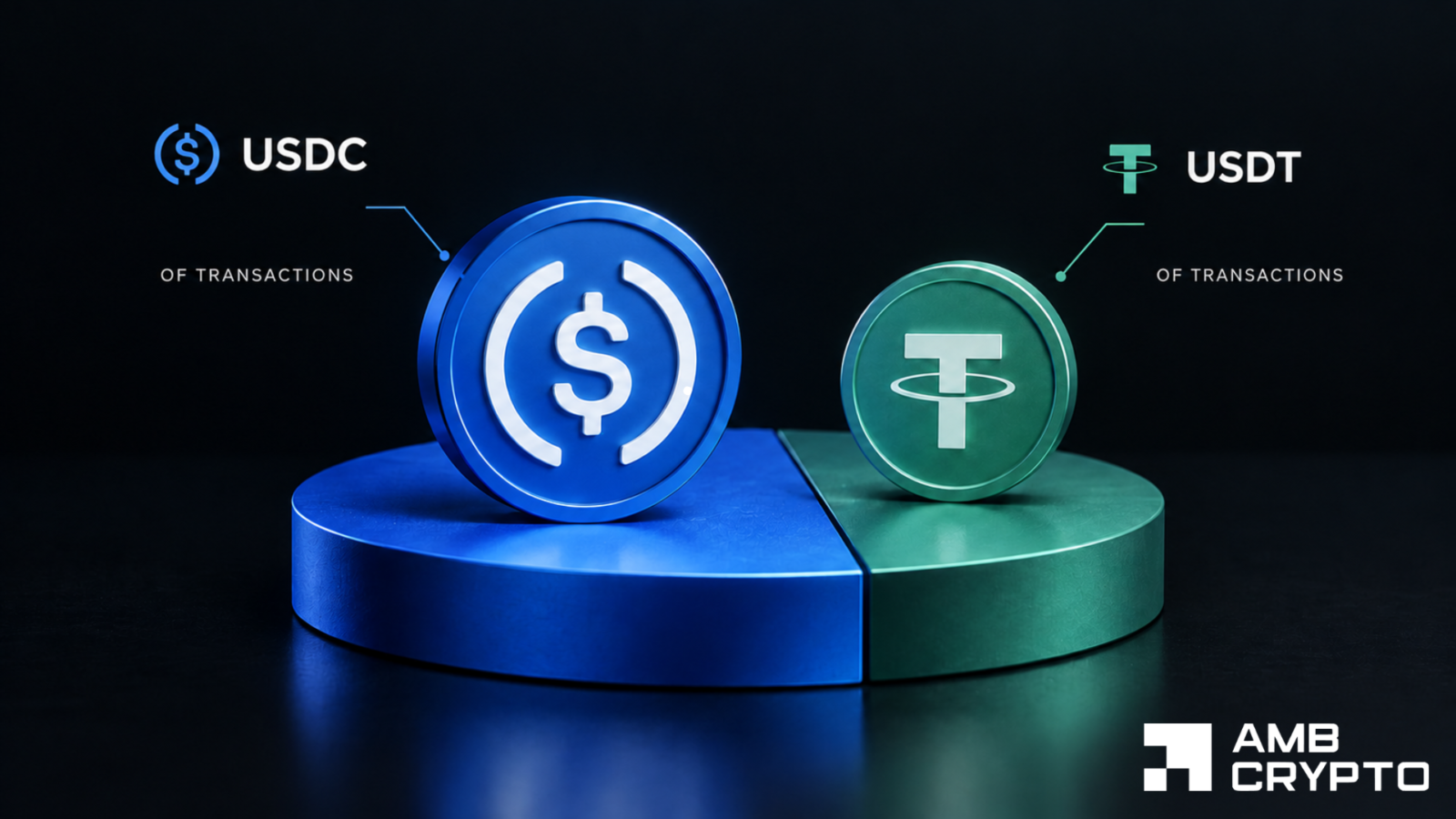
Despite Tether's USDT holding a larger market cap at $183 billion compared to USDC's $72.5 billion, USDC has captured significant transaction volume. According to Bernstein reports, USDC now handles over 60% of adjusted stablecoin transaction volume in 2026.
Circle's revenue for the first half of the year reached $1.40 billion, reflecting growing adoption of its services. Recent activity shows the company minting $3.75 billion in USDC on Solana over the past seven days.
Arc Blockchain Adoption Remains Limited
Circle launched its own blockchain, Arc, in mid-September to compete more directly in the stablecoin space. However, adoption has been minimal, with Arc accounting for less than 1% of all USDC, or approximately $661.4 million.
The majority of USDC supply remains distributed across established blockchains. Ethereum holds 66.6% of the circulating supply, followed by Solana, HyperEVM, Base, and Arbitrum One.
Despite the limited Arc adoption, some metrics showed positive movement following the chain's launch. DeFi total value locked in USDC increased by 6%, while weekly asset senders grew by 5.4% to 5.5 million users.