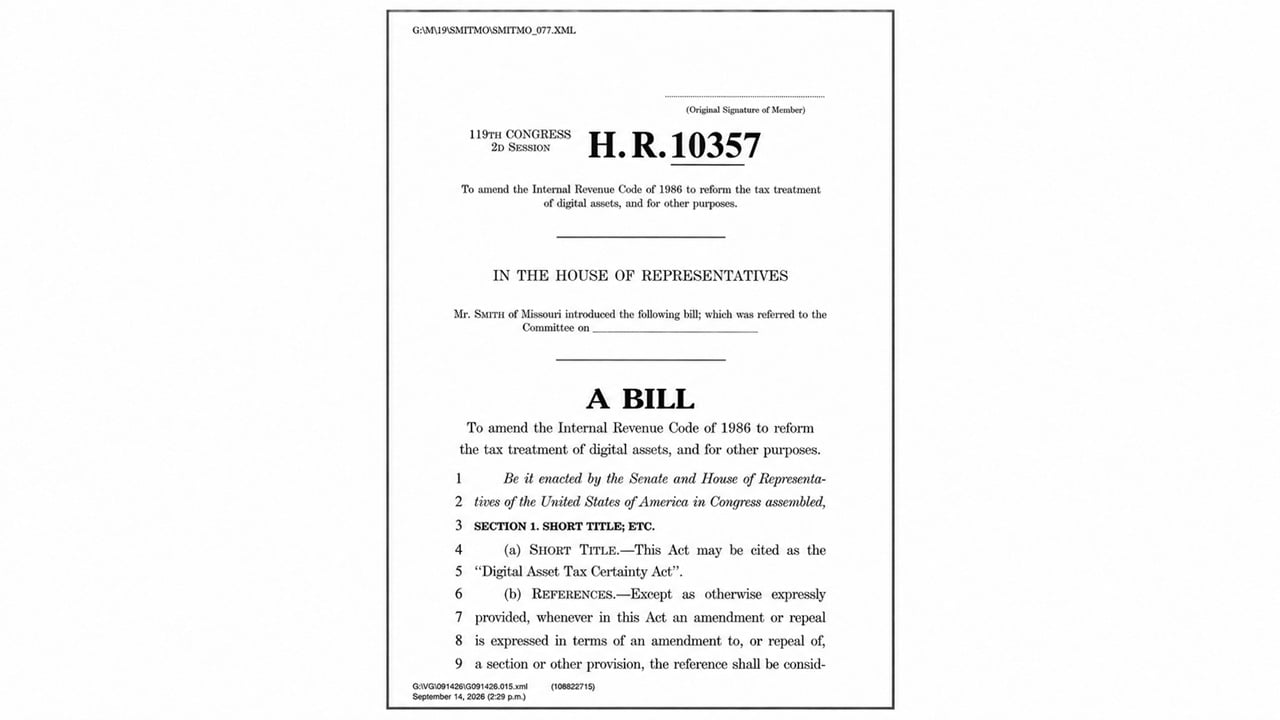
The CLARITY Act's path to passage has narrowed significantly. Polymarket traders assigned the cryptocurrency bill an 18% probability of becoming law by the end of 2026 on September 14, a sharp decline from 34% earlier that same day and a dramatic reversal from 82% in February.
The bill, formally designated H.R. 3633, must clear both chambers of Congress and receive presidential approval by December 31 to satisfy the prediction market's contract terms. A Senate cloture vote was scheduled for September 15.
Banking Industry Raises Stablecoin Concerns
Eight banking trade groups sent a letter to Senate leaders on September 14 opposing the stablecoin provisions in the final draft. The organizations argued that the bill's language permits exchanges and other service providers to offer interest-like rewards on stablecoin holdings, potentially diverting deposits from banks and reducing available credit for mortgages, agricultural loans, and small-business lending.
The banking coalition rejected a proposed regulatory circuit breaker mechanism as insufficient. They contended that a safeguard responding only after substantial deposit flight has occurred amounts to no safeguard at all. The groups recommended amendments to broaden the prohibition on rewards and eliminate language allowing rewards based on customer stablecoin balances, holding periods, or tenure.
Republicans including Senators Cynthia Lummis, John Boozman, and Tim Scott had characterized the circuit breaker as strong protection for community banks.
State Attorneys General Object to Federal Preemption
A separate coalition of 18 state attorneys general, led by New York Attorney General Letitia James, raised concerns that federal preemption provisions could restrict state authority over cryptocurrency fraud, registration, and investor protection.
The state opposition emerged as Senate leaders worked to secure Democratic support necessary to advance the bill. Despite 126 revisions requested by Senate Democrats—addressing token classifications, issuer disclosures, decentralized finance, exchange oversight, and other issues—the two coalitions maintained their objections.
Longer Trend of Declining Confidence
The drop to 18% reflects an extended erosion of confidence beyond a single day's reaction. The prediction market priced the CLARITY Act as high as 82% in February before declining to 21% by August 9, when Senate delays began affecting assessments.
The bill still faces multiple hurdles: Senate passage, House approval of any amended version, and presidential signature before year-end.