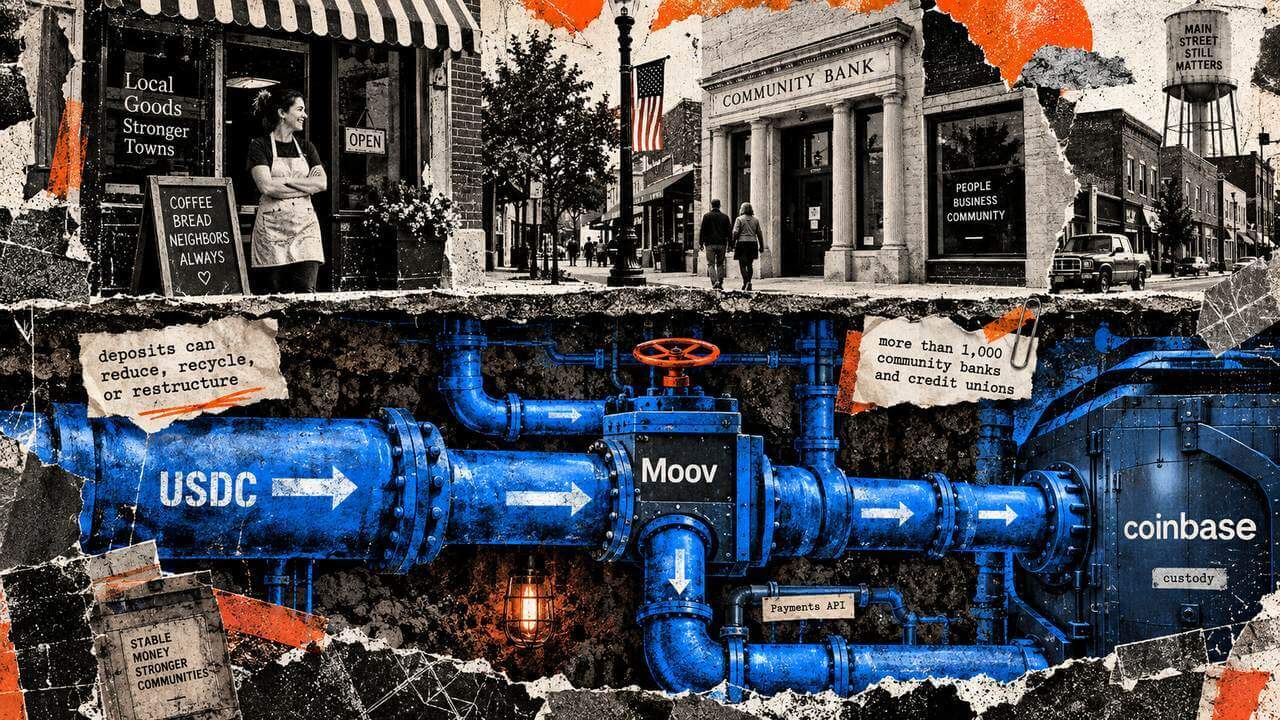
Coinbase and payments platform Moov announced a partnership on September 10 to give community banks and credit unions the ability to offer stablecoin services through their existing customer relationships. Under the arrangement, Coinbase supplies custody and transaction infrastructure while Moov integrates those services into its platform for financial institutions, allowing banks to keep the customer-facing relationship.
According to Moov's announcement, business customers seeking to accept stablecoins currently must go outside their primary financial institution. The partnership aims to bring that capability into banks' existing payments experience. Moov reports a customer base of more than 1,000 community banks and credit unions, though the companies did not specify how many are live, under contract, or in pilot programs, nor did they provide an implementation timeline.
How the Partnership Structure Works
The arrangement divides responsibilities among three parties. Coinbase provides custodial wallet accounts for fund custody and its Payments API to orchestrate stablecoin movement. Moov connects these tools to the payment systems used by its bank and credit union customers. The banks or credit unions remain the primary customer-facing institution while maintaining the account relationship.
The partnership leaves several critical details unspecified, including which stablecoins and networks each institution will support, how custodial balances will be owned, settlement routes, fees, revenue sharing, data access rights, and liability allocation.
Regulatory and Deposit Considerations
The stablecoin service structure does not change the legal status of payment stablecoins. According to an April 2026 proposed rule from the Federal Deposit Insurance Corporation, deposits held at banks as reserves for payment stablecoins would be insured as corporate deposits of the stablecoin issuer, subject to applicable limits. Stablecoin holders would receive no pass-through deposit insurance under the proposal.
A Federal Reserve analysis published in December 2025 found that stablecoins can reduce, recycle, or restructure deposits depending on who purchases them, what assets are converted, and where stablecoin issuers place their reserves. The Fed identified partnerships, custody services, settlement accounts, and white-label infrastructure as ways banks can remain connected to digital payment flows.
Outstanding Questions
The partnership raises questions about control over economics and operations. Community institutions may retain the account relationship and customer interaction, but whether they retain control over pricing, settlement destinations, customer data, and risk decisions remains unclear. The first bank deployments will reveal adoption rates, supported assets, account ownership structures, and settlement paths, along with commercial terms including pricing, revenue sharing, data access, compliance responsibilities, and liability allocation.