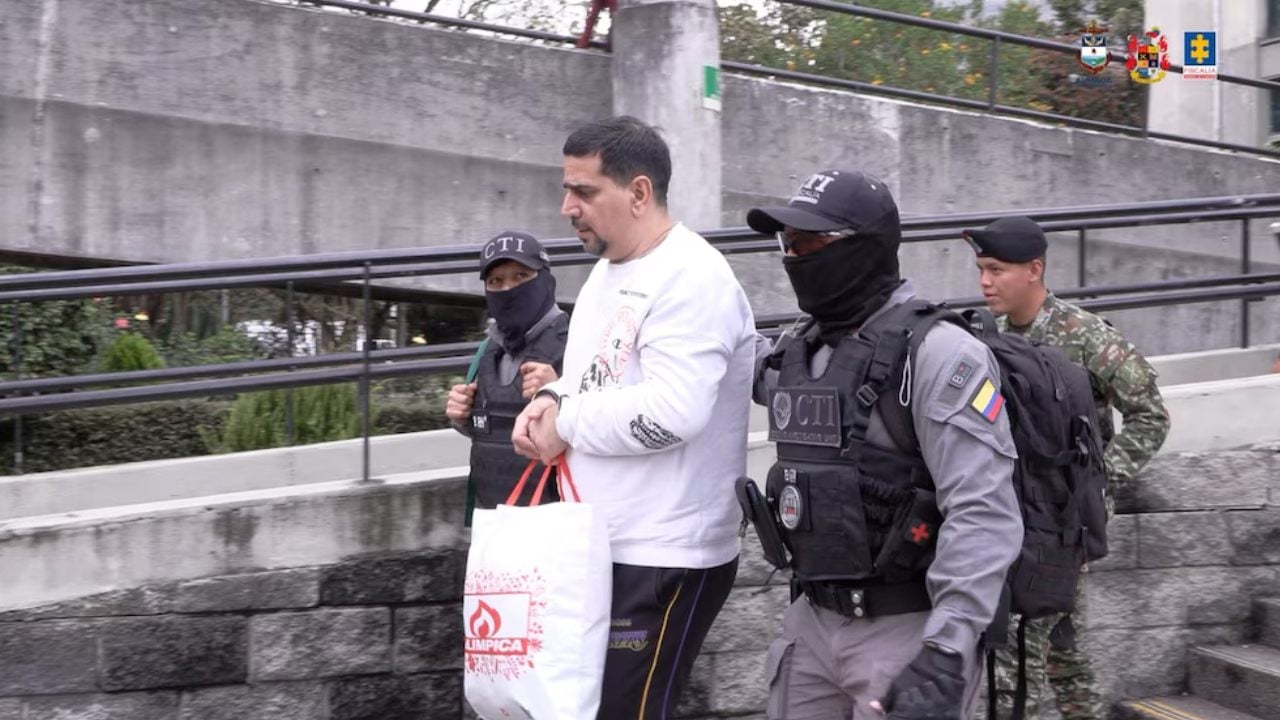
Colombian authorities have detained eight people accused of laundering drug trafficking proceeds through cryptocurrency networks, in an operation coordinated with U.S. intelligence, the Office of the Attorney General of Colombia announced Wednesday.
The operation involved CTI Police officials and the national army across four locations: Cajicá, Maicao, Barranquilla, and Bogotá. Among those captured was Guillermo Carpio Cárdenas, known as “Gallo,” described as the head of one group. Also detained were Alex Alberto Castillo Gómez, Jhon Jairo Torres Peláez, Nizar Hachem Sawan, Andrés Mauricio Guarnizo Vaca, Danilo Andrés Hernández Junco, and Juan Daniel Arenas Uribe, known as Juan Arenas.
The U.S. District Court for the District of Puerto Rico alleges that the ring organized a scheme to circulate and obfuscate the source of illicit drug funds using a deposit network, cryptocurrency tokens, and smurfing—a technique involving small transactions to avoid detection by financial intelligence units.
In a separate action, Nassim Orfale Vasquez was captured in Barranquilla. He was indicted in the U.S. District Court for the Southern District of New York for participating in a structure that used cryptocurrency transactions to launder drug trafficking funds. According to the Internal Revenue Service, Vasquez processed over $42 million in suspicious cryptocurrency transactions since 2018, and authorities are investigating whether a larger organization operates from the Colombian coast for these purposes.
The attorney general’s office said those arrested will undergo extradition procedures under Colombian law, with due process respected. The operation follows the dismantling of a stablecoin laundering network led by Leonardo de Jesus Zuluaga Duque, a Colombian citizen known as “Rey,” who was sentenced to 160 months in a federal prison.
Colombian President Abelardo de La Espriella has prioritized criminal extraditions to the U.S., focusing on drug trafficking groups, and has faced criticism for his hard-line approach toward narco criminals. He ranks as the third most popular leader in Latin America, behind Mexico’s Sheinbaum and El Salvador’s Bukele, a longtime bitcoin proponent.