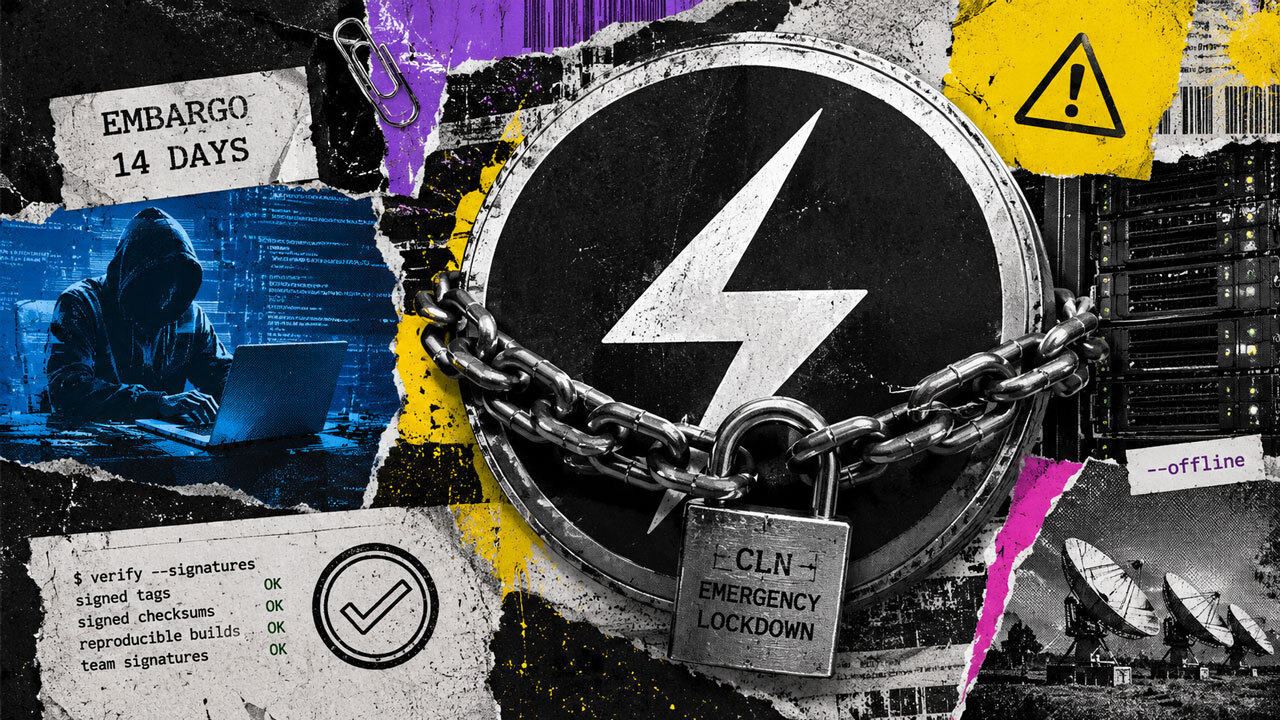
Core Lightning (CLN) developers have issued an urgent warning to node operators, calling for a security decision before full threat assessments can be publicly shared. In an Aug. 23 message posted on Stacker News, operators were urged to install new software binaries designed to fix multiple reported vulnerabilities.
The development team advised operators who choose not to upgrade to run their nodes offline. Furthermore, the CLN team announced plans to keep the technical details of the vulnerabilities under embargo for two weeks to minimize the risk of exploitation during remediation.
Verification Challenges and Coordinated Disclosure
To help users check provenance and reproducibility, CLN plans to attach team signatures to the new binaries. Core Lightning's documented release process includes signed tags, signed checksums, and reproducible builds, which allow operators to confirm that software packages originate from the intended release process.
However, operators cannot yet inspect the underlying evidence or determine the specific exploit mechanisms, as technical details remain withheld. Operators also lack sufficient information to determine whether individual node configurations face the same level of risk.
The coordinated security disclosure follows CERT guidance, which aims to minimize adversary advantages during remediation by drawing a distinction between patch availability and patch deployment. Releasing full technical details immediately could allow attackers to identify vulnerable paths before operators apply patches.
The Impact of AI-Generated Reports
The recent security sequence began around Aug. 13, when the CLN team reported receiving multiple AI-generated CVE reports from several sources over a span of approximately 10 days. Outside open-source contributors joined the team to validate the reports and prepare fixes, leading to the Aug. 23 release of binaries addressing many of the reported issues.
The influx reflects a broader trend across the industry. In March, Google revised its Open Source Software Vulnerability Reward Program following a massive surge in AI-generated reports, noting that many submissions contained incorrect information or hallucinated exploit paths. Automated tools can increase report volumes and accelerate vulnerability discovery, compressing the window of time maintainers have to validate flaws and distribute fixes before exploit knowledge spreads.
Potential Network Impacts
The embargo creates a temporary information hierarchy where operators must rely on maintainer judgment. The bullish outlook relies on operators smoothly authenticating and installing the patched software, followed by CLN publishing technical details that validate the warning.
Conversely, the bearish scenario involves hesitation from operators unwilling to upgrade without inspecting the threat model, or those opting to take nodes offline. Core Lightning documents offline mode as preventing nodes from binding to ports or reconnecting to peers, meaning prolonged upgrades or offline nodes could potentially reduce routing availability across parts of the network.