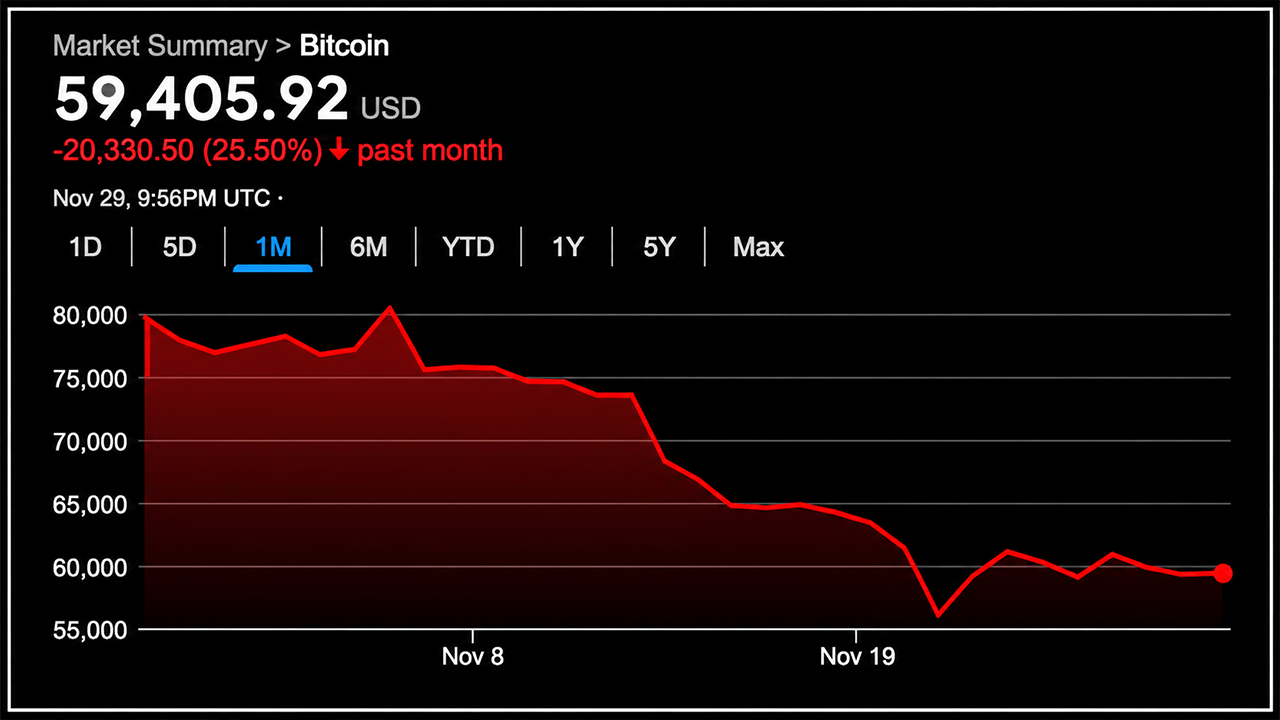
Recent volatility in digital‑asset markets has turned corporate crypto treasuries into a real‑world stress test. Companies that built large holdings of Bitcoin (BTC) and Ethereum (ETH) during bull markets now confront falling token prices, automated debt obligations and index exclusions.
DeFi debt creates liquidation risk
Nasdaq‑listed BTCS deposited 46,676 ETH – roughly $99 million – into the Aave lending protocol and borrowed $64.1 million in stablecoins. Aave’s liquidation threshold of 80% meant that a decline in ETH price brought the position close to automatic liquidation. BTCS reduced its Aave debt to $54 million to avoid forced liquidation and disclosed that future liquidations are not guaranteed.
Negative yields force capital‑allocation changes
Strategy (MSTR) saw its market‑adjusted net asset value (mNAV) fall below 1×, reaching 0.96× with 850,849 BTC, resulting in a projected 2026 BTC yield of –4.6%. The company’s recent equity raise funded only $33.4 million of Bitcoin purchases while it spent $206 million repurchasing preferred shares to improve its balance sheet. Michael Saylor indicated the firm will continue buying shares below $100 to support liquidity and reduce dividend obligations.
Index exclusions add pressure
MSCI removed Strategy, Metaplanet and Yellow Cake from the ACWI IMI index after classifying them as non‑operating holding companies. The removal obliges index funds to divest, potentially generating about $2.8 billion of stock sales and adding downward pressure on share prices.
Broader market outflows
Data from SoSoValue showed Spot Bitcoin ETFs experiencing a fourth consecutive week of net outflows totaling $1.79 billion, while Ethereum ETFs recorded six weeks of net outflows amounting to $314 million.
Implications for digital‑asset treasuries
The stress test highlights that firms relying on automated crypto debt, diminishing valuation premiums or index‑fund flows face heightened risk. Companies with patient equity, solid cash reserves and active staking revenues are better positioned to weather steep market declines. Long‑term resilience will depend on balance‑sheet discipline, adequate liquidation buffers and structural flexibility.