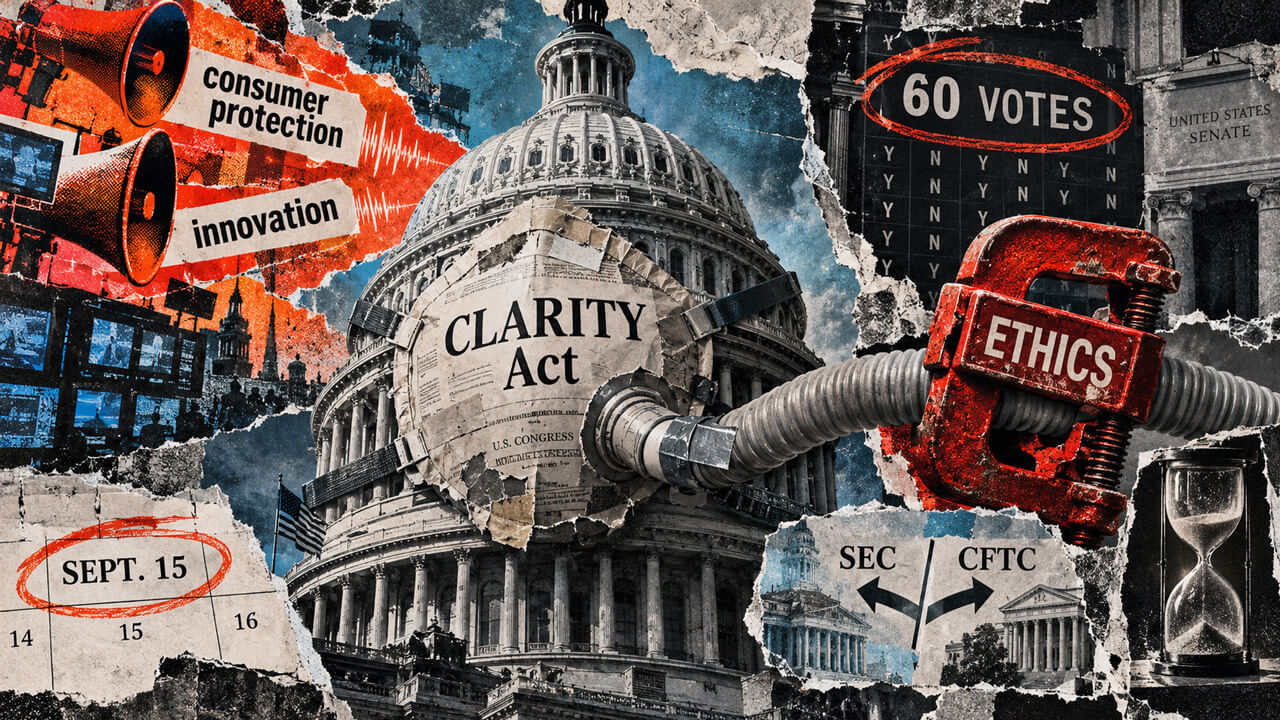
The cryptocurrency industry is launching a seven-figure national advertising campaign to support the Digital Asset Market Clarity Act ahead of a crucial Senate vote scheduled for Sept. 15. The vote will determine whether to invoke cloture on a motion to proceed to the bill, a procedural hurdle that requires 60 votes to open debate.
The legislation seeks to establish federal rules for digital-asset markets and divide oversight between the Securities and Exchange Commission and the Commodity Futures Trading Commission. However, senators involved in negotiations have signaled that the necessary votes may not yet be secured.
The Cedar Innovation Foundation, a 501(c)(4) nonprofit linked to the Fairshake super PAC network, is spearheading the cable advertising campaign across three spots. Two spots focus on consumer protection and outside endorsements, while the third targets banks that have opposed parts of the legislation.
Banks, particularly smaller lenders, have spent months pushing lawmakers to tighten provisions regarding stablecoin rewards. They argue that yield-like incentives could draw deposits away from the banking system. Meanwhile, proponents of the legislation highlight provisions intended to protect customers during platform failures, requiring intermediaries to segregate customer assets, and note support from law enforcement groups and partial backing from AARP regarding crypto ATM fraud.
Despite these efforts, political divisions threaten the bill's survival. Discussions have stalled over ethics restrictions concerning a sitting president and his family's crypto interests, with Democratic lawmakers and the White House remaining divided. While Republican senators have expressed pessimism regarding the outlook, a White House spokesperson stated that the administration supports the legislation and has worked on comprehensive ethics provisions.
Sen. Cynthia Lummis has urged colleagues to support the bill to protect American crypto innovation and customer funds, warning that a failure to pass market-structure legislation this year could delay regulatory clarity for years.