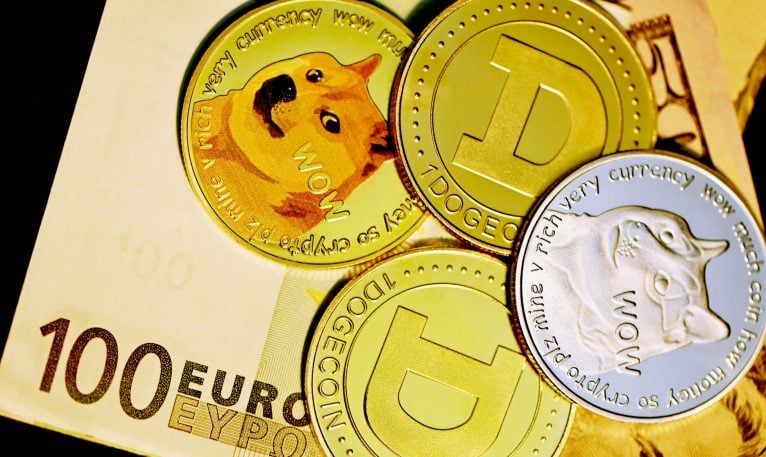
Dogecoin's narrative is evolving beyond its reputation as cryptocurrency's most recognizable joke. While the asset's Shiba Inu mascot and enthusiastic community remain defining characteristics, the focus of discussion is shifting toward a different question: whether people will actually use it as money.
The distinction matters. Cryptocurrency adoption has traditionally been measured through market capitalization, trading volume, and institutional investment. Payment adoption offers a different metric—one that tests whether a digital asset functions as currency.
Simplicity as a Structural Advantage
Dogecoin was created in 2013 as a lighthearted alternative to the increasingly serious cryptocurrency industry. Its design prioritizes simplicity: users acquire DOGE, hold it in a compatible wallet, and transfer it to another address. Unlike many crypto projects, Dogecoin does not require users to understand smart contracts, staking systems, or decentralized finance protocols.
This straightforward model has historically supported peer-to-peer tipping and small online payments. Recent initiatives involving payment providers and financial platforms suggest efforts to extend that utility further. If successful, Dogecoin could develop a functional identity alongside its speculative reputation.
The Payment Infrastructure Challenge
Cryptocurrency adoption as an investment has advanced significantly, but spending digital currencies remains less intuitive than purchasing them. Users can buy cryptocurrency on exchanges within minutes, yet finding places to spend a particular coin often requires research. Merchants must decide which assets to support, while customers must consider transaction costs, processing times, wallet compatibility, and conversion rates.
Online entertainment platforms, particularly gaming and gambling businesses, have been more active in experimenting with cryptocurrency payments because their entirely digital customer experience allows for easier integration.
Obstacles to Payment Adoption
Dogecoin faces obstacles shared by most cryptocurrencies intended for payments. Price volatility creates uncertainty—a product priced at $50 may require substantially different amounts of DOGE from one day to the next. This tension between Dogecoin as an investment and as a currency can discourage spending. Regulatory and tax considerations also vary by jurisdiction, adding complexity for businesses and consumers.
Payment processors can manage some of these issues through automated exchange rate calculations or fiat conversion, though additional infrastructure can reduce the simplicity that makes direct crypto payments attractive.
Gradual Rather Than Dramatic Adoption
Crypto adoption is often imagined as a sudden universal shift. More likely, adoption will emerge gradually through incremental developments: new payment integrations, financial products, and merchants experimenting with DOGE collectively building infrastructure for broader usage.
Dogecoin's community-driven identity remains one of its strongest advantages. The asset does not need to abandon its cultural identity to become more useful. What ultimately matters is whether the ecosystem can convert that attention into practical applications that users choose to adopt regularly.