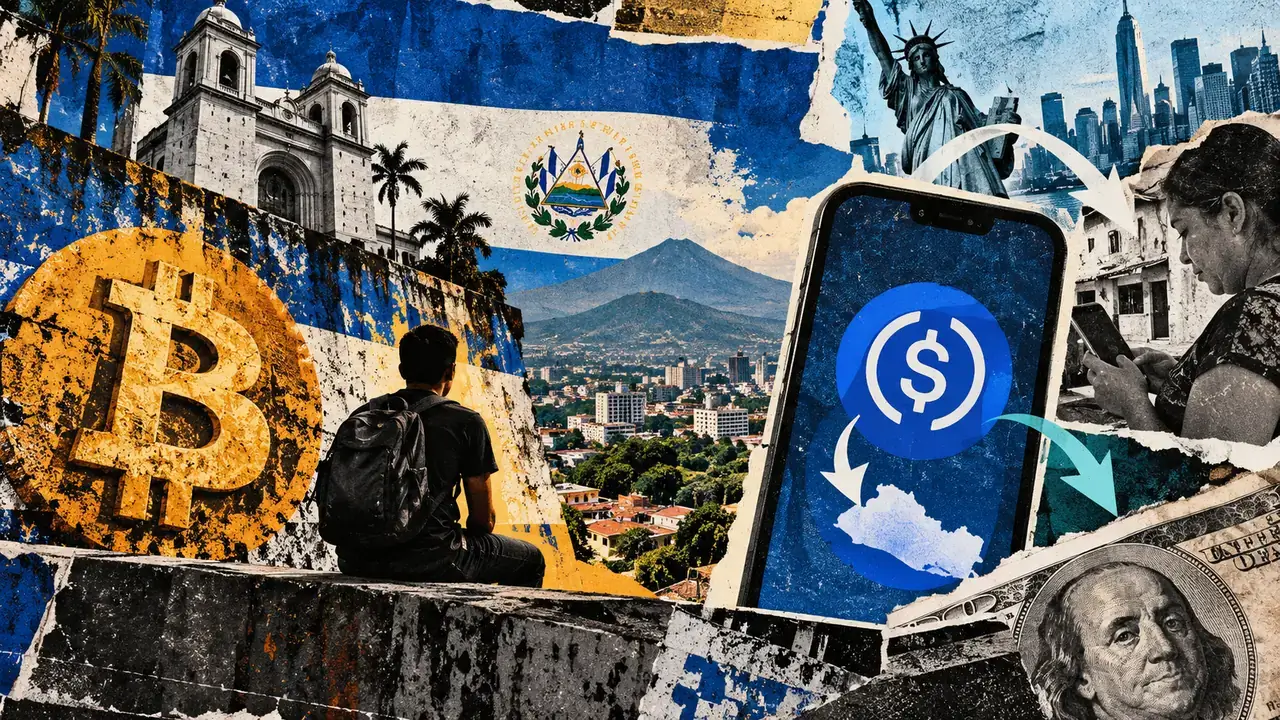
El Salvador is deploying stablecoins for remittances through a new national payments app called Sivar, developed by Modveon in partnership with Coinbase. The platform will settle transfers in dollar-backed tokens on the Base blockchain, allowing US users to fund payments with debit cards while Salvadoran recipients receive value through app-embedded wallets.
The move reflects a practical separation between El Salvador's strategic Bitcoin holdings and the technology used for everyday cross-border payments. When El Salvador adopted Bitcoin as legal tender in 2021, proponents argued the cryptocurrency could reduce remittance costs. Five years later, the country is pursuing that goal through stablecoins instead.
Market Opportunity
El Salvador received approximately $9 billion in remittances in 2025, with roughly 92% coming from the United States. An estimated 1.6 million Salvadorans depend on these transfers as a major source of household income.
Sivar will charge a flat $2 per transfer regardless of size. More than 25,000 Salvadorans had registered before launch. Recipients can convert stablecoin balances to cash at over 1,000 locations across El Salvador.
Competing Stablecoin Services
Sivar enters a growing market. MoneyGram expanded a USDC-based stablecoin service into El Salvador in April through partnerships with the Stellar Development Foundation, Crossmint, and Circle. Users can hold dollar-denominated digital balances and withdraw cash at MoneyGram locations.
Tether, the world's largest stablecoin issuer, relocated its headquarters to El Salvador in 2025 after receiving authorization as a stablecoin issuer and digital-asset service provider. The company has also integrated USDT with Bitcoin's Lightning Network to combine dollar-denominated payments with blockchain settlement.
Bitcoin's Evolving Role
El Salvador has not abandoned Bitcoin. The country's Bitcoin Office marked the fifth anniversary of adoption by highlighting a Strategic Bitcoin Reserve of approximately 7,789 BTC, Bitcoin education in public schools, and designated Bitcoin Zones.
However, the government's ability to expand Bitcoin holdings has changed. The International Monetary Fund stated this month that El Salvador has used no public resources to accumulate Bitcoin since its first program review. The government provided documentation showing subsequent increases came from private donations.
Legal changes made under El Salvador's $1.4 billion IMF program removed Bitcoin's status as mandatory legal tender, made private-sector acceptance voluntary, and required taxes to be paid in US dollars. The government also transferred majority ownership and operations of its Chivo wallet to a private operator.
Bitcoin now remains embedded in El Salvador's reserve strategy and national branding, while stablecoins are being deployed for the practical use case of moving money across borders.