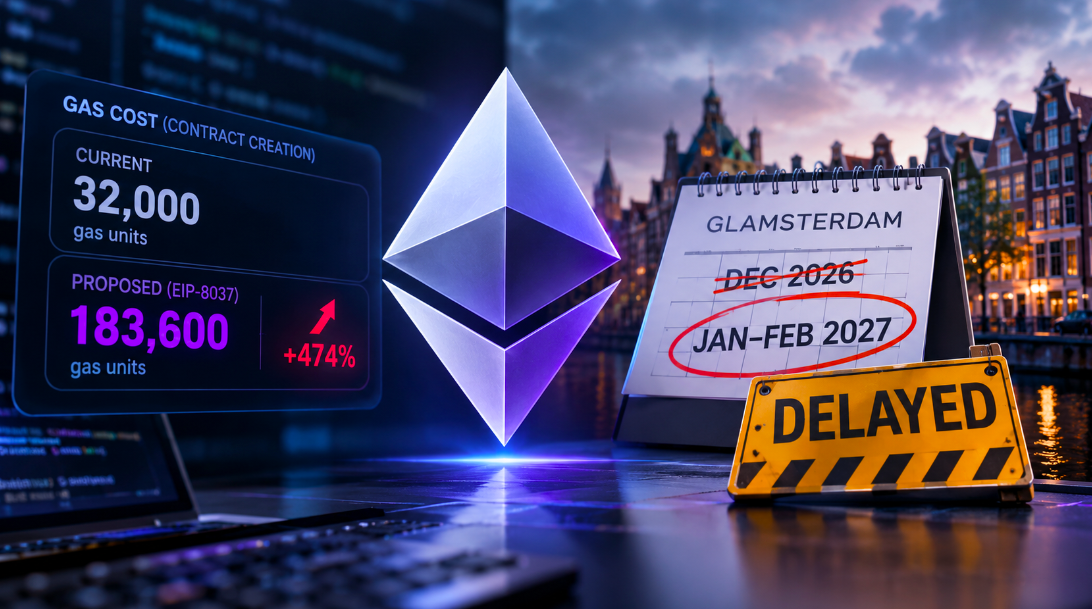
Ethereum developers are proceeding with Glamsterdam's existing gas rules despite 200 compatibility findings that could disrupt smart contracts, according to discussions at a Nov. 19 core developers meeting.
The upgrade is designed to significantly expand Ethereum's capacity by potentially increasing the block gas limit from 60 million to 200 million. This would give applications more room to operate on the main network while reducing congestion and transaction fees during periods of heavy demand.
Compatibility concerns identified
Two proposals, EIP-8037 and EIP-8038, introduce new gas pricing and accounting rules. A ChainSecurity assessment identified 200 compatibility findings across investigations coordinated by the Ethereum Foundation. Of these, three were classified as high severity, 30 as medium, and 167 as low. None was rated critical.
The assessment identified potential disruptions affecting bridges, exchanges, wallets, staking platforms, governance systems, and other infrastructure. Most findings can be addressed through configuration changes, but 24 require smart contract upgrades or migrations. Potential consequences include interrupted operations, locked funds, and errors in reward accounting.
The core issue stems from applications that rely on fixed gas allowances to perform specific operations. Under Glamsterdam's proposed rules, those allowances may no longer be sufficient to complete the same work.
Timeline and next steps
Developers tentatively targeted the week of Dec. 14 for testing on Ethereum's Hoodi testnet, potentially allowing mainnet activation as early as mid-January. However, the schedule remains unconfirmed as teams address compatibility problems.
The Ethereum Foundation has contacted more than 50 affected companies. High-impact projects are expected to complete fixes by mid-December, while other affected projects reported remediation schedules extending to Jan. 10.
A final decision is expected during the next All Core Developers Consensus call on Nov. 26, when execution and consensus teams will determine whether to proceed with the December test. Developers advocating for specification changes have been asked to present specific alternatives with impact analysis and auditor feedback before that meeting.