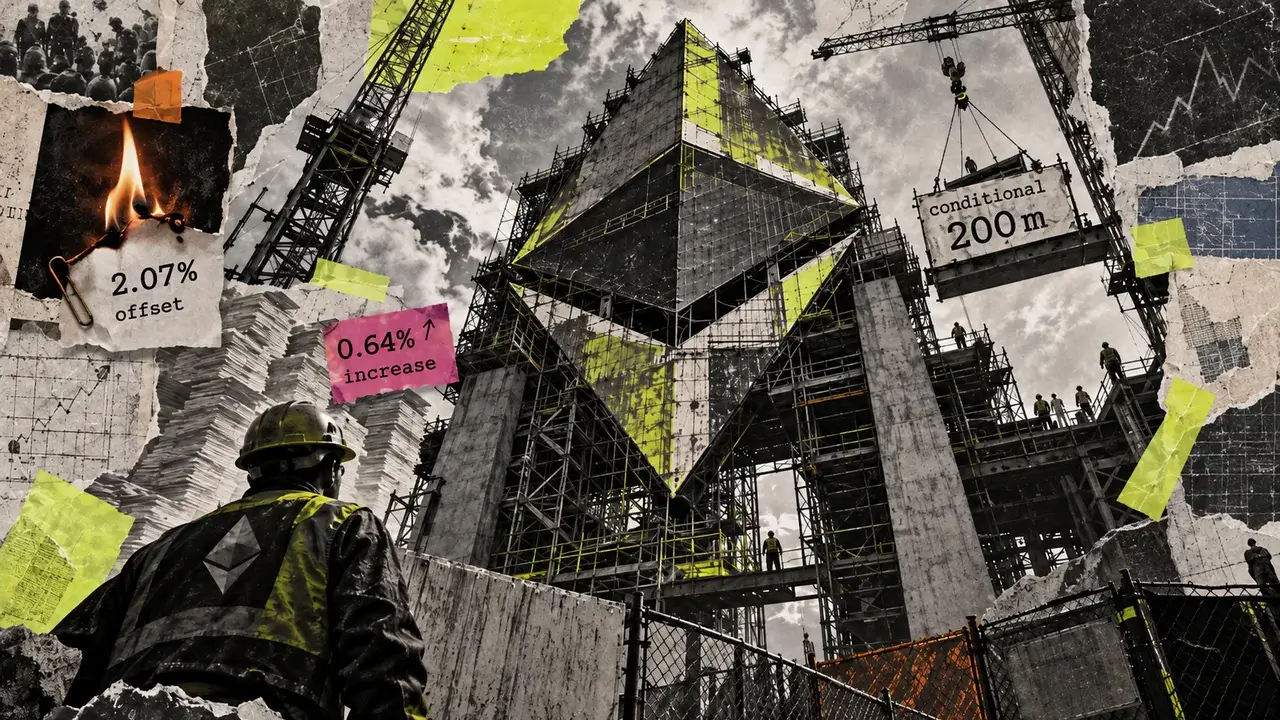
Ethereum's transaction fees have burned enough ETH to offset just 2.07% of the new coins issued in 2026, according to supply data through October 9. After accounting for fee burns, validator penalties, and other destruction, the network has added approximately 778,413 ETH, increasing total supply by about 0.64% over the period.
The ethsupply.fyi ledger tracked activity from January 1 through October 9, recording 796,623 ETH of gross issuance against 16,524 ETH destroyed through execution and blob transaction fees. An additional 1,685 ETH was removed through consensus penalties, leaving net additions of 778,412 ETH after all destruction mechanisms.
Gas Limits and Fee Requirements
The gap between issuance and burns reflects how Ethereum's gas dynamics affect the network's deflationary potential. Using current supply data, an execution base fee of approximately 13.85 gwei with today's 60 million gas limit would be needed to offset gross issuance. A hypothetical 200 million gas limit would require only 4.16 gwei to achieve the same offset, as the same fee budget spreads across more consumed gas.
Both scenarios require roughly 2,992 ETH of daily burn under the model's assumptions. The larger gas target lowers the required base fee because transaction costs are distributed across greater capacity.
The Glamsterdam Upgrade and Capacity
Developers are pursuing a conditional 200 million maximum gas goal following the Glamsterdam upgrade, which aims to support greater throughput through proposer-builder separation and block-level access lists. The Ethereum Foundation's testnet announcement scheduled Sepolia for October 6, while leaving Hoodi and mainnet activation dates undecided. Changes to gas accounting after the upgrade mean a gas unit may buy different work, preventing direct translation of capacity increases into proportionally more transactions or burned ETH.
Supply Growth Amid Network Changes
The current snapshot reports approximately 122.116 million ETH in total supply, with roughly 121.338 million ETH at the start of the measured window. While the 2026 ledger shows supply increasing, the relevant signal for holders is whether burned fees and other destruction approach or exceed issuance over a matched interval.
A sustained shift toward shrinking supply would need to appear across multiple metrics: consumed gas, execution base fees, blob burn, and stake-dependent issuance together. Layer-2 blockchain growth and staking participation compound the calculation, since existing holders can stake and applications can grow without those measures alone establishing the required fee burn to offset issuance.