Ethereum co-founder Vitalik Buterin has repositioned ETH as a store of value, moving the network into territory where Bitcoin's pitch to traditional finance is strongest. This latest narrative shift places the two largest blockchain networks in direct competition for the same institutional capital.
Buterin stated that valuing ETH as a fee-burning token "never was as strong as it seemed," and argued instead that it should be valued as a store of value aligned with decentralization, censorship resistance, open source code, privacy, and security.
Mixed Reactions Within Ethereum Leadership
Responses to the pivot varied within the Ethereum community. Bitmine Chairman Tom Lee, whose company holds approximately 6 million ETH, called Buterin's comments "a seismic shift" that validates the company's strategy. Joseph Lubin, who controls Consensys, argued that ETH "goes further" than gold and Bitcoin as a store of value.
Etherealize, a firm founded after receiving a 2024 grant from Buterin and the Ethereum Foundation to promote Ethereum to Wall Street executives, has been positioning ETH as "a diversified complement to Bitcoin" with cash flow and as a "programmable store of value."
Previous Narrative Changes
The store-of-value framing follows earlier failed attempts to differentiate ETH from Bitcoin. The "ultrasound money" campaign and positioning ETH as "digital oil" did not gain mainstream traction. Each new narrative has come with increasingly ambitious claims about Ethereum's potential.
Market Performance Diverges From Messaging
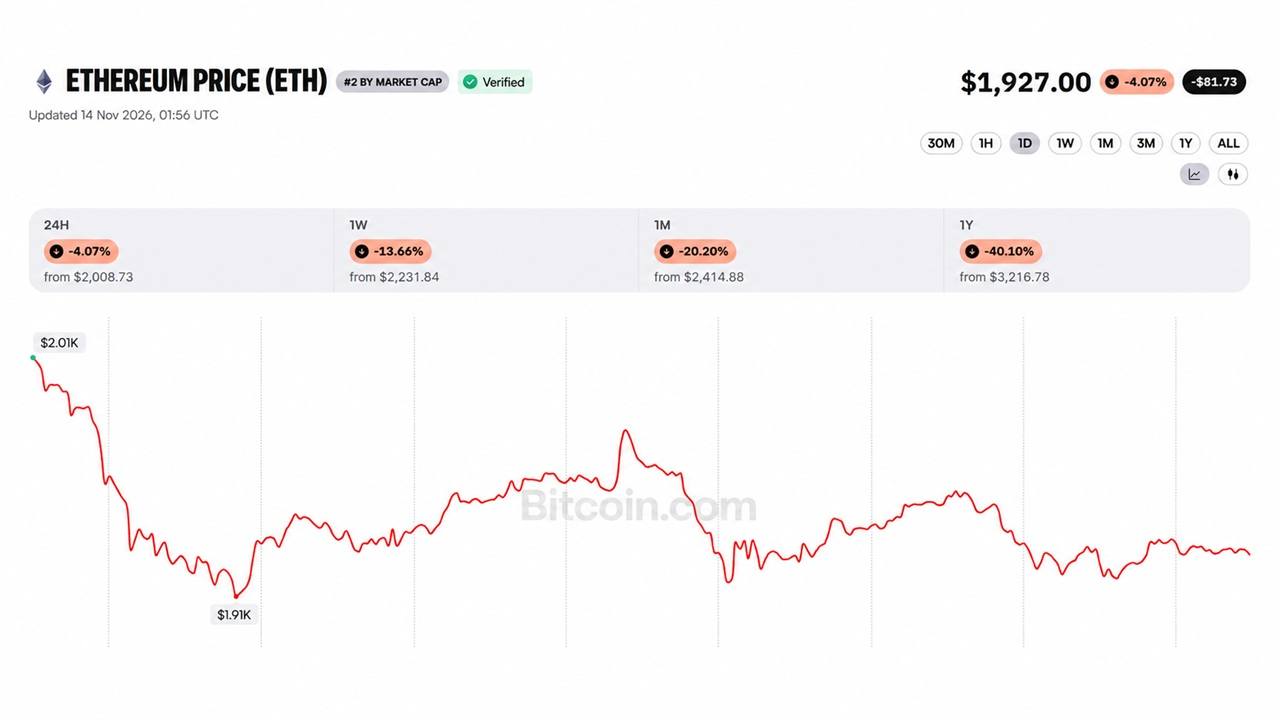
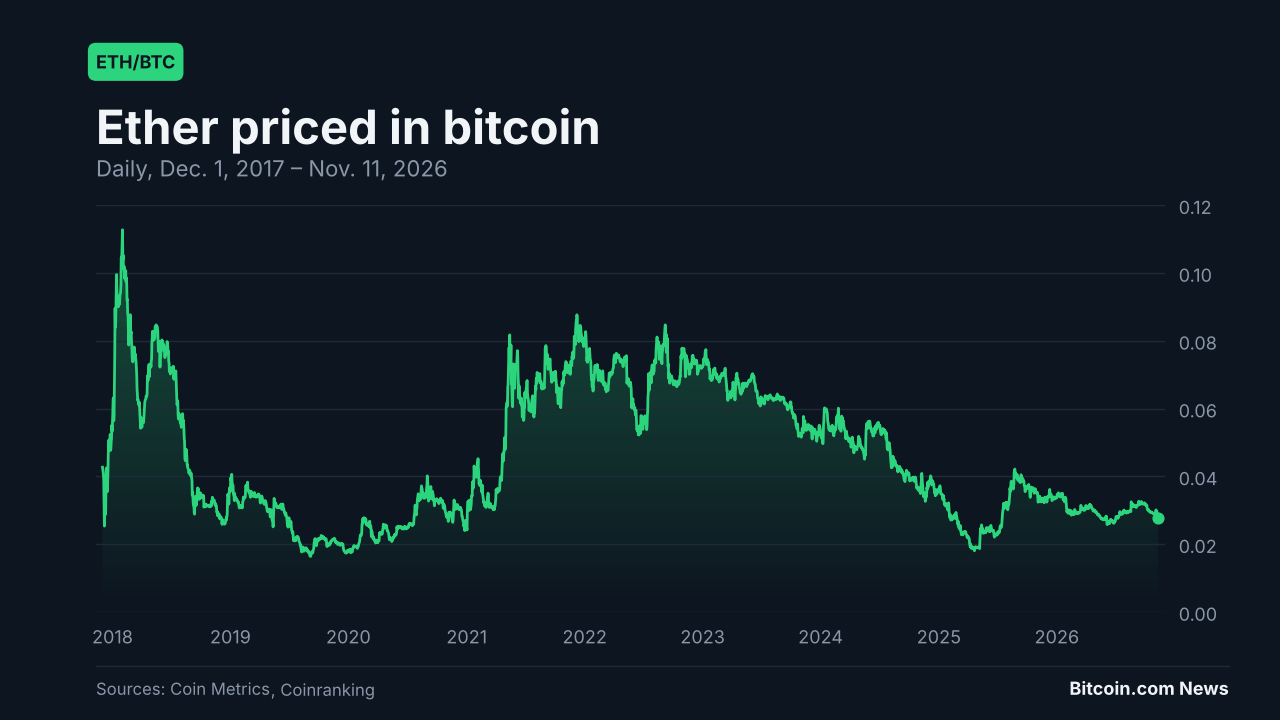
Despite the renewed pitch, market flows tell a different story. ETH reached approximately $4,946 in August 2025 but now trades about 58% below that peak. Inflows into ether exchange-traded funds have declined 23% since October 2025, compared with a 12% decline for Bitcoin ETFs. Over the past year, BTC is down 30% while ETH is down 41%.
Tensions in the Store-of-Value Argument
Buterin's reasoning creates inconsistencies with previous Ethereum arguments. While Etherealize emphasized that fee burns support ETH's value and that staking yield comes partly from transaction fees, Buterin now downplays the importance of burns. This undermines Etherealize's response to a 2017 objection by Bitcoin advocate John Pfeffer that staking yield represents inflation transferring value from non-staking to staking holders.
Bitmine stakes approximately 84% of its holdings and expects to earn $309 million worth of ETH annually at current yields, making the outcome of this debate materially relevant to treasury firms.
The Definition Problem
A fundamental challenge for both Bitcoin and Ethereum advocates is that "store of value" lacks a universally agreed definition. There is no consensus on how long an asset must hold its value or how far it can fall and still qualify as a store of value. Buterin identifies survival as "the first and most important SoV-ish metric," but many cryptocurrencies have survived while declining more than 90%.
Historical precedent offers limited comfort. Wampum, silver, and gold have all experienced significant devaluations or periods of instability despite being considered stores of value at different times.
Competing Similar Stories
Ethereum's store-of-value pitch now overlaps substantially with Bitcoin's established narrative. About half of the attributes Buterin cites for ETH as a store of value—including survival, slow change, low protocol politics, easy self-custody, and the ability to run a node on modest hardware—are already attributed to Bitcoin.
Some Ethereum thought leaders are claiming the network offers all of Bitcoin's benefits plus additional capabilities. This mirrors the failed "ultrasound money" campaign, which attempted to prove that ETH was superior sound money. Bankless co-founder David Hoffman sold all his ETH in May 2026, stating that the "ETH is money" thesis had played out rather than failed, and that only "a marginal amount of that success will be reflected in ETH."
Hoffman characterized the timing of Buterin's announcement as "coming from a place of weakness, not strength."
Historical Context
In a 2017 paper, investor John Pfeffer argued that while ETH could theoretically replace Bitcoin as a dominant store of value, "an objective observer would give bitcoin significantly higher odds than ETH." Nine years later, Bitcoin has outperformed Ethereum substantially on a price basis, up approximately 5.7 times from the 2017 price cited in the paper, while ETH has appreciated less than 3 times over the same period.