A Federal Reserve rate increase affects the cryptocurrency industry unevenly, rewarding some businesses while straining others. Stablecoin issuers and Bitcoin borrowers face opposite pressures from the same policy shift, a dynamic that becomes clear only when examining how different contracts channel interest-rate changes through the market.
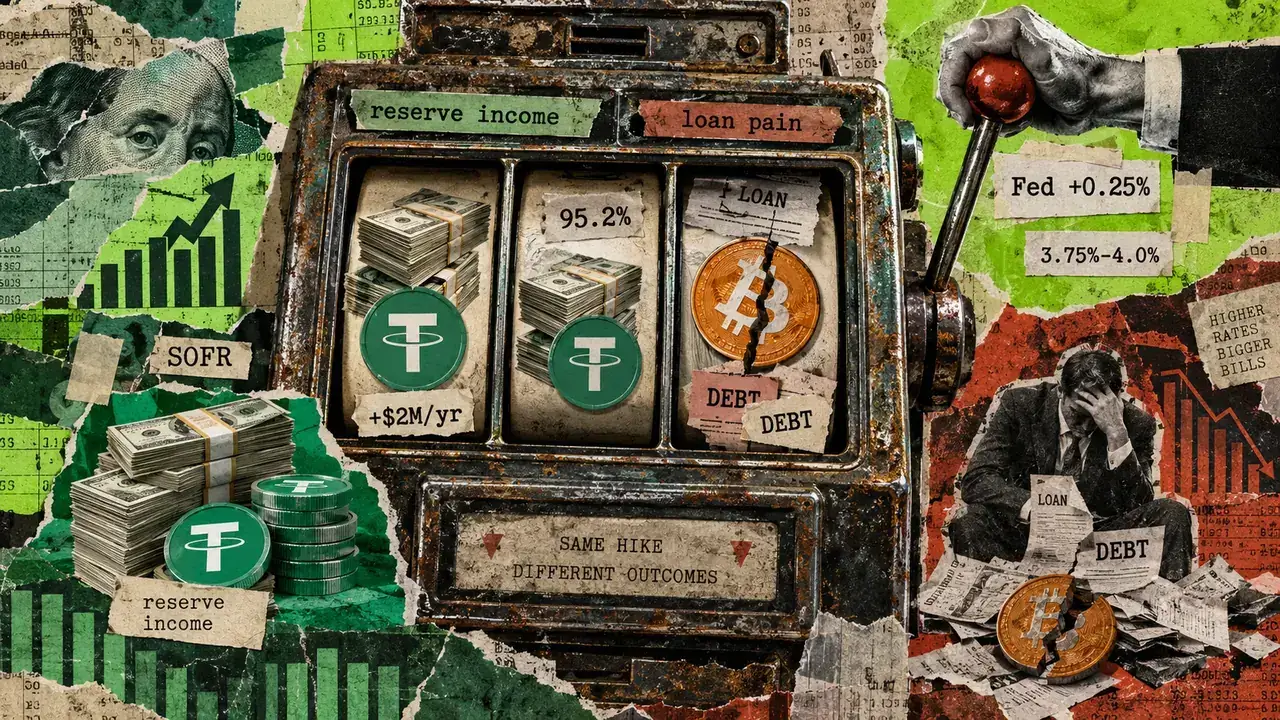
Stablecoin issuers earn income on the assets backing customer balances. Circle's second-quarter 2026 filing showed that reserve income supplied 95.2% of revenue in the three months ended June 30, with returns tracking close to the secured overnight financing rate (SOFR). When the Fed raised its target range by a quarter percentage point to 3.75%-4% on September 16, higher overnight rates could boost returns on short-term stablecoin reserves as assets mature or reset.
The same increase pressures companies that borrowed money to buy Bitcoin. Businesses with floating-rate loans face larger interest bills when short-term rates rise. A hypothetical company raising $100 million in fresh interest-bearing debt would pay an additional $2 million annually if its borrowing rate increased by two percentage points, requiring the business to offset that cost through earnings, additional financing, or asset sales.
Different Rates, Different Outcomes
The distinction matters because short-term and long-term rates move through different mechanisms. Overnight rates influence returns on instruments that mature or reset quickly, while the 10-year Treasury yield incorporates expectations about future short rates and compensation for holding longer-dated debt. Investors could demand additional compensation for owning long-dated government debt while expecting overnight rates to fall later, making long-term financing more expensive even as short-term reserve returns decline.
Stablecoin issuers reinvesting maturing Treasury bills and companies funding lengthy construction projects can both be affected differently by the same Treasury market move, depending on whether their rates reset in the short or long term.
Bitcoin Holders Face a Different Calculation
Bitcoin ownership differs fundamentally from interest-bearing assets because the cryptocurrency does not generate contractual income. Holders profit only if its price appreciates, but higher available bond yields give investors a competing promised return to compare against an uncertain price-based gain. That comparison depends on individual circumstances including inflation expectations, taxes, and investment time horizons.
Reserve Income and Token Circulation
A stablecoin issuer with $10 billion in reserves earning 4% annually generates $400 million before expenses. If that return falls to 3%, income drops to $300 million. Recovering the original income amount would require approximately $13.33 billion in reserves—roughly a third more—even as issuer revenue per dollar of customer deposits declines.
Token holders typically do not receive reserve income unless the product's terms specify a right to it. What customers purchase is usually the ability to hold and move a dollar-linked balance. Higher reserve returns increase issuer income while raising the implicit cost to customers by forgoing the interest they would earn elsewhere.
DeFi Lending Adds Complexity
Onchain lending protocols set rates based on borrowing utilization and governance parameters rather than Treasury yields alone. When borrowers demand a large share of available stablecoins, rates can rise; weaker demand or additional supply can pull them down. A position advertising 7% returns requires comparison against a 4% government alternative alongside contractual, liquidity, technical, and counterparty risks. Users with limited access to conventional debt products or needing tokens available for collateral or payments may rationally accept lower returns in exchange for services they require.
Fed policy therefore affects the crypto industry through multiple simultaneous decisions: issuers pursuing reserve income, borrowers attempting to earn more than their financing costs, and Bitcoin holders weighing price appreciation against income available elsewhere. Understanding rate exposure requires examining specific contract terms rather than treating all interest-rate changes as uniformly positive or negative for crypto as a whole.