A recent experimental study conducted by researchers at the Federal Reserve Bank of Cleveland indicates that Bitcoin price gains can attract new buyers into the cryptocurrency market by elevating expectations for future returns.
According to the working paper titled Do You Even Crypto, Bro? Cryptocurrencies in Household Finance, participants who were shown Bitcoin's previous 12-month performance grew more bullish on the asset class. Released in July 2026 by authors Michael Weber, Bernardo Candia, Olivier Coibion, and Yuriy Gorodnichenko, the study found that informed participants were roughly 2.5 percentage points more likely to own cryptocurrency in a subsequent survey.
The Cleveland Fed classifies the research as a preliminary working paper, noting that the views expressed belong solely to the authors and do not represent the Federal Reserve Bank of Cleveland or the Federal Reserve System.
Impact on Expectations and Portfolios
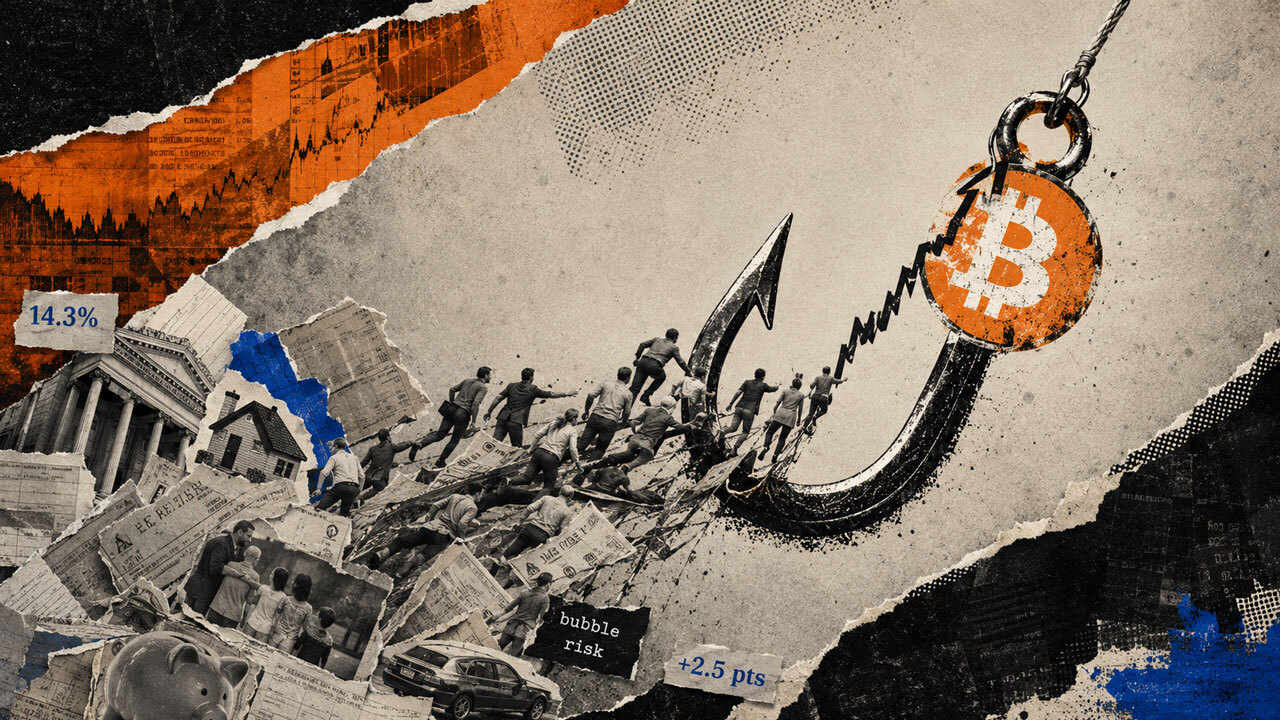
The experiment, conducted during the second quarter of 2025, divided participants into different information groups. One group learned that Bitcoin had returned 14.3% over the prior year, while another viewed a corresponding Bitcoin price chart. Control groups received either no information or details regarding other assets such as the S&P 500, GameStop, or Federal Open Market Committee inflation forecasts.
Respondents told Bitcoin's exact return increased their expected crypto return for the following year by 3.2 percentage points relative to the control group. Those shown the price chart increased their expectations by about 1.2 percentage points.
This shift directly influenced desired asset allocations. The Bitcoin treatments raised the amount respondents wished to allocate to crypto by about 2 percentage points from a control group average of 4.3%. Most of this additional exposure was drawn from money participants would otherwise have kept in cash, checking, or savings accounts.
Demographics, Knowledge, and Spending Behavior
Researchers observed that the response to past performance was strongest among individuals with limited prior knowledge of crypto. This suggests market rallies exert the greatest pull on potential investors who have not yet formed strong views, whereas individuals who already considered crypto a poor investment altered their desired allocations to a much lesser extent.
The study also analyzed broader household data, noting a wide demographic divide. Younger respondents and men exhibited higher ownership rates, though differences in financial knowledge and expected returns held stronger explanatory power than demographics alone.
Additionally, the research identified links between Bitcoin gains and the spending behavior of crypto-owning households. Price gains were associated with increased purchases of durable goods—such as computers and refrigerators—though these spending effects faded by the following quarter.