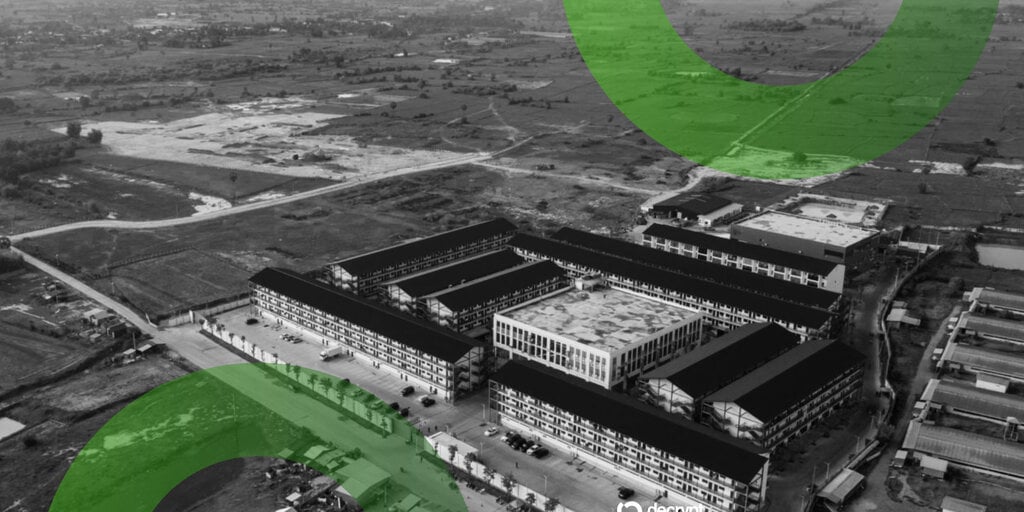
The Treasury Department's Financial Crimes Enforcement Network (FinCEN) has tied approximately $12.7 billion in suspicious financial activity to cryptocurrency investment scams operated from Southeast Asian compounds, according to an analysis and alert published Thursday.
FinCEN examined 33,904 suspicious activity reports filed between September 2023 and December 2025, submitted by roughly 1,300 institutions. Cryptocurrency money services businesses filed 55% of reports and flagged $5.5 billion in suspicious activity. Banks filed 41% of reports and flagged $6.4 billion, while securities firms accounted for the remainder at $784.5 million.
The volume and dollar amounts of reported suspicious activity increased substantially during the period. Reports grew from 590 worth $485.7 million in October 2023 to 2,482 worth $833.5 million in December 2025, representing average monthly increases of 10.9% in filing volume and 18% in reported sums. FinCEN noted that growth may partly reflect wider adoption of search terminology from its 2023 alert and cautioned that totals may include double-counted transfers, attempted payments, and filer errors.
Transaction Patterns and Asset Use
Scammers employed at least 22 different digital assets, most commonly Ethereum, USDT, and USDC. Blockchain analysis showed that regardless of what victims initially purchased, proceeds were nearly always converted to stablecoins and almost exclusively to USDT before being transferred through decentralized finance protocols or exchanges outside the United States. Scammers frequently reused collection addresses across multiple victims simultaneously, enabling some firms to identify the pattern.
Victim Demographics and Losses
Elder exploitation appeared in approximately 25% of reports, comparable to the 24.4% share of the population aged 60 and over, leading FinCEN to conclude that older adults are neither disproportionately victimized nor disproportionately robbed. Victims spanned all 50 states.
Losses were financed through retirement accounts, home equity lines of credit, second mortgages, and personal loans. Individual losses varied widely, with documented cases including a woman who sent nearly $640,000 from her retirement fund and another who lost more than $1 million over six months.
FinCEN included a section addressing victim self-harm risk following fraud discovery, directing affected individuals to the 988 Suicide and Crisis Lifeline.
Operations and Enforcement
The compounds operate primarily in Cambodia, Laos, and Burma, staffed by hundreds of thousands of people, many trafficked through fraudulent job advertisements, according to the United Nations. Interpol has warned that this operational model is spreading beyond Southeast Asia.
U.S. authorities seized more than $25 million tied to such schemes in the current year. Since 2015, FinCEN's Rapid Response Program has interdicted $1.8 billion and recovered just over $1 billion for 5,790 American victims.