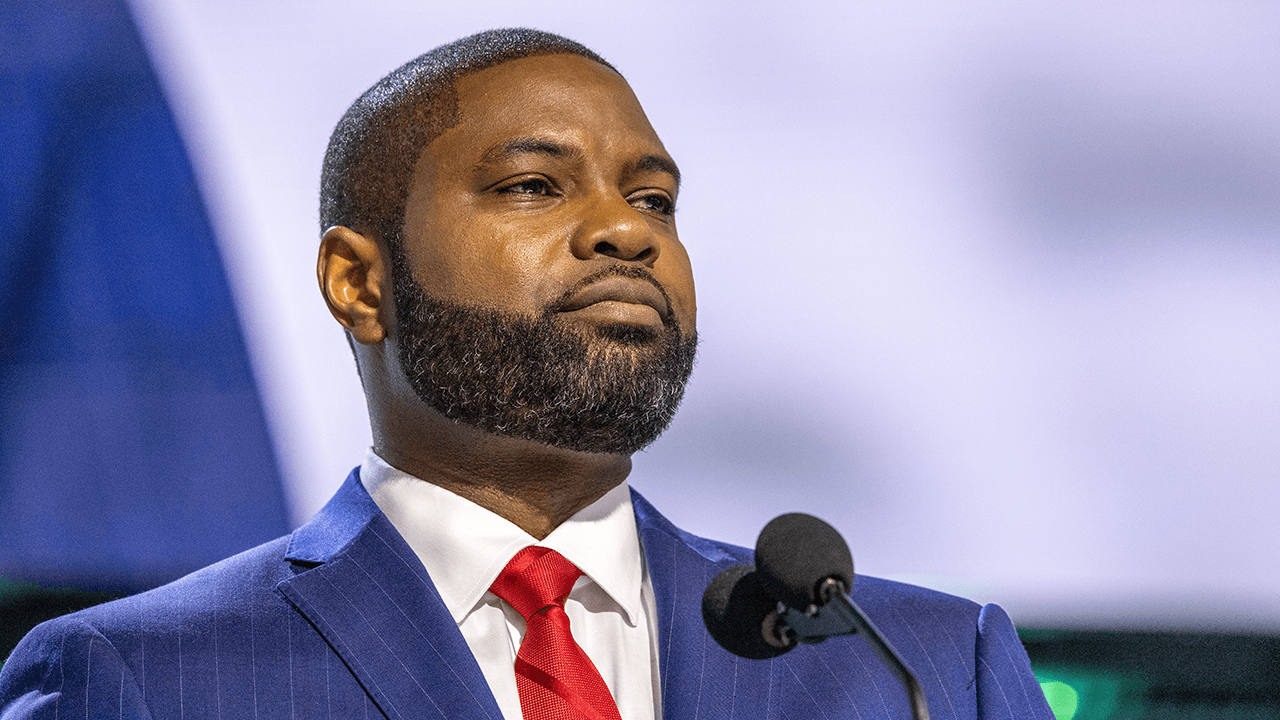
Florida congressman and gubernatorial candidate Byron Donalds wants governments to build bitcoin reserves while questioning whether lawmakers and regulators understand the digital asset markets taking shape around them. In an October 17, 2026 interview, Donalds outlined his vision for state-level cryptocurrency policy and expressed skepticism about federal capacity to oversee these emerging markets.
Donalds, who previously worked in banking, finance, and insurance, recalled his early encounters with bitcoin through clients seeking advice. He described his initial uncertainty about the asset's prospects, but said that early investors from 2014-2015 saw substantial value gains. Today, he views bitcoin primarily as a hedge against monetary policy rather than as a payment mechanism.
"I think bitcoin probably has more of a commodity feel now, but it's obviously been proven to increase substantially in value," Donalds said. "A hedge against central banking and monetary policy is probably its highest use, which gives it properties similar to gold."
Strategic Reserves and State Policy
Donalds introduced federal legislation to establish a strategic bitcoin reserve and advocated for similar initiatives at the state level. He distinguished between law enforcement asset seizures and deliberate reserve assembly, arguing that governments need ways to hedge against interest rate risk.
For Florida specifically, he proposed two priorities: creating a strategic reserve and enabling fractional ownership in real-world assets through digital exchanges. He did not outline specific rules or timelines for implementation.
On the question of whether previous federal bitcoin sales were mistakes, Donalds was measured: "It's probably too early to say. You could say now it was a mistake, depending on the valuation they sold it at, but I think it was more about what the decision-making process was at that time."
Regulatory Framework Concerns
Donalds expressed frustration with Congress's grasp of cryptocurrency policy. He criticized senators and their staff for lacking understanding of digital assets and blamed misinformation spreading across Capitol Hill. After a failed cloture vote on the CLARITY Act, a crypto market structure bill, Donalds predicted the House would pass similar legislation in the next Congress.
"CLARITY is about as good as you can get with the current iteration of Congress," he said. "I think you're probably going to need new leaders who can actually get us there."
He also questioned whether federal regulators have the capacity to oversee these markets effectively. "Does the CFTC have the manpower and the intellectual capacity to truly regulate these marketplaces? Or do we just have regulations for regulation's sake with no real ability to enforce them?" Donalds asked.
Opposition to Central Bank Digital Currency
While supporting government bitcoin holdings, Donalds firmly opposed a federal central bank digital currency. He cited concerns about financial surveillance and said he would maintain Florida's existing CBDC prohibition.
"I would never want the government to issue a digital currency where we're supposed to trust that the government would never peer behind the curtain at the financial transactions of Americans," he said.
Prediction Markets and Election Data
Donalds discussed prediction markets showing his election chances near 80 percent. When asked whether these markets were useful or essentially gambling, he distinguished between venues acting as market makers and genuine marketplaces matching opposing positions.
"If you just have a marketplace where people take two sides of an issue, that's a derivative contract, just like oil futures or orange juice futures or anything else," Donalds explained. He expected the Commodity Futures Trading Commission to prevail in jurisdictional disputes with states over prediction market regulation.
Long-Term Policy Outlook
Looking ahead ten years, Donalds warned that policy failure would mean development and investment in bitcoin, crypto, and prediction markets moving offshore because U.S. officials could not establish workable regulatory frameworks.
"I think failure is that a lot of the development in bitcoin, crypto markets, and prediction markets goes offshore, because Congress or the states can't figure out regulatory systems that allow these industries to grow while making sure the average consumer has baseline protections," he stressed.
Donalds advocated for industry self-regulation alongside basic consumer safeguards. When asked whether government capacity to regulate these markets would improve, he answered directly: "No. Unfortunately, I don't."