Blockchain analytics firm Chainalysis has identified a substantial gap between crypto activity in France and reported tax filings, raising questions about compliance as new EU regulations take effect.
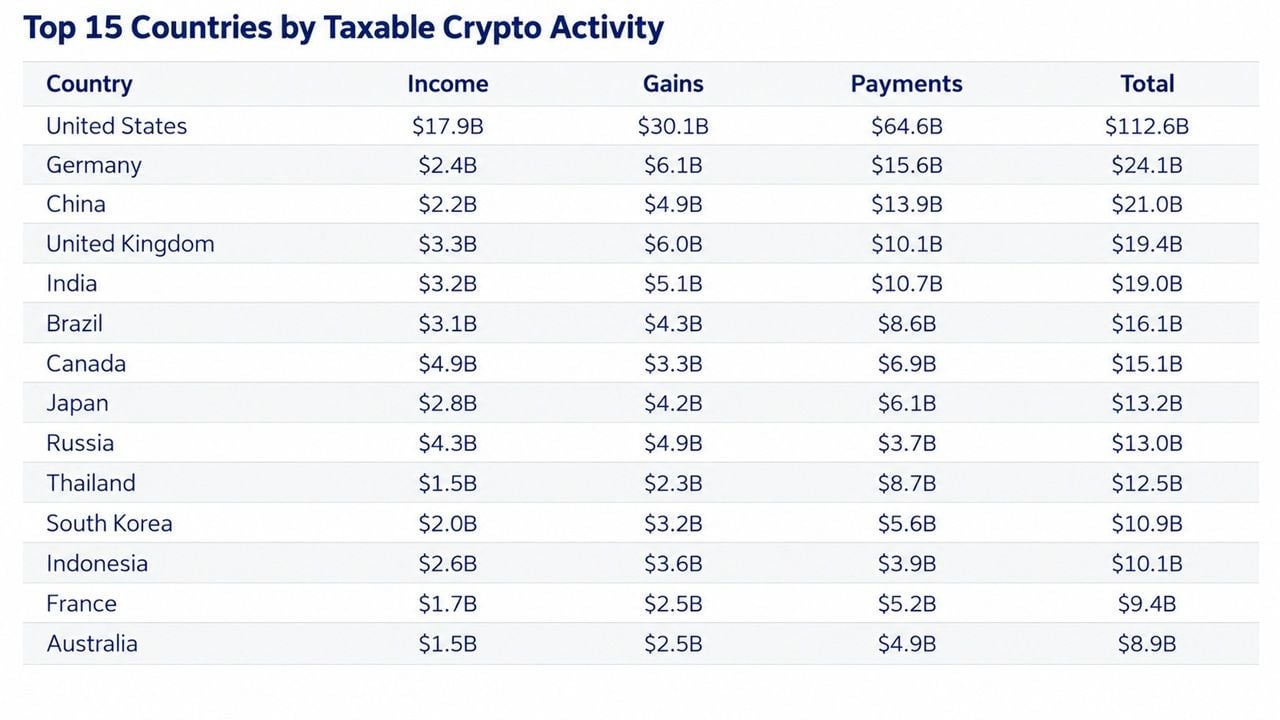
Chainalysis estimates France generated $9.4 billion in potentially taxable crypto activity during 2025, comprised of $5.2 billion in payments, $2.5 billion in capital gains, and $1.7 billion in income from sources such as mining and staking.
In contrast, French tax filings for the 2024 income year show only 24,000 individuals declared a combined €368 million ($427 million) in net gains. This represents an increase from approximately 7,700 taxpayers and €150.8 million ($175 million) in the previous year, but remains a fraction of the activity recorded on blockchain networks.
While the two figures are not directly comparable—since taxable activity differs from taxable profit—the disparity remains substantial. Chainalysis has tied the pattern to non-compliance rates exceeding 90% in some jurisdictions, noting that Sweden presents a similar example where more than 90% of people did not report crypto activity.
Tax Framework and Stakes
France imposes a flat tax rate of 31.4% on net capital gains from crypto, with an annual exemption threshold of just €305 (approximately $350), making the vast majority of realized profits technically reportable.
EU Data-Sharing Rules Begin in 2027
The European Union's eighth Directive on Administrative Cooperation, known as DAC8, took effect on January 1, 2026. The directive requires crypto service providers operating in member states to collect detailed identity and transaction data on users and report it to national tax authorities. Cross-border record exchanges among tax authorities begin on September 30, 2027.
DAC8 implements the Organization for Economic Cooperation and Development's Crypto-Asset Reporting Framework, placing crypto on the same automatic information-sharing basis that banking has operated under for years. However, the directive has faced legal challenges, including one mounted by crypto exchange Bull Bitcoin in France.
Structural Limitations of New Reporting Rules
Chainalysis calculates that the reporting framework captures only about 14% of global taxable crypto activity, leaving roughly 86% outside its practical scope. Self-custody wallets, decentralized exchanges, peer-to-peer transfers, and onchain income streams operate without intermediaries, generating taxable events that current reporting regimes do not capture.





