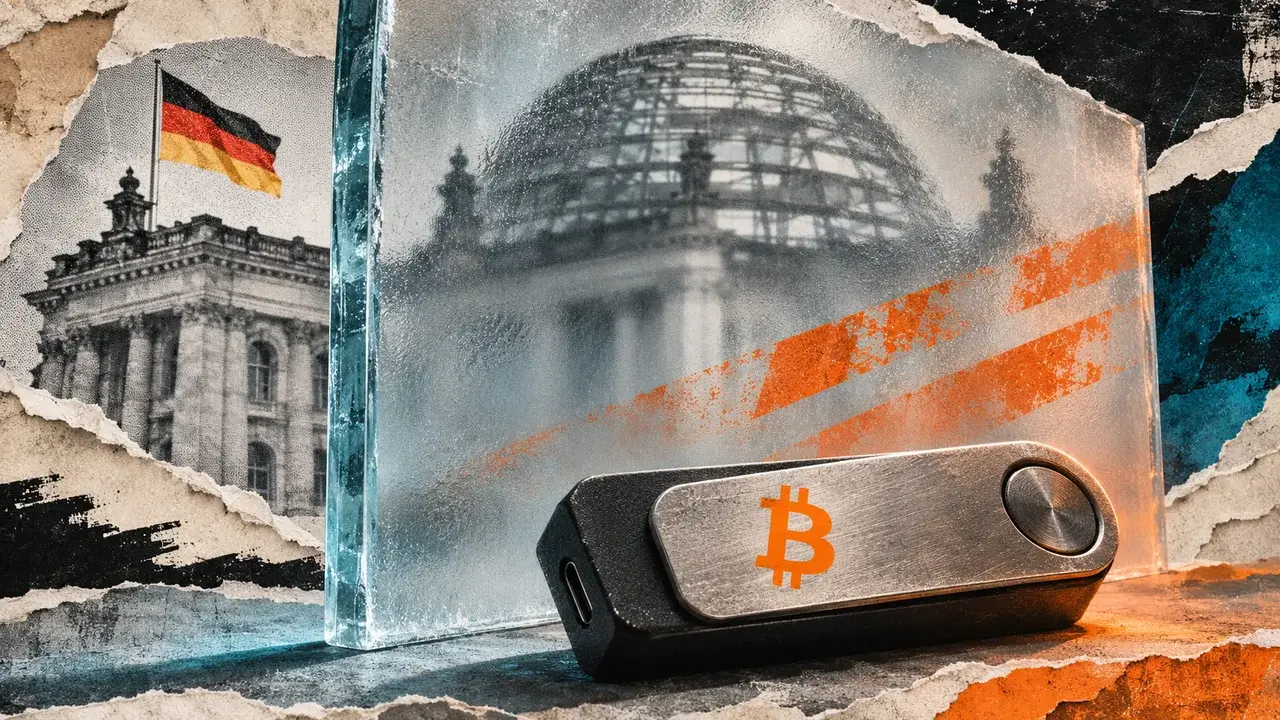
Germany's Bundestag approved legislation on November 12 that grants customs authorities the power to temporarily freeze cryptocurrency holdings suspected of unlawful origin, including assets held in self-custody wallets without access to private keys.
The measure advances a broader government effort to combat money laundering and financial crime by expanding investigative powers over assets of questionable provenance. Customs authorities would initially have 30 days to investigate suspicious holdings, with a finance court authorized to extend the freeze for an additional 150 days if investigators establish credible doubts about the assets' origin.
Asset Thresholds and Enforcement Mechanisms
The approved legislation identifies cryptocurrencies worth more than €100,000 as a general benchmark for significant holdings subject to freezing. Authorities may also combine closely connected assets when determining eligibility.
The enforcement approach differs based on asset custody. For cryptocurrencies held on centralized exchanges, German authorities could issue an attachment order requiring the custodian to restrict withdrawals from affected accounts, drawing on existing tax enforcement provisions.
Self-Custody Challenges
Enforcing restrictions against self-custody wallets presents greater complications, as users control the private keys needed to authorize transactions without relying on a financial intermediary. Germany's proposed framework addresses this by treating cryptocurrencies as attachable property rights under Section 321 of the German Fiscal Code.
Under this provision, authorities can serve wallet holders with a legal prohibition on disposing of assets, which would legally restrict transfers even though holders retain technical capability to move their cryptocurrency. However, identifying wallet controllers and distinguishing between individual and multi-party controlled addresses could complicate enforcement.
Germany's Blockchain Bundesverband flagged these enforcement challenges in earlier submissions, noting that determining who controls a wallet does not automatically follow from identifying the blockchain address itself.
Final Legislative Status
The legislation has not completed Germany's final approval process. As of November 18, the bill awaited consideration by the Bundesrat, Germany's chamber representing the states, and publication in the Federal Law Gazette.
The framework distinguishes temporary asset freezes from permanent confiscation, which would require a separate finance court decision establishing unlawful origin. The legislation's effectiveness against self-custodied holdings will ultimately depend on authorities' ability to identify wallet controllers and enforce legal restrictions.