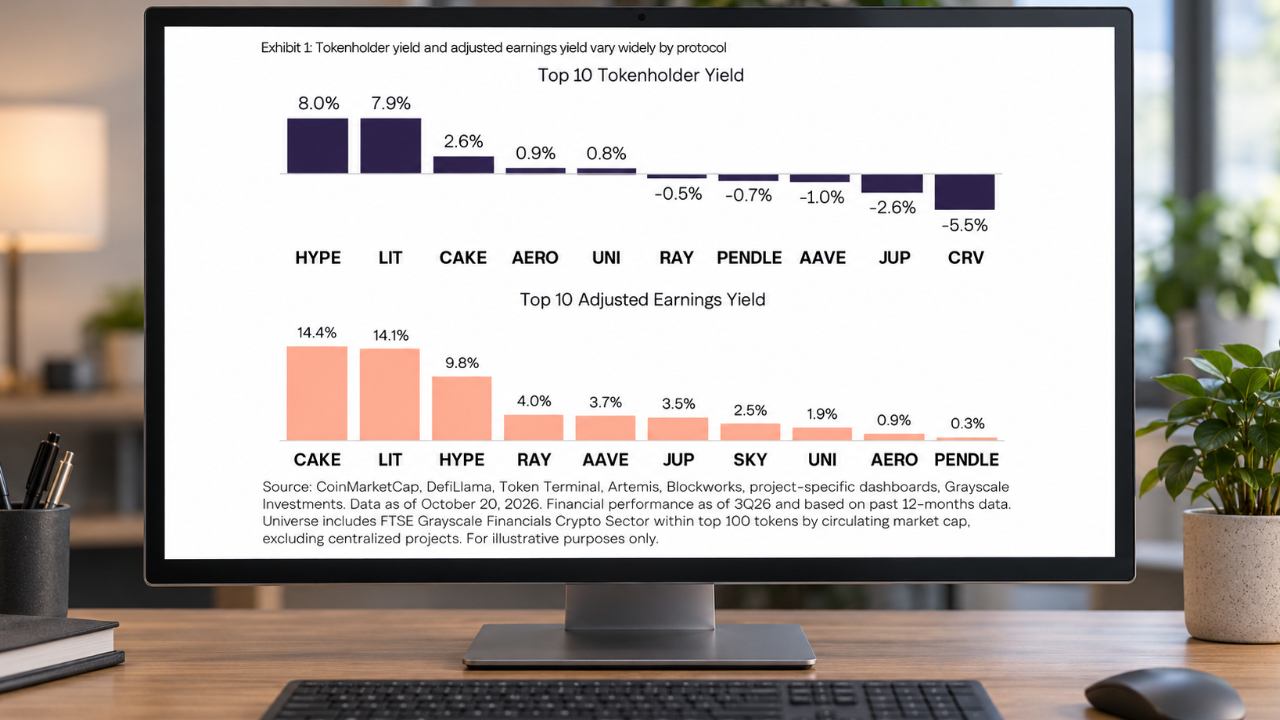
Crypto investors assessing income-generating protocols can compare earnings and distributions with market capitalization while accounting for supply inflation, according to Grayscale's earnings-based valuation framework published October 21.
Zach Pandl, head of research at the digital asset manager, outlined an approach that distinguishes income an application produces from the economic benefit attributable to its holders. Trading, lending, and other onchain financial activities generate fees, with expenses subtracted to leave earnings comparable across protocols.
Measuring Tokenholder Returns
Tokenholder yield calculation adds staking rewards and buybacks, subtracts issuance, and divides the result by circulating market capitalization. Adjusted earnings yield divides total earnings by market value, then subtracts circulating supply inflation.
Buybacks, token burns, and staking distributions return value through different mechanisms, while new token issuance and unlocks can offset their benefits. Grayscale distinguishes between buybacks, which reduce circulating supply, and burns, which reduce total supply.
Protocol Performance Comparisons
Among 10 protocols tracked in Grayscale's analysis as of October 20, HYPE led tokenholder yield at 8.0% while CRV ranked last at -5.5%. CAKE topped adjusted earnings yield at 14.4%.
Ethereum validators earn rewards for participating in network consensus, including proposing blocks and checking other validators' work. The network imposes penalties for missed duties and slashing for specified misconduct, linking compensation to participants' performance.
Bitcoin's Separate Valuation
Bitcoin receives different treatment in the analysis as a digital commodity and decentralized alternative to fiat currencies. Grayscale argues it should be valued as digital gold, with valuation indicators drawing on blockchain activity and historical benchmarks.