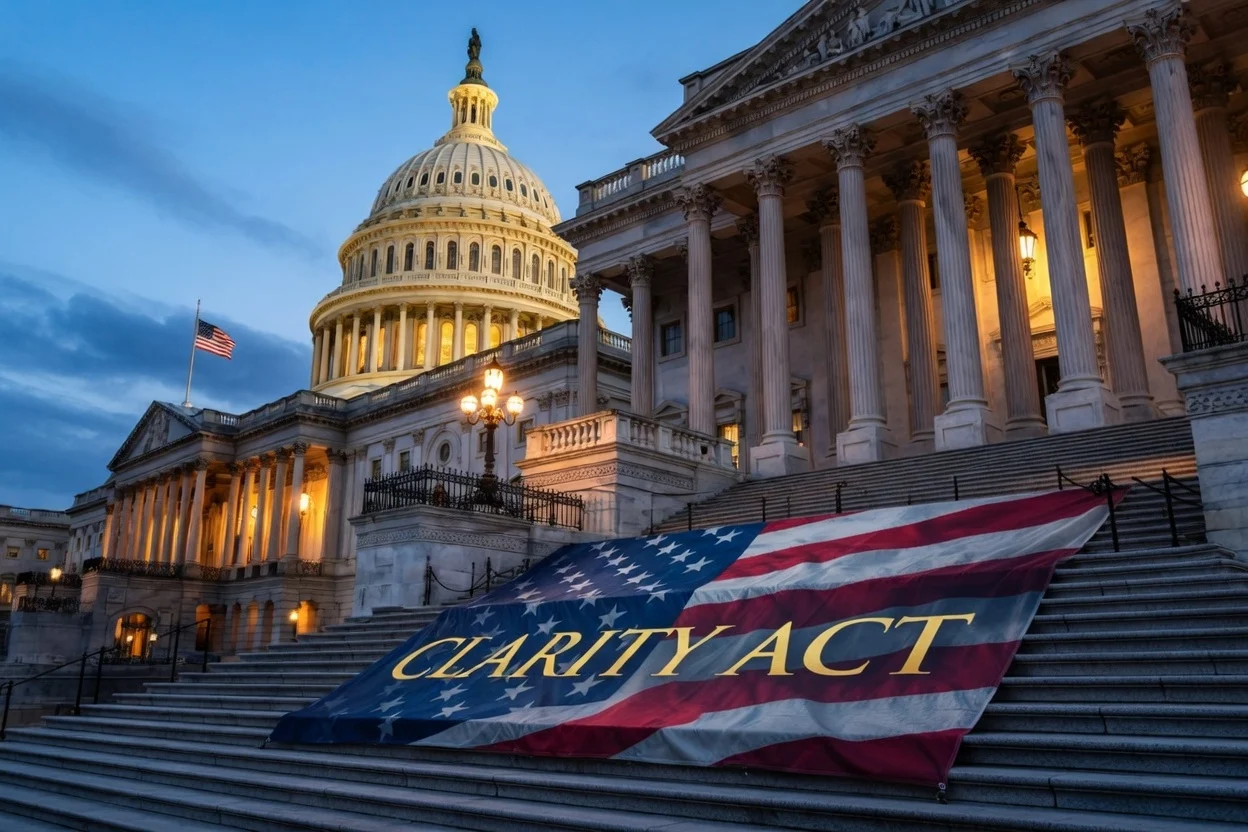
U.S. crypto regulation is progressing through multiple channels independent of the CLARITY Act's uncertain path through Congress, according to Grayscale Investments. Stablecoin legislation has already been enacted, while the SEC and CFTC have proposed or initiated rules affecting token issuance, securities, and derivatives.
Grayscale Head of Research Zach Pandl outlined the assessment in a Sept. 10 analysis, identifying developments across stablecoins, token issuance, tokenized securities, and perpetual futures as evidence that regulatory progress does not depend solely on comprehensive market legislation.
Stablecoin Framework Already in Place
Federal law has already established rules for payment stablecoins. President Donald Trump signed the GENIUS Act into law on July 18, 2025, creating a regulatory framework for their issuance. The law requires full reserve backing and monthly public disclosures about reserve composition, according to the White House. It also prohibits misleading claims that these tokens are federally insured, backed by the U.S. government, or legal tender.
SEC Proposes Fundraising and Tokenization Rules
The Securities and Exchange Commission proposed a fundraising framework on Aug. 18 that would permit crypto projects to raise capital under certain conditions. Regulation Crypto Assets would allow qualifying offerings of up to $5 million over four years or $75 million per 12-month period, with issuers providing disclosures and remaining subject to antifraud and antimanipulation provisions.
The proposal also addresses when an investment contract involving a crypto asset could cease to fall within securities regulation, using a conditional safe harbor centered on an issuer completing or permanently ceasing essential managerial efforts promised to purchasers. Public comments on the SEC proposal are due Oct. 20.
Additional Regulatory Developments
Other initiatives include proposed transfer-agent rules to accommodate blockchain ownership records and an innovation exemption under consideration to support certain onchain securities activities. The CFTC has opened regulated perpetual futures pathways through Kalshi and Coinbase.
The CLARITY Act faces a procedural hurdle with a Sept. 15 cloture vote requiring 60 votes to proceed. Grayscale argues that while congressional action would provide the most comprehensive framework, failure to pass CLARITY this year would not halt regulatory progress already underway. Only Congress can establish a comprehensive division of SEC and CFTC authority, the firm said.