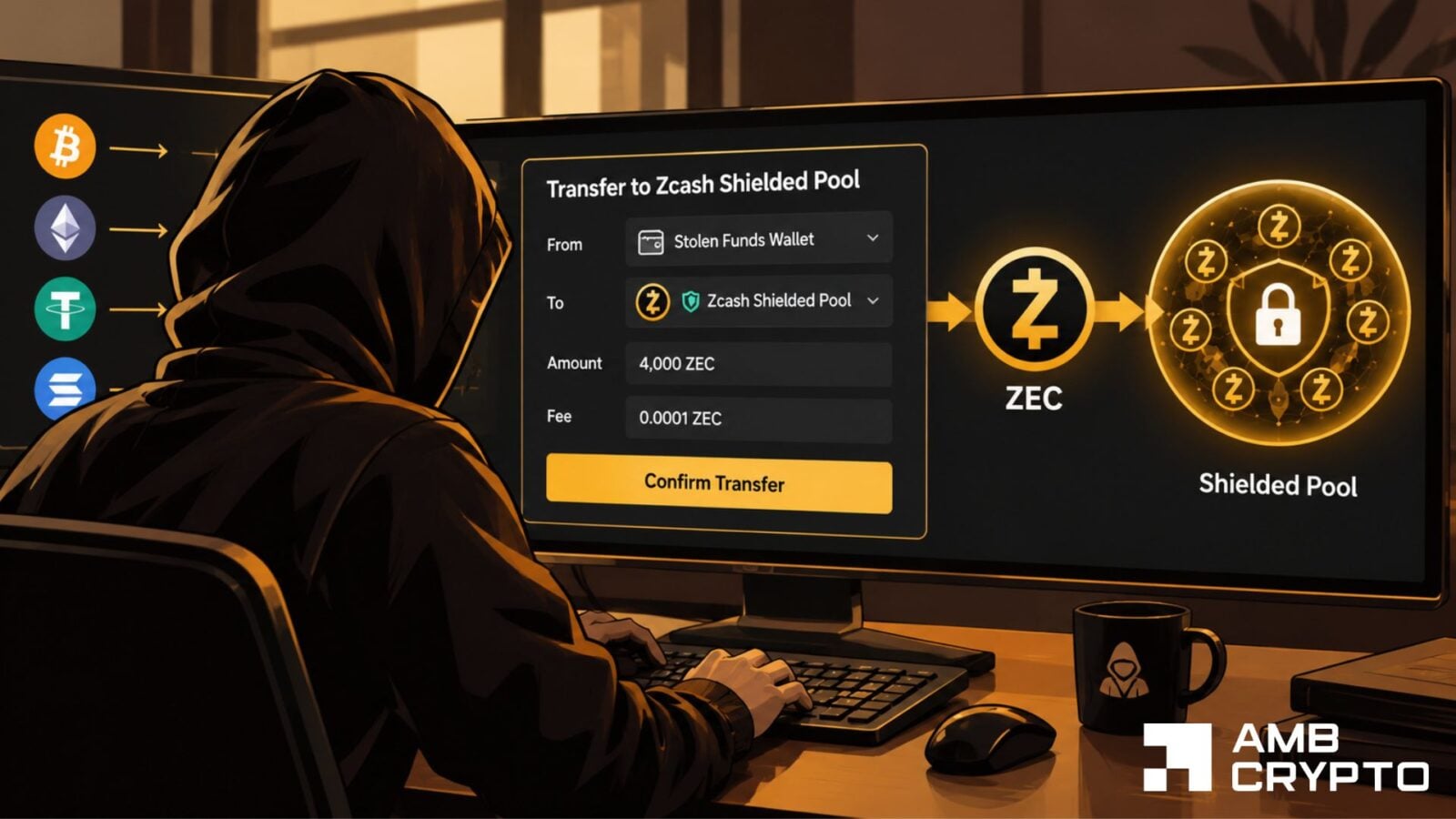
Stolen funds from multiple cryptocurrency breaches have been moved into Zcash's shielded pools, according to security researchers tracking the illicit activity. Funds from the recent Ledger supply chain attack and $12 million from payment firm Triple-A were identified entering Zcash's privacy pools, while approximately $4 million of the $28.3 million stolen from the Bitget exploit was similarly concealed.
Zcash differs from other privacy coins in that privacy features are optional rather than default. Users can choose to shield funds by routing them through privacy pools like Ironwood, making transactions untraceable once they reach these pools. This contrasts with Monero, where privacy is enabled by default and all transactions remain untraceable on all centralized exchanges.
The pattern mirrors concerns that prompted regulatory action against Monero, which was delisted from major exchanges including Binance and faced restrictions in the European Union due to its use in money laundering. Zcash's increasing appeal to threat actors raises similar questions about potential regulatory scrutiny.
Data shows that Zcash's shielded supply has increased by 16 percent since July, rising from 4.3 million ZEC to 4.96 million ZEC. Once funds enter these shielded pools, they become effectively untraceable, creating a barrier to traditional asset freezing mechanisms used by centralized platforms and coordinated compliance efforts.
Unlike centralized exchanges, privacy platforms typically lack screening mechanisms for sanctioned addresses, making it impossible to distinguish between legitimate and stolen funds once they are shielded. This has positioned privacy-focused platforms as primary alternatives for bypassing seizures and freezes on centralized platforms.