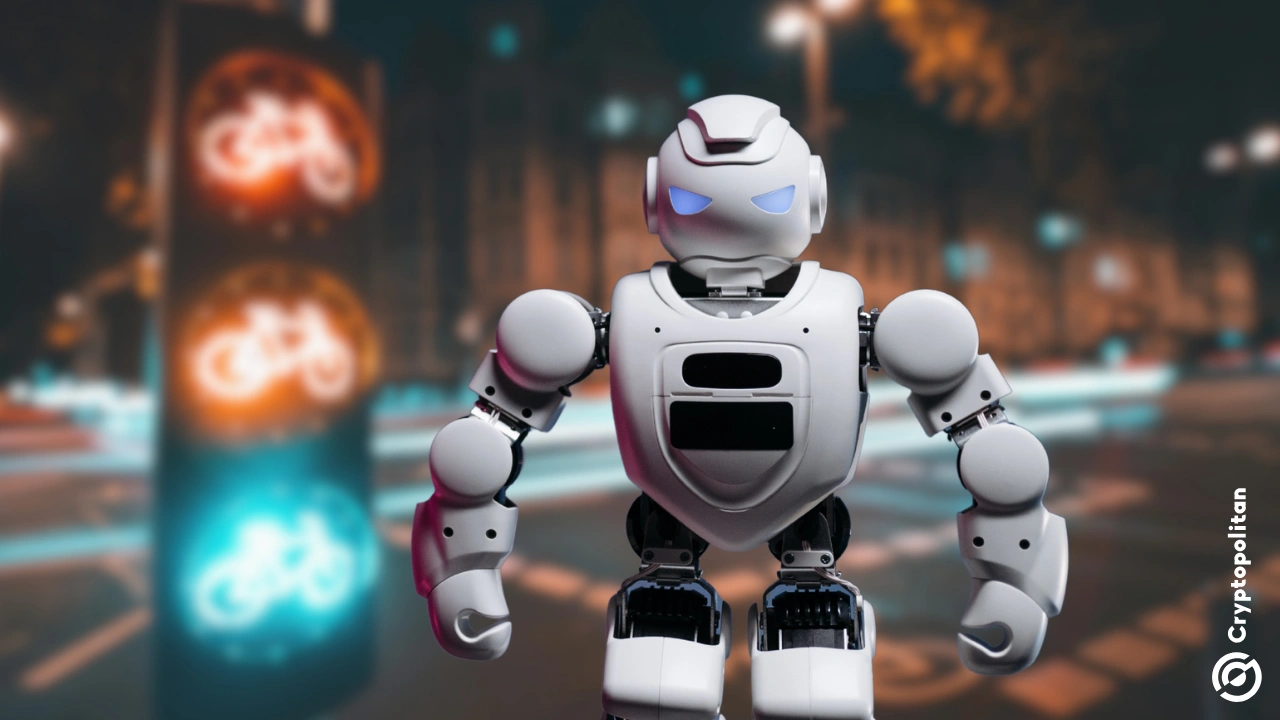
Hangzhou has deployed a unit of 15 humanoid robots to assist with traffic monitoring around the West Lake area, signaling a broader push in China to transition robots from exhibition halls to real-world street operations. The deployment coincided with the August 19 opening of the 2026 World Robot Conference in Beijing, which featured roughly 3,000 products.
Built by local Chinese startup SUPCON Information, the wheeled humanoid units—named the T2—stand 1.88 meters tall and weigh 98 kilograms. While the robots cannot make arrests or issue fines, they are programmed to guide pedestrians, provide directions, and record traffic violations such as helmetless e-bike riders, illegal passengers, vehicles stopping past marked lines, and pedestrians crossing against signals. Final enforcement decisions remain strictly with human officers.
The T2 robots feature two seven-jointed arms programmed with eight traffic-command gestures approved by the Ministry of Public Security, cycling through the gestures in sync with traffic signals. Using a system of cameras, radar, and onboard computing, each unit issues at least three voice warnings upon spotting a violation, and automatically files the incident report to the traffic police bureau's early warning center for human assessment.
SUPCON currently operates a fleet of 50 robots across eight cities and aims to expand that number to around 200 by the end of 2026. However, international expansion for these systems faces higher local certification and data-protection hurdles compared to typical technology exports like cars.
The street deployments align with a broader display of domestic robotics ambition in China. Public procurement remains a key driver for the sector, as public buyers represent a reliable customer base actively paying for humanoids while the broader industry continues to navigate commercial demand challenges.