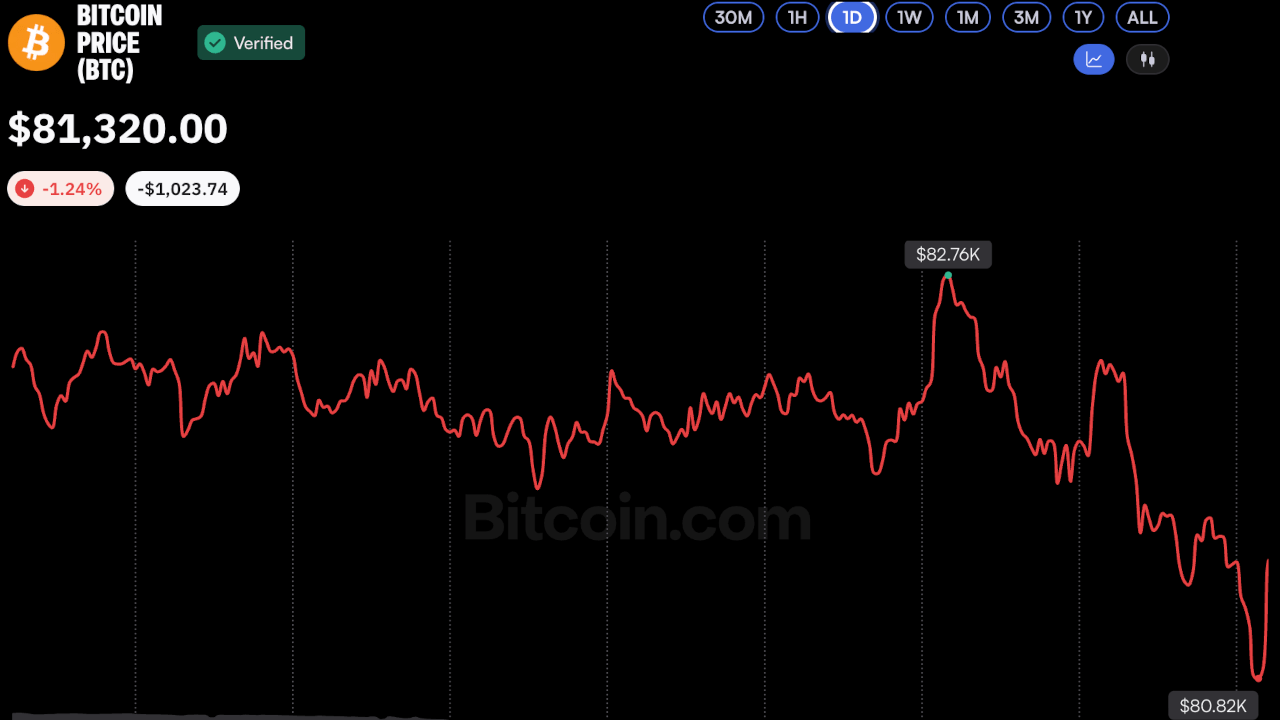
Bitcoin's price declined this week after new U.S. inflation data came in hotter than expected, pushing the cryptocurrency down 2% over a seven-day period to $81,473.
The pressure stems from recent economic reports. On Wednesday, U.S. consumer prices rose more than anticipated in September. The following day, the Labor Department's Bureau of Labor Statistics reported that U.S. producer prices increased in September at the fastest pace in more than four years.
These readings create a challenging environment for digital assets because elevated inflation suggests the Federal Reserve may maintain higher interest rates. Increased borrowing costs can restrict the liquidity needed for cryptocurrency rallies.
According to James Butterfill, Head of Research at European asset manager CoinShares, bitcoin's near-term setup is difficult but not fundamentally bearish. Butterfill wrote that the macro environment is caught between conflicting forces: inflation remains too elevated for the Fed to ease policy, while the economy is too resilient to force a pivot.
"Bitcoin and the broader digital asset market have moved lower on the resulting hawkish repricing, a reminder of how sensitive Bitcoin remains to monetary policy over short horizons," Butterfill stated in a Friday report.
Butterfill advised investors to adopt a longer-term perspective rather than react to individual weekly data points. He suggested viewing coming weeks as a data-driven range rather than a trend, and sizing digital asset exposure against strategic allocation rather than short-term market prints.
The Federal Reserve raised rates in September and is scheduled to meet at the end of the month.