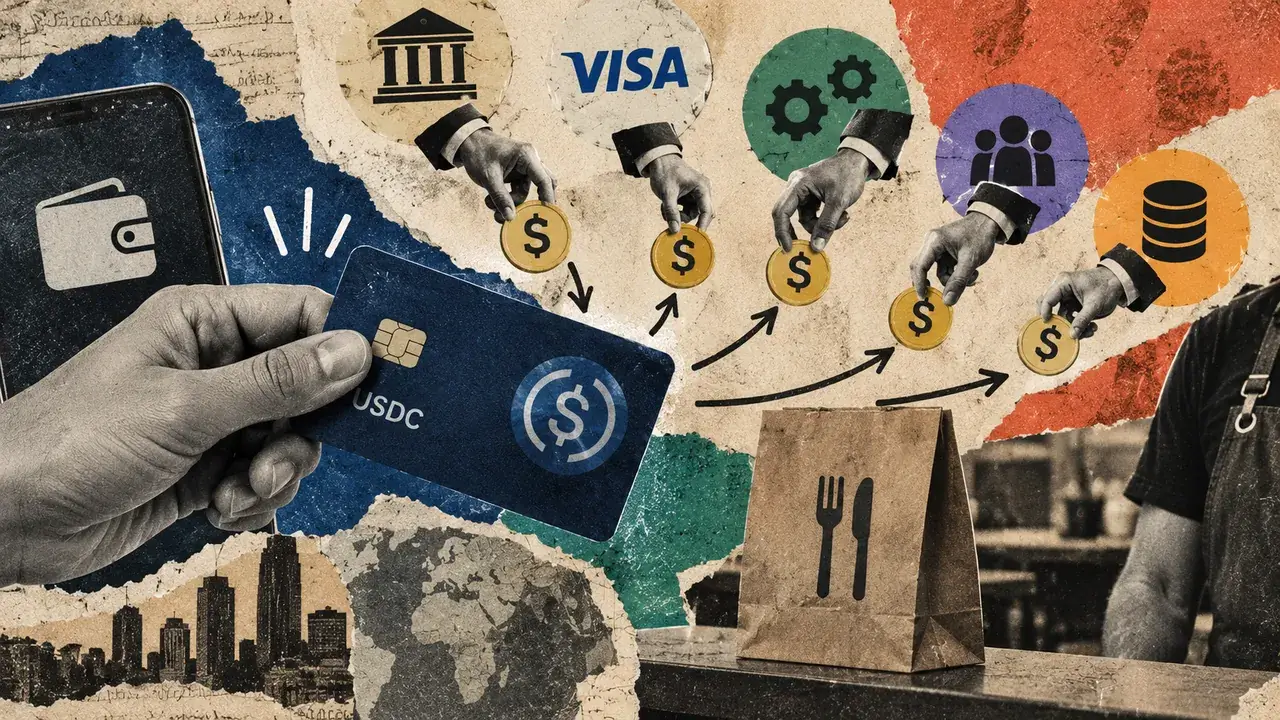
Stablecoin cards function like ordinary payment cards at checkout, converting digital dollars to local currency automatically while merchants receive fiat deposits through their normal payment processors. This arrangement creates multiple revenue streams for the companies operating the infrastructure.
On October 1, Visa reported more than 160 stablecoin-linked card programs, with payment volume increasing nearly 200% from the previous year. Companies such as Bridge, Wirex, and Rain provide the technical backbone, earning revenue through payment fees, currency conversion charges, settlement financing, and customer subscriptions.
Who Gets Paid and How
Multiple participants share responsibility for each transaction. The card issuer issues the physical card and manages issuing responsibilities. A wallet or card brand provides the customer-facing app and relationship. The payment network connects financial institutions and processes transactions. The merchant's payment provider enables card acceptance. Each participant relies on interchange fees, transaction fees, or other arrangements to cover their costs.
Bridge, acquired by Stripe in 2025, advertises a card product allowing program operators to retain 100% of interchange while charging additional transaction fees. This gives crypto wallets and financial apps a potential revenue source when customers spend their balances, though the actual profit depends on processing costs, fraud prevention, compliance expenses, and chargeback handling.
Wirex reported that programs using its infrastructure process more than $200 million in monthly spending, including partner activity, though the company has not disclosed specific transaction fees or revenue-sharing breakdowns.
Financing the Settlement Gap
Card payments create timing mismatches between authorization and settlement. Stablecoins can move around the clock, but card networks still require immediate funding when settlement obligations come due. This creates demand for short-term financing even when transactions begin with digital assets.
Rain uses a revolving credit facility from Credit Coop to fund Visa settlement obligations. Rain draws on the facility to cover payments, then directs incoming cardholder proceeds through smart contracts to repay the borrowing and interest. Visa claims this arrangement has reduced borrowing costs by as much as 30% for some participants, though underlying terms remain undisclosed.
The cost of short-term borrowing is minimal at scale. Borrowing $1 million at 10% annually costs approximately $274 per day or $68 for six hours. Faster settlement reduces financing costs without changing customer spending patterns, and the same capital can fund successive payment batches as earlier advances are repaid.
The Cashback Math
Rewards programs introduce additional costs that must be covered through multiple revenue streams. Britain's Payment Systems Regulator sets interchange caps at 0.2% for covered domestic consumer debit transactions and 0.3% for credit transactions. On a £100 debit purchase, this leaves at most 20 pence in interchange before the issuer's operating expenses. Offering 2% cashback would cost £2, creating a £1.80 gap that must come from subscriptions, conversion charges, or promotional budgets.
Wirex ties higher cashback rates to subscription tiers and token lockups, with rewards varying by market and customer plan. The customer's actual return depends on subscription costs, conversion spreads, and foreign-transaction charges, which can significantly reduce the benefit.
Customer Economics
Stablecoin cards offer the clearest advantage to people already receiving or holding digital dollars. Freelancers paid in stablecoins can spend earnings without repeatedly transferring money through exchanges and banks, avoiding some associated charges.
For others, the math is more complex. Someone earning euros faces additional currency conversion costs when spending stablecoin dollars and converting back. Even stablecoin earners must account for conversion spreads, card fees, and exchange rates applied at checkout. Dollar-linked tokens maintain stability against the dollar but their purchasing power in other currencies fluctuates with foreign-exchange rates.
Despite rapid growth in stablecoin card spending, publicly available data does not show whether customers continue using cards after introductory incentives end or whether providers consistently earn more than they spend serving those customers.
Stablecoin cards removed friction from spending digital dollars at ordinary merchants without requiring businesses to change their payment systems. The companies operating this infrastructure earn money from the same fee structures that have supported traditional card payments for decades, with blockchain-based settlement potentially reducing some costs. For customers, the benefit depends on total costs after fees, conversions, and rewards. For providers, success depends on whether enough customers find that benefit worth returning for.