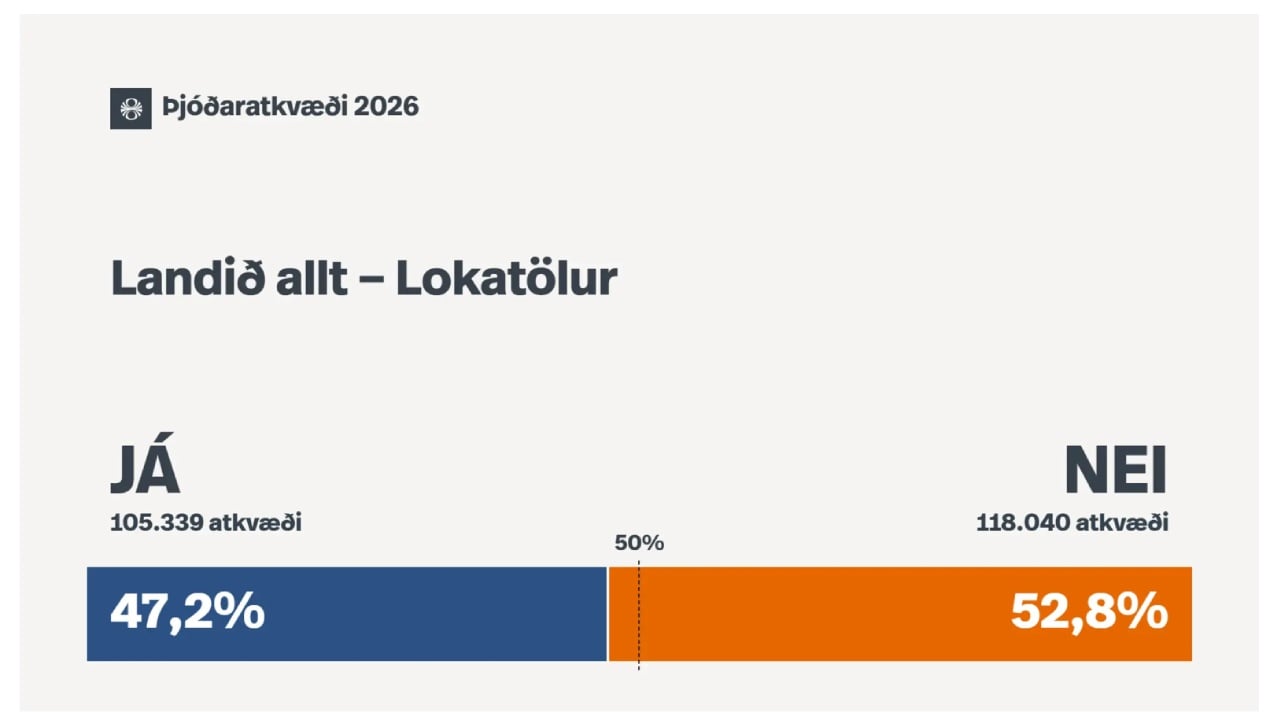
In a referendum held on August 30, voters in Iceland rejected a proposal to resume talks to join the European Union. According to data from the country's official broadcaster, RÚV, the No option secured 52.8% of the vote, totaling 105,339 votes. The vote highlighted a divide between urban areas that supported integration talks and rural communities that opposed them.
Had the Yes option prevailed, it would have restarted membership talks originally initiated in 2009 and later frozen. By rejecting the proposal, Iceland maintains its current status as a member of the European Economic Area (EEA) and a signatory of the Schengen Agreement. Consequently, the nation remains outside the umbrella of the European Union's Markets in Crypto Assets (MiCA) framework.
Currently, cryptocurrency activities in Iceland are governed primarily through general-purpose financial laws rather than a specialized regulatory framework. Ella Nummelin, Corporate Administrative Intern at IBCCS TAX CY, noted that Iceland's crypto laws have remained stable while other European jurisdictions adapt to MiCA.
However, Nummelin pointed out that this situation could change in the future. Although no formal timeline has been announced, MiCA is widely expected to be incorporated eventually into the EEA Agreement, which would bring Iceland into closer alignment with European crypto regulations.