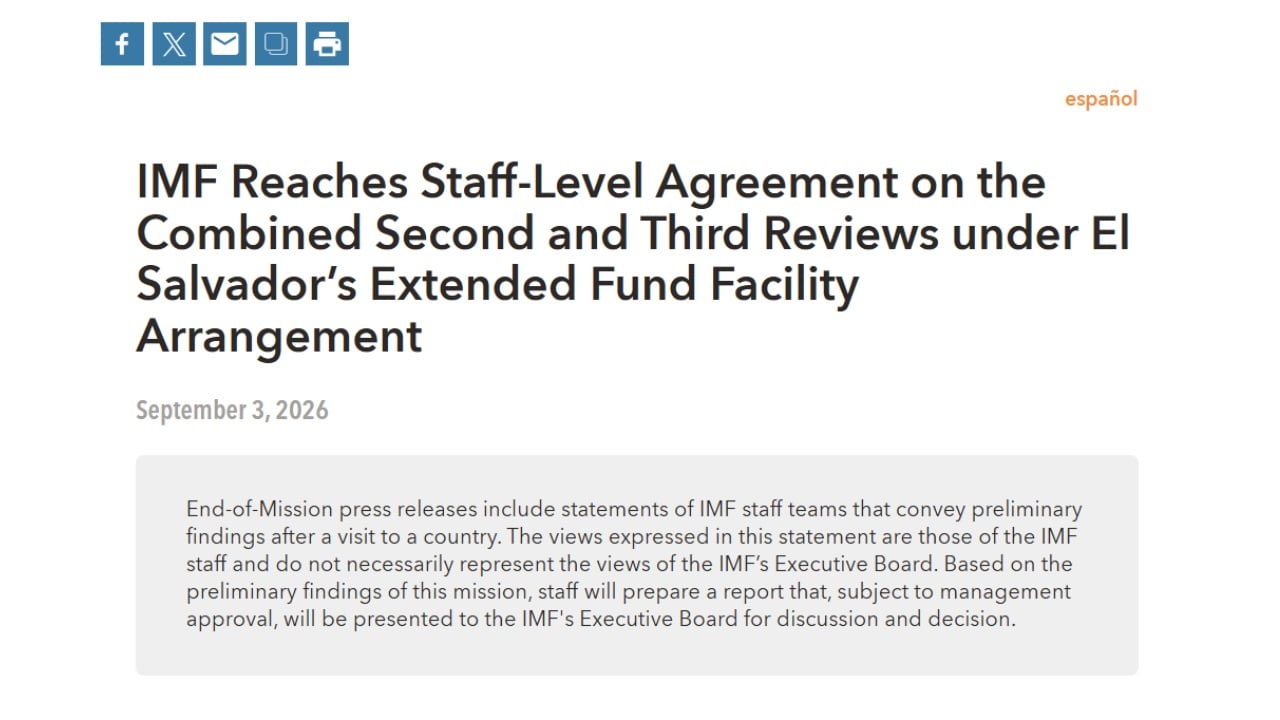
The International Monetary Fund has clarified the source of El Salvador's bitcoin holdings following a staff-level agreement that released $140 million as part of a 40-month funding facility. According to an IMF press release, documentation confirmed that bitcoin additions to the government's treasury came from private donations rather than public resources.
"Documentation has been provided verifying that Bitcoin accumulation since the first review reflects private donations and that no public resources were used," the IMF stated in its announcement on Thursday.
The fund noted that going forward, no additional bitcoin accumulation beyond the documented donations is expected. El Salvador and the IMF also reached an understanding to modernize the digital assets framework governing public-sector cryptocurrency holdings.
Chivo Wallet Resolution
The Chivo Wallet, El Salvador's state-backed digital wallet that had been flagged as a compliance concern, has been restructured to address IMF objections. The government has substantially reduced public participation in the platform, while operational control and majority ownership have transferred to private hands. El Salvador retains a minority stake and maintains custody of customer assets.
The IMF emphasized that the government had not made direct bitcoin purchases since the facility agreement was signed in February 2025, attributing earlier reserve increases to consolidation of bitcoin across various government-owned wallets.
IMF Funding and Economic Outlook
The $140 million release followed the second and third reviews of the extended fund facility. In its announcement, the IMF projected that El Salvador's gross domestic product growth would reach 4.5 percent in 2026.