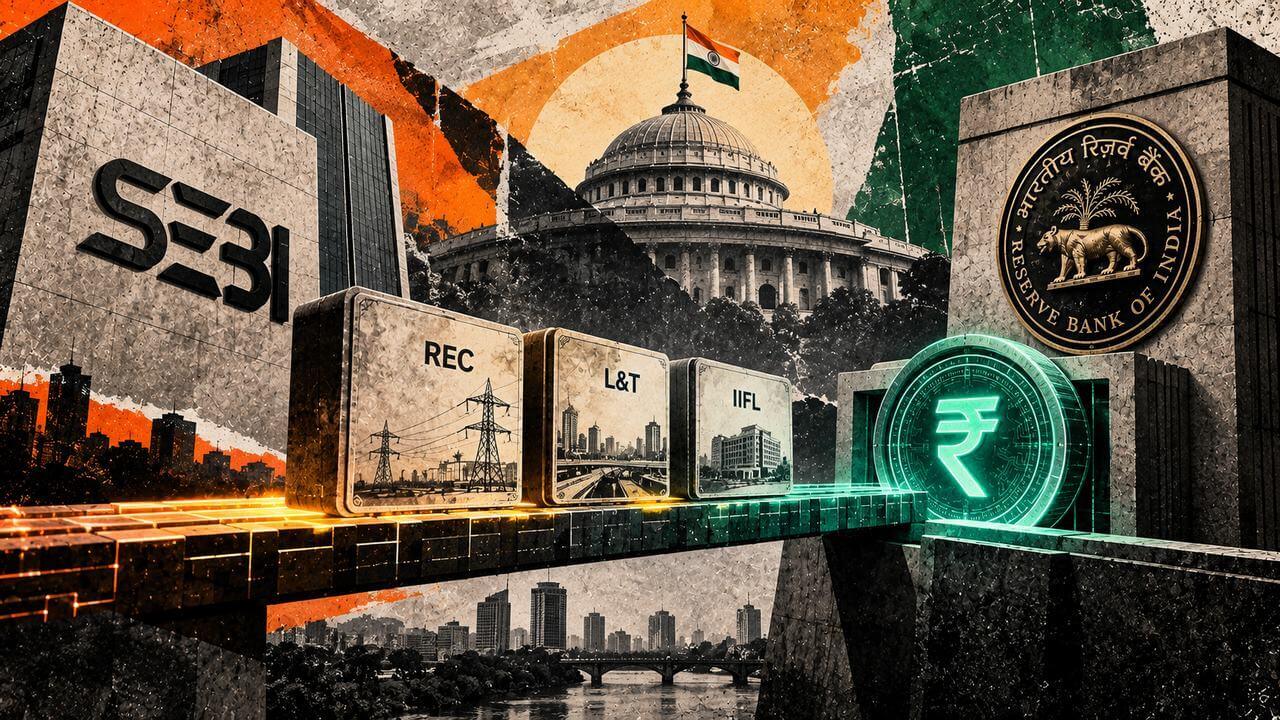
India's Securities and Exchange Board of India (SEBI) has launched a pilot program for tokenized corporate bonds, moving ₹1,025 crore through the first three issuances. REC Limited, L&T Limited, and IIFL completed tokenized bond issues on September 7 and September 9, comprising ₹500 crore from REC, ₹500 crore from L&T, and ₹25 crore from IIFL, according to SEBI's announcement on September 10.
The pilot, called Demat 2.0, issues corporate bonds as native digital tokens on a private, permissioned distributed ledger while using the Reserve Bank of India's wholesale digital rupee for payment settlement. The two legs are linked for atomic delivery-versus-payment, meaning both the bond and cash settle simultaneously, or neither settles at all. This synchronization removes the interval in which a buyer could send funds before receiving the security, or a seller could deliver the bond before receiving payment.
Existing terms preserved. The tokenized bond retains the same ISIN identifier, coupon, maturity, covenants, rating, and security as a conventional dematerialized bond. Issuer credit risk and investor rights remain unchanged, and regulatory treatment stays the same.
India's depositories own the network and remain the statutory, authoritative records of beneficial ownership. Depositories and stock exchanges operate the system's validating computers and manage investors' private keys, preserving the existing custody chain. Investors gain access to the tokenized ledger without managing private keys or replacing the depository record that establishes ownership.
Phase two to follow. The current stage covers institutional issuance and ledger-based asset servicing. Secondary-market trading and retail participation are reserved for Stage II. During the interim, an investor may exit through peer-to-peer or depository transfers, with payment occurring through the digital rupee or conventional banking channels.