Janus Henderson, with approximately $500 billion in assets under management, has become the latest major traditional asset manager to deepen its bet on blockchain-based finance by announcing a blockchain-native fund designed to track the Nasdaq-100 Index. The move comes as the tokenization market crossed $34 billion in September 2026.
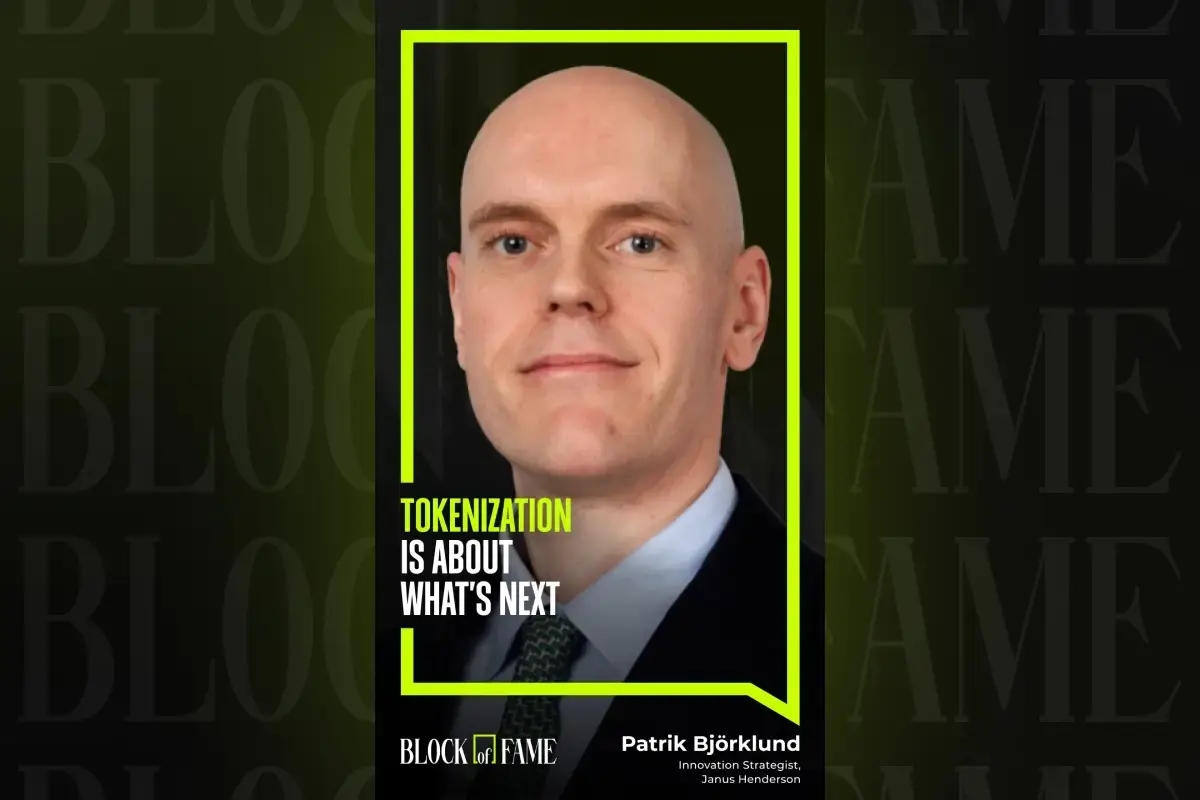
Until now, tokenization has largely focused on bringing familiar financial instruments, particularly US Treasuries and private credit, onto blockchain networks. However, bringing exposure to one of the world’s most recognised equity benchmarks onchain represents a different step, according to Patrik Bjorklund, Innovation Strategist at Janus Henderson.
“Treasuries and private credit have shown that tokenisation can work for cash-like and income assets, with a growing number of practical use cases for both traditional and decentralised market participants. The Nasdaq-100 is different because we’re now bringing a well-established mainstream equity exposure onchain,” Bjorklund said.
Why build a blockchain-native fund?
JQQQ, developed by Janus Henderson and tokenization infrastructure provider Centrifuge, is described as the first blockchain-native fund offering exposure to the Nasdaq-100 Index through an issuer-sponsored investment strategy. The fund seeks to track the Nasdaq-100 under a license from Nasdaq and launches exclusively on the Stellar blockchain.
“We wanted to build for where we think financial infrastructure is heading, rather than simply creating a digital representation of an existing product,” Bjorklund said.
The fund is structured as a segregated portfolio of Anemoy Capital SPC. Anemoy Asset Management serves as its investment manager, while Janus Henderson Investors US LLC acts as the sub-investment manager. This distinction is important because the launch does not mean Janus Henderson is the fund’s sole legal issuer or investment manager.
For Janus Henderson, the idea is not simply to make an existing investment product available in digital form. It is to build a fund around the capabilities of blockchain infrastructure from the outset.
Bjorklund said the difference lies in how investors can access and hold the product, as well as its potential to connect with other applications.
“Blockchain-native means eligible investors can subscribe and redeem in stablecoins and hold the fund onchain,” he explained. “Potentially, it can connect with wallets and DeFi applications as the ecosystem develops.”
This is an important distinction in how the industry approaches tokenization. A token representing an asset does not automatically make that asset useful across decentralised financial markets. Its underlying structure, ownership rights, transferability and compatibility with other platforms all matter.
For example, an onchain fund that supports stablecoin subscriptions and redemptions could offer a different investor experience from a conventional fund that only uses blockchain technology to maintain a digital record of ownership. The possibility of integrating such holdings into lending markets, collateral arrangements and programmable portfolios could expand their utility further.
“Not all tokenized equities are the same”
The growing interest in tokenized equities has also brought a more complicated debate to the forefront: what exactly does an investor own when they purchase a token linked to a publicly traded stock?
Bjorklund explains a clear distinction which will become increasingly important as more traditional assets enter blockchain-based markets.
“I think the debate is useful because it highlights that not all tokenised products are the same. There is an important distinction between a third party creating a token that tracks an equity and a licensed, issuer-sponsored investment product with clear ownership and investor protections,” he said.
The debate is becoming particularly relevant as some of the world’s largest publicly traded companies push back against plans to tokenize their shares through third-party platforms.
A notable example is the proposed tokenized stock trading venture between crypto exchange OKX and Intercontinental Exchange (ICE), the parent company of the New York Stock Exchange. The joint venture, OKXICE, initially identified 63 stock tickers representing 62 companies it intended to make available for blockchain-based trading.
However, the proposal has encountered considerable resistance from the companies whose shares were selected. By November 3, a total of 56 companies had objected to the initiative. More importantly, 49 of the original 62 companies had opted out, representing approximately 79% of the initial roster. Seven other companies outside the original selection had also objected.
The list includes some of the biggest names in global finance and technology, including Microsoft, Alphabet, Amazon, Nvidia, Tesla, JPMorgan Chase, Goldman Sachs, Coca-Cola, Walmart and Netflix.
What is holding tokenized finance back?
Despite the momentum, blockchain-native investment products are still far from becoming routine alternatives to conventional funds.
Explaining the challenges, Bjorklund said, “I think it comes down to three things: regulatory clarity, interoperability, and making it much easier for investors who aren’t already onchain to access these products. We’ll know we’ve made real progress when onchain funds are routinely available through third-party wallets and platforms, and owning one feels as straightforward as owning a conventional investment product.”
The next phase of tokenization
The launch of JQQQ comes at a time when the tokenization debate is moving beyond whether traditional assets can be represented on blockchain networks. The more important question is what financial institutions can build around them.
For years, tokenization was largely presented as a way to bring existing assets into a digital environment. But as more established financial institutions experiment with blockchain-native products, the focus is gradually shifting towards the infrastructure and financial applications that can emerge once those assets are onchain.
Bjorklund believes one of the biggest misconceptions about tokenization is that its purpose is simply to put existing assets on a blockchain.
“The more interesting question is what can be done with an asset once it is there, as onchain assets become part of a broader programmable financial ecosystem,” he said.
That shift could determine how far tokenization moves beyond institutional experiments and into mainstream finance.
Janus Henderson’s Nasdaq-100 fund is not, by itself, proof that conventional index investing is about to move entirely onchain. Nor does it resolve the regulatory and infrastructure challenges facing tokenized equities. But it does offer a glimpse of how established asset managers are approaching the opportunity—not merely by creating digital representations of existing products, but by considering how investment products can be issued, accessed and potentially used within a blockchain-based financial system.
Ultimately, the success of tokenization may not be measured by how many traditional assets are brought onchain. It may depend on whether those assets become more accessible, more interoperable and more useful once they get there.