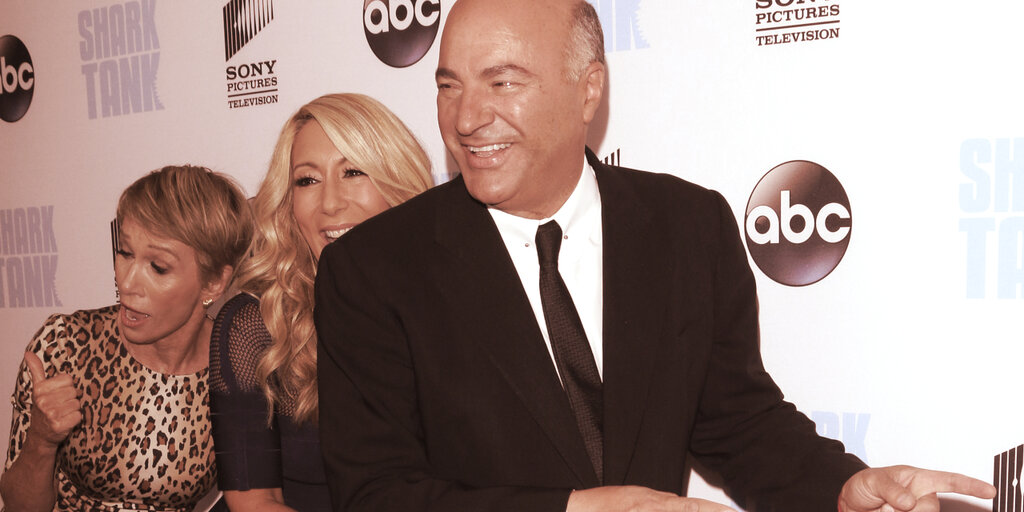
Kevin O'Leary said Bitcoin could reach $1 million if the cryptocurrency industry resolves a significant security threat posed by quantum computing. Speaking at Avalanche Summit in New York, the investor described quantum computers powerful enough to break encryption as a barrier preventing institutions from treating Bitcoin as a core holding rather than a novelty asset.
The theoretical risk, nicknamed "Q-Day" by the industry, refers to the moment when a sufficiently powerful quantum computer could potentially forge the digital signatures that secure Bitcoin wallets. No quantum computer capable of such an attack currently exists, though estimates for when one might emerge range from the early 2030s to never.
O'Leary acknowledged that quantum computing concerns are already influencing institutional investment strategies. Large funds tend to cap Bitcoin exposure around 3 percent of their portfolios, treating it similarly to gold rather than a core holding.
Shifting Strategy on Blockchain Selection
O'Leary stated that his previous thesis was incorrect. Eighteen months ago, he believed Bitcoin and Ethereum alone would capture the industry's upside, assuming everyone would eventually standardize on Ethereum. He now expects different industries to adopt different blockchains based on which exchange adopts them first for tokenized assets.
Following the U.S. Securities and Exchange Commission's issuance of its "Innovation Exemption," which permits approved platforms to trade tokenized stocks on blockchains, O'Leary suggested digitization would become the 12th sector of the S&P 500 because it serves all other sectors.
Investing in Infrastructure Over Individual Platforms
Beyond cryptocurrency, O'Leary emphasized investing in the infrastructure supporting emerging technologies rather than betting on individual winners. In the artificial intelligence space, he is focusing on the power grid underlying AI systems instead of individual AI models.
His power-related holdings include BitZero, a former Bitcoin miner now listed on Nasdaq as a power company with operations in Norway, Finland, Alberta, and Utah. He also disclosed taking his first-ever position in uranium, citing expectations that small modular reactors will be deployed at U.S. data centers supporting AI infrastructure.
Regulatory Outlook
On crypto regulation, O'Leary does not expect the Clarity Act, which would determine which U.S. agency oversees crypto trading, to advance before midterm elections. He suggested Congress may revisit the issue on a bipartisan basis after the midterms.