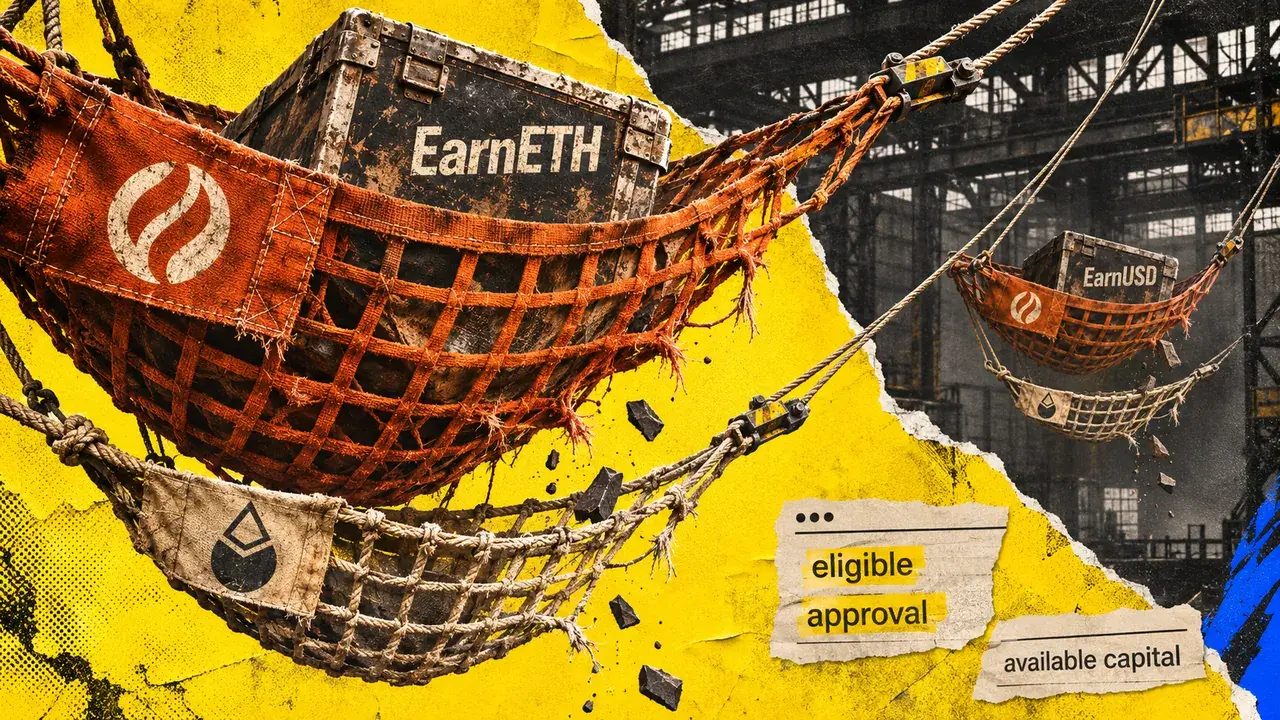
Lido Earn's DeFi vaults added a new layer of loss protection on November 5, 2026, introducing a tiered defense system for depositors. The protection mechanism, provided by Firelight, an onchain protection protocol, now absorbs eligible approved losses before drawing on the existing Lido DAO buffer.
According to Lido's November illustration, combined protection covers approximately 7.2% of EarnETH assets and 12.1% of EarnUSD assets. However, this coverage remains subject to eligibility requirements, approval processes, and available capital.
How the Protection Works
Lido Earn's vaults deploy deposits into DeFi strategies. EarnETH allocates ETH and stETH, while EarnUSD offers dollar-denominated strategies. Users receive tokens representing vault shares, whose value reflects performance.
The protection operates in two layers. Firelight provides the first line of defense, absorbing eligible losses up to 5.7% of EarnETH's total value locked and 8% of EarnUSD's TVL during the initial 30-day period. The DAO buffer forms the second layer, holding shares in the affected vaults that can be burned to offset losses for remaining depositors.
Eligibility and Exclusions
Firelight's coverage applies only to specific failure categories: smart contract exploits, oracle failures, governance exploits, and bad debt or redemption failures caused by protocol mechanism failures. Ordinary price movements, liquidations at accurate prices, stolen keys, user error, and offchain issues are excluded.
An independent consortium of five security and risk firms must approve any loss assessment before Firelight initiates a payout. Approved payments draw first on Firelight's reserve, then on staked capital.
Capital Limits and Depositor Exposure
For the first 30-day period beginning November 5, Lido's November illustration showed EarnETH assets at $212.9 million with combined protection of $15.4 million. EarnUSD held $50.3 million in assets with combined protection totaling $6.1 million.
The DAO buffer operates independently under its own mandate. Once a loss of at least 1% of a vault's TVL is confirmed, the Growth Committee can burn DAO-held shares to offset losses for other depositors. This mechanism is not restricted to specific failure categories, though the mandate can be changed by DAO vote.
Any loss exceeding the combined protection from both layers, including amounts above market limits or beyond available capital, can remain with depositors. Lido states neither layer constitutes insurance or a guarantee, and that Firelight protection provides depositors no right of action against Firelight parties.