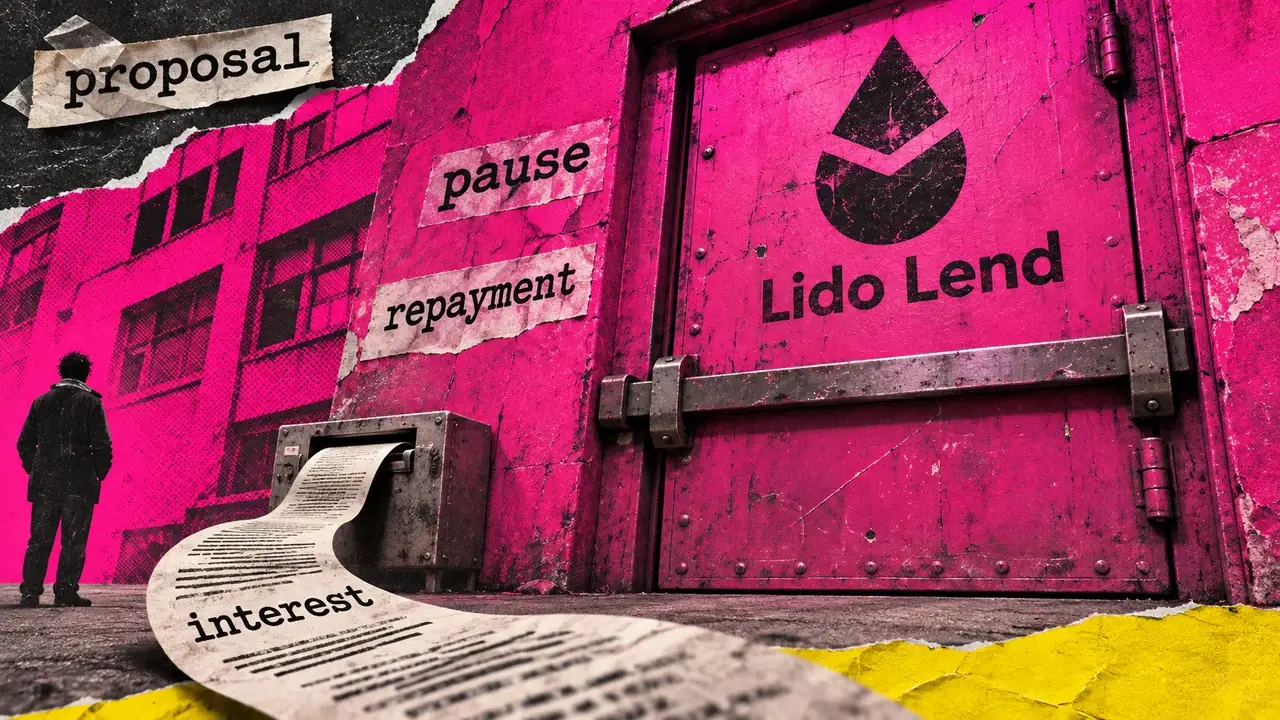
Lido Lend, a proposed lending protocol built on a modified version of Morpho Blue, includes emergency pause mechanisms that could block borrowers from repaying loans and prevent lenders from withdrawing funds, while interest continues to accrue on blocked balances.
Under the protocol's design, a controller pause would stop repayment, liquidation, and lender settlement simultaneously. Notably, the pause does not halt the interest clock—borrowers would emerge from a pause with larger debt balances reflecting accrued interest during the lockout period.
How the Emergency Pause Works
The protocol distinguishes between two restrictions. A Guardian ban stops new borrowing and collateral maturation but allows repayment and withdrawals to continue. A broader market freeze stops new borrowing and collateral activation but preserves repayment and lender settlement rights.
Only the full controller pause blocks repayment alongside other functions. The core accounting system calculates interest based on elapsed time, meaning a successful interest update after a pause resumes would reflect the entire locked period.
Who Controls the Pause
The proposed Lend Emergency Brakes Committee, operating on a 3-of-6 signing threshold, could trigger pauses through a CircuitBreaker system. However, the committee cannot select pause duration, extend it, or end it early. Duration configuration falls to a separate administrator with bounds set between one minute and 60 days.
The proposal includes a Reseal Manager mechanism that could make a pause indefinite if Dual Governance moves outside its normal state, effectively converting a time-limited pause into an open-ended one without requiring a fresh governance vote at that step.
Current Status
The protocol's core contracts are deployed on Ethereum mainnet, but the Lido DAO must formally accept the protocol. The first proposed market would be WETH/wstETH and would launch with one contributor-run Guardian under a 1-of-1 quorum arrangement. As of the November 14 signer declaration, no completed acceptance vote or market creation had been announced.
The Risk Steward Committee could impose market freezes through a dashboard but could only tighten, not loosen, controller settings. An Operational Committee would handle actions such as unfreezing through bounded Easy Track motions, subject to objections from LDO holders.