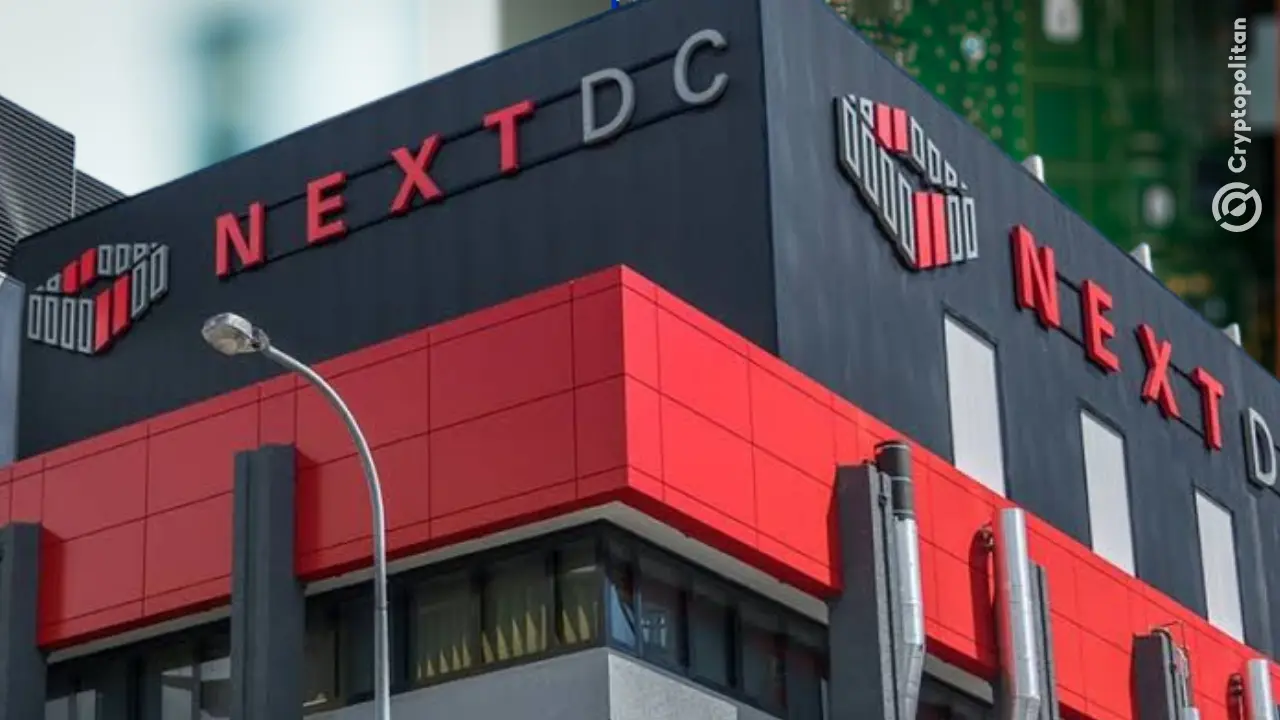
NextDC, an Australian data center operator, announced on August 27 that it achieved record contracting performance, increasing contracted capacity by three times to 740.1 MW while posting a profit for the year. The expansion reflects surging demand from the AI infrastructure boom, though it is putting increasing pressure on power and water supplies.
The company swung from an A$60.5 million loss in the prior financial year to an A$82.1 million statutory profit for the year ended June 30, 2026. Contracted utilization surged by 202%, and capital expenditures reached A$3.4 billion, double previous levels. Core business metrics also improved, with net revenue growing 16% to A$405 million and underlying EBITDA rising 15% to A$248.8 million.
Record Contracting and Future Commitments
NextDC's forward order book reached 565.1 megawatts, over three times current billing utilization. Chief Executive Officer Craig Scroggie called FY26 "the largest contracting year in NEXTDC's history." The company has secured A$9.75 billion in new capital since August 2025, with pro forma liquidity growing to A$8.7 billion. New facilities opened in Kuala Lumpur in May 2026, and construction has begun on a Tokyo location.
Global AI Infrastructure Expansion
The scale of data center growth extends worldwide. According to Gartner estimates, global data center electricity consumption is projected to increase from 447 terawatt-hours in 2025 to 565 terawatt-hours in 2026, representing 26% growth. McKinsey forecasts that global data center energy demand will rise from approximately 82 gigawatts in 2025 to around 220 gigawatts by 2030, with AI accounting for a projected increase from 44 gigawatts to 155 gigawatts, roughly 70% of total demand.
Global cumulative capital expenditures related to data centers could exceed $1.7 trillion through 2030, according to McKinsey.
Australian Grid Under Pressure
NextDC's expansion is colliding with power constraints in Australia. New South Wales and the Commonwealth are reviewing data center connections to the power grid and energy consumption. The NSW consultation process was expected to close by September 14, 2026, with national recommendations anticipated to take effect in 2027.
According to a report by Oxford Economics Australia and the Australian Energy Market Operator, data center usage on Australia's National Electricity Market is expected to rise from 5.1 terawatt-hours in FY26 to 15.5 terawatt-hours by FY30 and 33.7 terawatt-hours by FY36, with New South Wales and Victoria accounting for over 85% of this consumption.
Infrastructure and Regulatory Challenges
Electricity costs represent the largest operating expense variable in the AI colocation industry. Current grid connection wait times average four years, with some sites experiencing delays up to ten years. Lead times for critical equipment including chillers, transformers, generators, and switchgear have more than doubled since 2019 and can exceed three years.
The Australian Energy Market Commission has recommended that data centers develop new renewable generation capacity, secure firming capacity, and provide greater demand flexibility. Commission Chair Anna Collyer stated: "Very large loads need to be planned, connected and operated as part of an integrated system."
Broader Political Landscape
Tensions around data center expansion extend beyond Australia. In the United States, a Gallup poll found that 71% of Americans oppose large data facilities near their homes, including 48% who strongly oppose them. Texas Governor Greg Abbott ordered regulators to pause some projects while auditors assess electricity needs, water use, and community impact.
The challenge facing NextDC and the broader industry reflects a central tension in the AI infrastructure boom: demand is established and already being booked through binding contracts, yet power availability, regulatory changes, and public acceptance increasingly determine how quickly that demand can be converted into operational capacity.