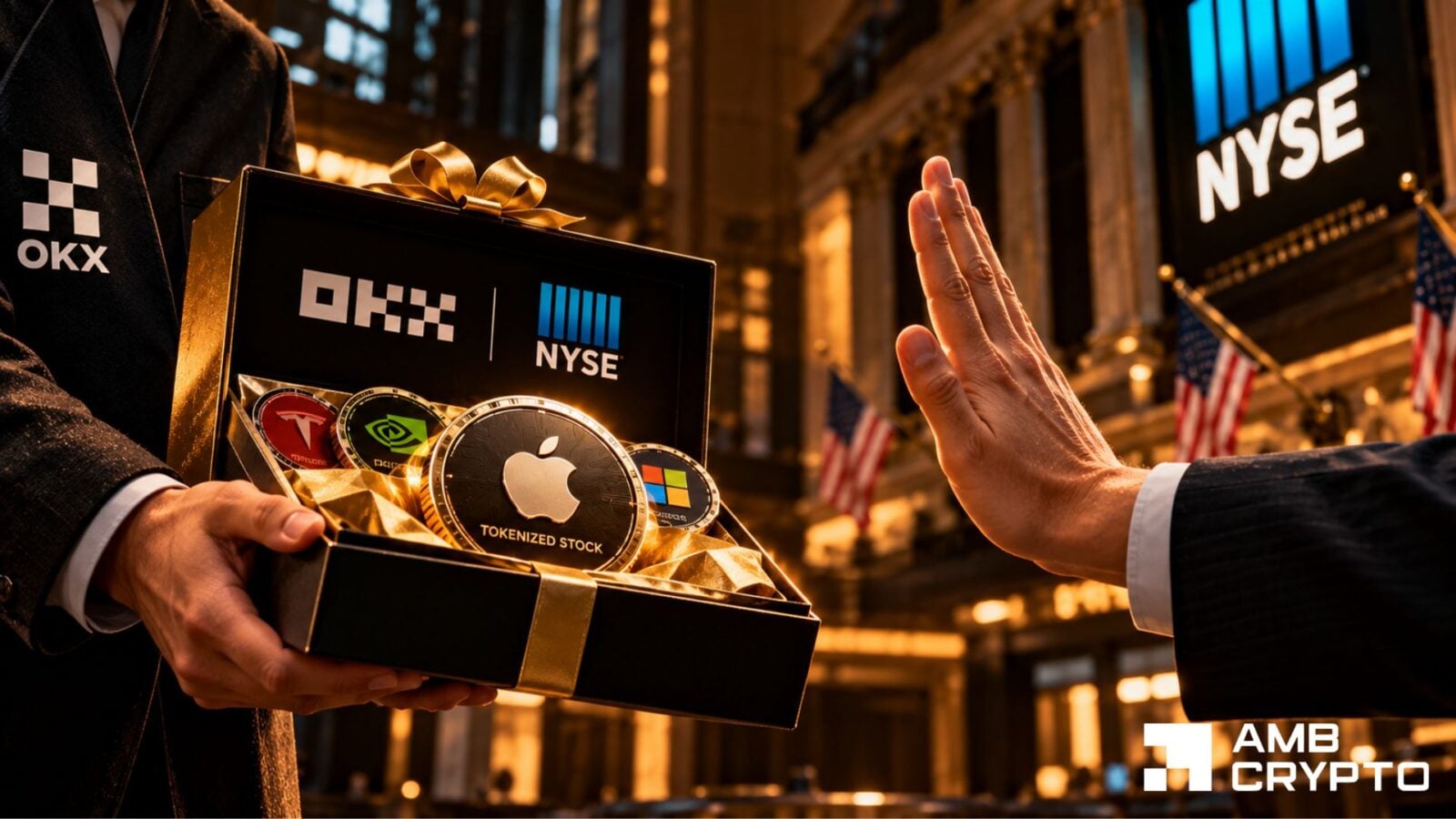
Nine major firms have opted out of having their tokenized stocks traded on the OKXICE platform, a venue co-owned by Intercontinental Exchange and crypto exchange OKX. The objectors include Broadcom, CoreWeave, Cerebras Systems, AppLovin, Applied Digital, Verizon, Rocket Labs, Applied Optoelectronics, and UnitedHealth Group.
OKXICE filed to tokenize the top 63 U.S. stocks through permissioned Uniswap V4 pools under the SEC's Innovation Exemption framework. Under the rules, companies had 30 days to object to the proposal, or their silence would be deemed consent. Applied Optoelectronics expressed uncertainty about potential impacts on its traditional share price, liquidity, and volatility.
Nasdaq Pushes Alternative Model
Nasdaq, a rival to the NYSE parent company ICE, has also opted out of tokenized stock venues. The exchange stated it had carefully reviewed the considerations and decided against allowing its shares to trade on such platforms.
Nasdaq opposes the OKXICE model, which allows tokenized stock venues to offer wrappers backed by real shares purchased by a third party. Instead, Nasdaq advocates for a model where companies directly issue their own tokenized stocks and maintain control over where and how they trade.
Nasdaq's concern centers on price discovery and liquidity fragmentation. The exchange fears that tokenized stock venues operating outside the National Market System could distort price discovery and fragment liquidity. Nasdaq has partnered with Kraken to offer tokenized stocks under its preferred model.
Growing Tokenized Stocks Market
Despite the opposition, tokenized stocks have reached $3.4 billion in market supply and over $10 billion in monthly transfer volume, representing approximately 1% of stablecoin supply.