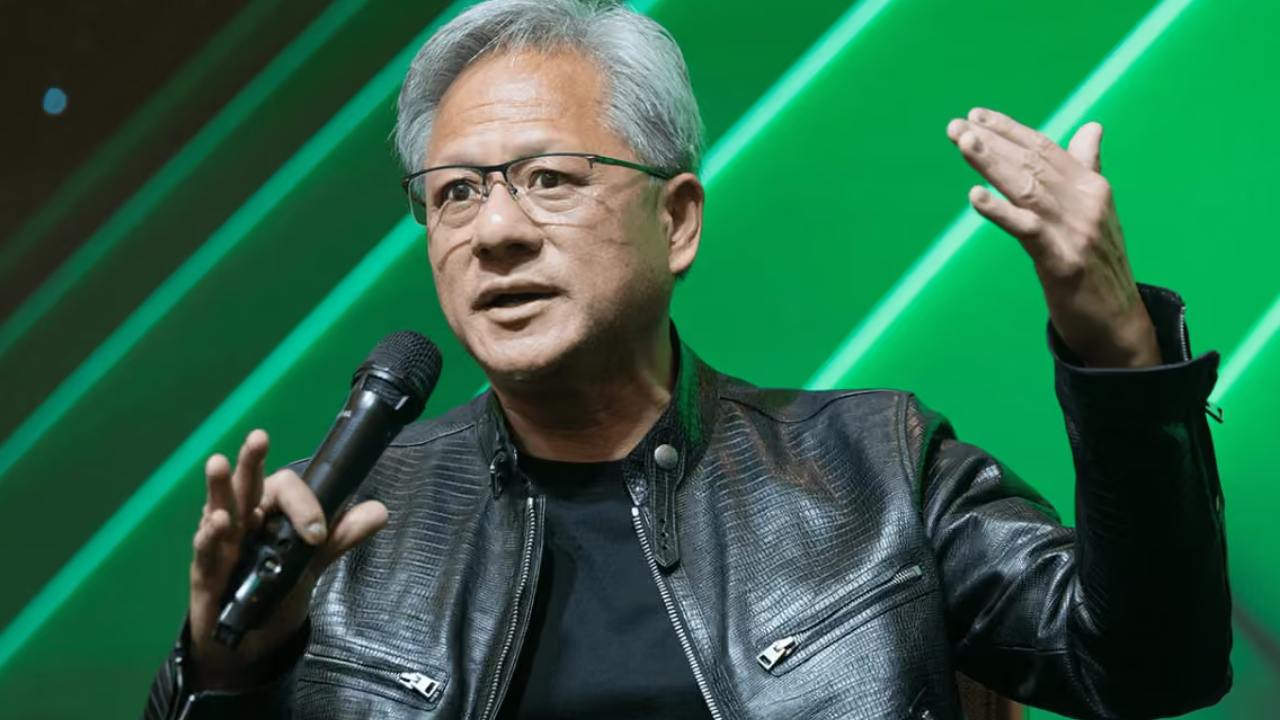
Speculation is mounting about the circumstances surrounding Jensen Huang's departure as Nvidia CEO. An undisclosed source told CNBC that the board decided to oust Huang the night before his announced resignation. While details remain unclear, some observers have linked his exit to his public advocacy for open-source AI models—drawing comparisons to similar battles in the cryptocurrency industry.
Under Huang's leadership, Nvidia invested significantly in open-source artificial intelligence. In March, Wired reported that Nvidia planned to spend $26 billion on open-source AI models over five years. In September, Nvidia agreed to acquire Hugging Face, an open-source model repository, for $12.93 billion. The company also released its own open-weight models, including Nemotron 3 Super, alongside datasets and training recipes.
In July, Huang posted an open letter backed by 25 companies defending open models. The letter urged lawmakers to avoid "premature restrictions on open models that stifle competition or drive innovation overseas." Huang wrote that "open models strengthen safety and cybersecurity, accelerate innovation and diffusion, and enable sovereignty."
In September, Nvidia warned that "other parties are actively lobbying the U.S. government and other stakeholders worldwide to adopt legislative or regulatory measures that would restrict or disadvantage open-source models and the customers of them."
Parallels with Cryptocurrency Battles
The fight over open AI models resembles the ongoing struggle between cryptocurrency developers and regulators over open-source software, often framed in national security terms.
In August 2022, the U.S. Treasury sanctioned Tornado Cash, an open-source coin mixer, citing more than $7 billion in alleged laundering through the platform. A federal appeals court ruled the sanctions unlawful in November 2024, and Treasury lifted them in March 2025. Roman Storm, a co-founder of Tornado Cash, was convicted in August 2025 of conspiring to operate an unlicensed money transmitting business. He faces a retrial on unresolved money laundering and sanctions charges.
The co-founders of Samourai Wallet, Keonne Rodriguez and William Lonergan Hill, pleaded guilty to conspiring to run an unlicensed money transmitting business in November 2025, receiving prison sentences of five and four years respectively.
The U.S. Department of Justice has stated that prosecutors will no longer approve charges under the unlicensed money transmitting statute against developers of decentralized, non-custodial software. However, this policy is not binding, and money laundering and sanctions cases remain within scope.
Industry Calls for Open Development
Figures in both the AI and cryptocurrency sectors are emphasizing the importance of open-source development. Erik Voorhees, a cryptocurrency investor and Venice AI founder, called on both industries to "get to work," noting that transparency through open-source and decentralization of power serve safety and equality.
Bitcoin advocate Jack Dorsey, CEO and founder of Block, has also called for open AI development. In September, he stated that neither the U.S. nor Chinese governments should decide "how much intelligence everyone else is allowed to develop," saying this would "leave most of the world waiting for permission."
Looking ahead, attention will focus on Huang's expected congressional testimony in December and whether Nvidia changes its stance toward open-source models. In the cryptocurrency sector, Roman Storm's retrial in April 2027 could set an important precedent for open-source developers.