Nvidia President and CEO Jensen Huang has resigned, the company's board announced, with Chief Financial Officer Colette Kress taking over as interim CEO until a permanent replacement is named. The departure caps a turbulent stretch for the chipmaker, whose shares were trading at $164.23 at the time of writing, down 14% over five days.
Board thanks Huang for 'immeasurable contributions'
In its statement, the board said Kress would lead the company in the interim and paid tribute to Huang's tenure.
"Jensen's contributions to NVIDIA are profound. NVIDIA is one of the most consequential technology companies in the world. The Board and the company thank Jensen for his immeasurable contributions to the company and the industry."
The leadership change follows reporting on Huang's personal life, including a New York Times report on an affair, which the source article describes as having weighed on investor sentiment before the resignation was confirmed.
Why crypto investors are watching
Market analysts often treat high-growth technology stocks and crypto as correlated risk-on assets. Nvidia's weight in major indices gives the company outsized influence: it accounts for 8% of the NASDAQ 100 and 7% of the S&P 500, according to the source article.
That means volatility in NVDA can ripple through broader technology indices. The same dynamic can reach crypto markets, where fund managers facing losses in the tech sector may sell liquid assets such as bitcoin to raise cash or meet margin requirements.
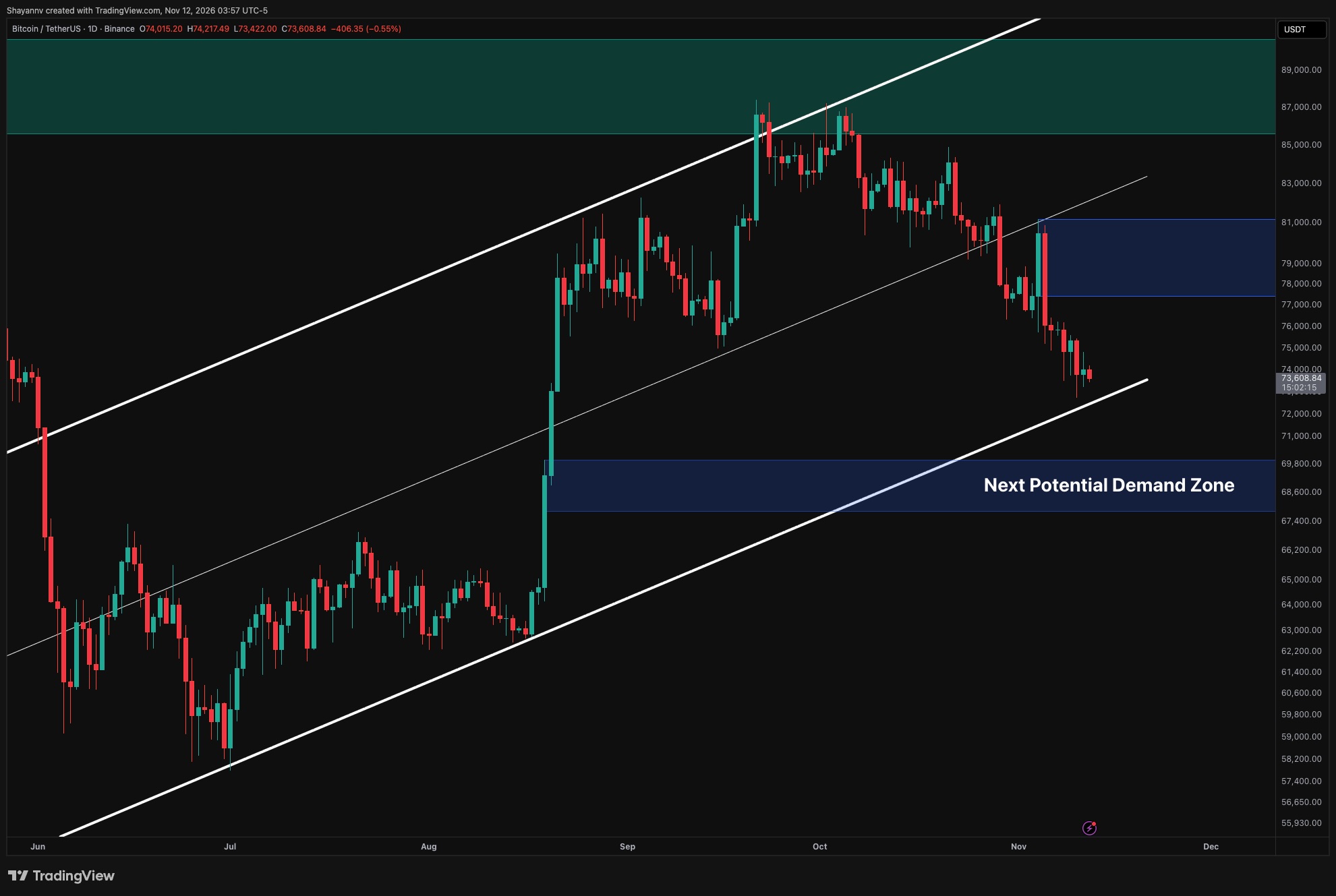
Bitcoin was already trading at its lowest level in months at the time of writing, with a hotter-than-expected U.S. CPI reading also weighing on the market.
Bitcoin miners' AI pivot under scrutiny
Publicly traded bitcoin miners such as IREN and Core Scientific have pivoted toward AI-driven high-performance computing hosting in recent years as bitcoin mining became less profitable. That shift has relied in part on Nvidia's GPU allocations and vendor financing.
With a leadership vacuum at the chipmaker, a new board and CEO may act more cautiously until a permanent chief executive is installed. That could affect borrowing costs for those miners and raise underwriting risks.
Christopher Brown, Senior Vice President for Investments at Synovus Securities, told Reuters: "Lenders will ask what happens to that support if Nvidia's leadership or regulatory standing is impaired, and Nvidia's own willingness to extend more guarantees may be constrained."
Jun Bei Lu of Australian fund manager Ten Cap told Reuters: "There's just a lot of uncertainty to come … not just for Nvidia; it's for the whole AI — all the businesses that they co-invest and sponsor. I think the fear is that the music might stop."
AI-linked tokens extend losses
Beyond broad market sentiment, Nvidia intersects with crypto through tokens tied to decentralized computing, GPU-backed infrastructure and AI. These assets have historically reacted to Nvidia announcements, keynotes and earnings, and the latest news has again moved prices lower.
- RENDER fell more than 11% in the five days after the New York Times report on Huang's affair, and was falling further as news of the resignation broke.
- NEAR has dropped close to 30% since that report was published, including a 9% decline in the prior 24 hours.
What comes next
The longer-term picture remains difficult to assess. The source article points to Nvidia's fiscal third-quarter 2026 financial results, scheduled for release on 17 November, as a clearer signal of how the market is pricing the leadership change and the company's commitments.
Further clarity on who will lead Nvidia permanently, and on the future of its financing and partnership arrangements, would also be closely watched by investors across both technology and crypto markets.