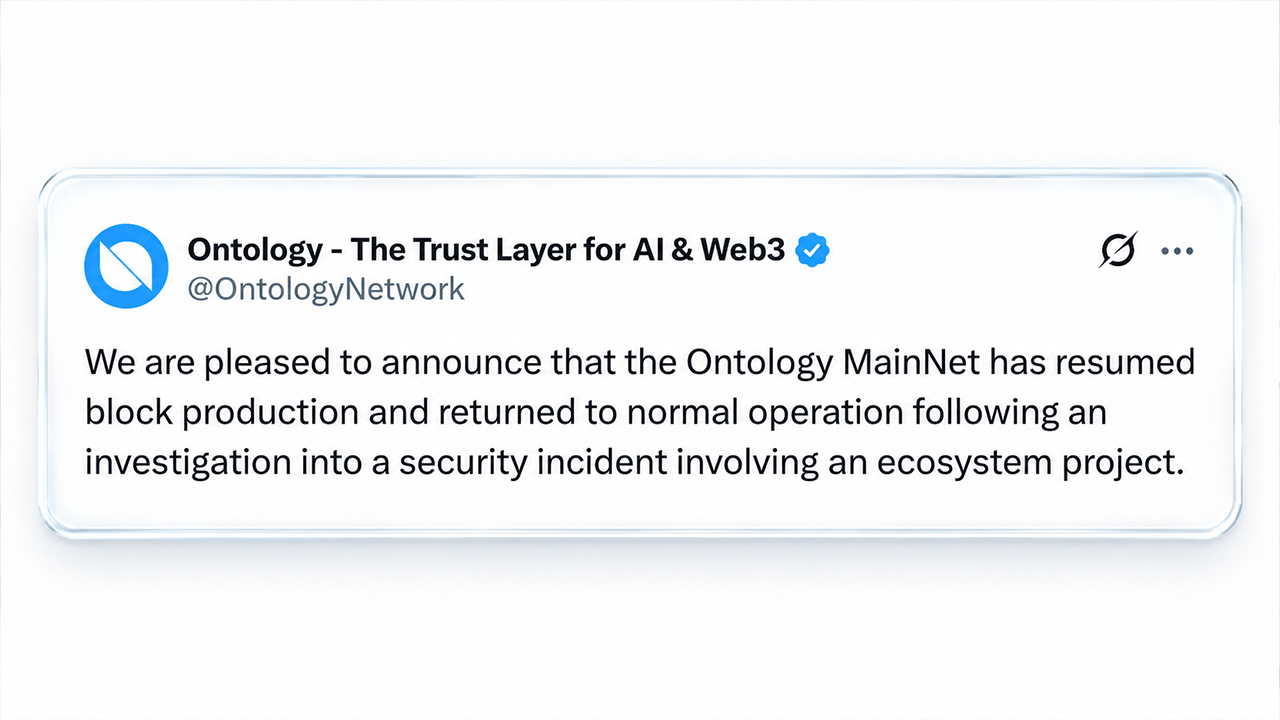
Ontology, a layer one blockchain, halted block production on October 10 following an urgent security report concerning a project operating on its network. The suspension lasted approximately 41 hours, resuming normal operations on October 12 at around 09:57 UTC.
The blockchain's operators coordinated with a majority of consensus nodes to temporarily stop adding new transactions as a precautionary measure. Several exchanges, including Bitget and South Korea's Coinone, suspended deposits and withdrawals of Ontology-network assets during the disruption.
Network Recovery and Disclosure
Ontology confirmed that mainnet block production resumed following its investigation. The team stated that core infrastructure remained secure and no funds had been lost from the Ontology network itself. However, the identity of the affected ecosystem project and details of the suspected vulnerability remained undisclosed. No technical explanation or detailed post-mortem accompanied the recovery announcement.
The network uses a consensus system called Verifiable Byzantine Fault Tolerance (VBFT), which combines staking mechanisms with coordinated validation. This architecture allowed participating nodes to collectively suspend the network when operators deemed intervention necessary.
Pattern of Security-Related Shutdowns
This marked Ontology's second emergency shutdown in approximately six weeks. On August 31, the blockchain suspended production following a security alert that subsequently developed into confirmed malicious activity. Operations resumed around September 2 after remediation and a mandatory software upgrade.
Other networks have experienced comparable emergencies. Cronos validators halted production on August 30 following an exploit involving the Tectonic lending protocol, subsequently rolling back approximately 10,000 to 11,000 blocks. ICON, Injective, and MultiversX also experienced security-related interruptions during August and September.