An open-source hardware project called Entropy32 Plus generates Bitcoin seed phrases using radioactive decay as its physical entropy source. The device uses a Geiger counter to detect decay events, processes their timing through SHA-256 conditioning, and maps the result to the BIP39 wordlist for seed generation.
How It Works
The device captures radioactive decay pulses through a Geiger counter connected via a 3.5mm audio jack. An LM393 comparator converts the raw voltage signal into clean digital readings using a fixed bias point near 0.5V.
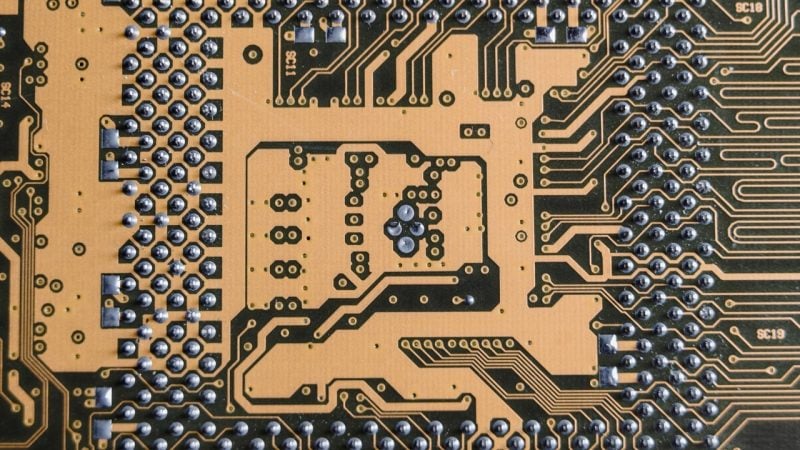
The timing intervals between successive pulses are processed through SHA-256 conditioning to remove statistical bias before mapping onto words from the standard 2048-word BIP39 English list. The entire operation runs offline on a custom PCB built around an ATmega328P microcontroller, paired with an OLED display and button-driven interface.
Technical Constraints
The project operates under significant memory constraints. The compiled firmware uses 30,006 of the microcontroller's 30,720 available bytes, leaving less than 1,000 bytes for future changes.
The BIP39 wordlist accounts for 13,117 bytes—roughly 43 percent of total storage—while the SHA-256 compression routine adds 2,278 bytes. These constraints required the project to use U8x8's text-only display mode instead of standard graphics libraries to conserve space.
Current Status and Validation
The project's documentation states that entropy quality has not yet been validated under NIST SP 800-90B methodology. The developer describes the build as experimental rather than independently audited, recommending that users verify the entropy source or proceed "at your own risk."
The repository includes the Arduino sketch, SHA-256 implementation, KiCad schematics, fabrication files, and 3D-printable enclosure designs for anyone building the device.