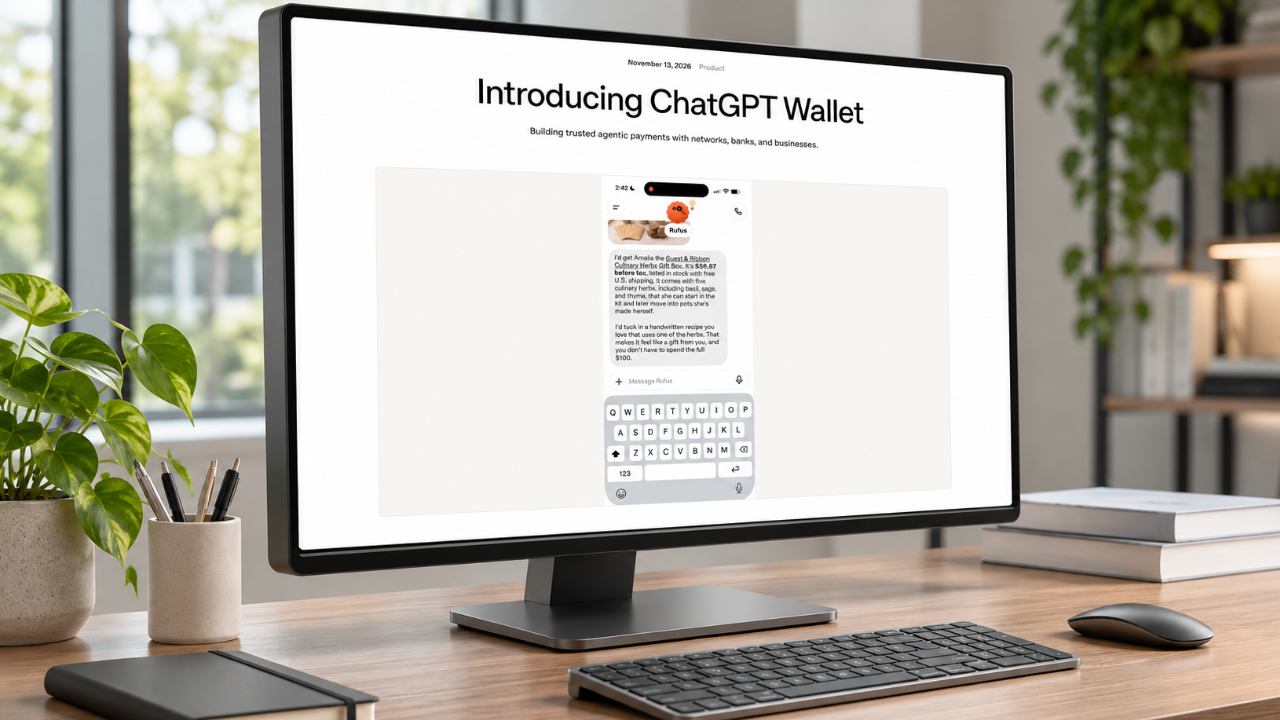
OpenAI introduced ChatGPT Wallet on November 13, allowing AI agents called dots to complete purchases on behalf of users. The service uses payment cards from American Express, Mastercard, and Visa, with initial availability limited to ChatGPT Pro subscribers in the United States.
The wallet operates through a tokenization system where users review transactions before approval using biometric authentication. A payment network supplies substitute card credentials—including a replacement card number, security code, and expiration date—to process checkout while keeping actual card details hidden from both the agent and merchant.
Access and Eligibility
ChatGPT Wallet is available to U.S. Pro subscribers age 18 or older with a U.S. billing address and supported American Express, Chase, Mastercard, or Visa cards. The feature currently works only within dot conversations, excluding standard Chat, Work, and standalone Codex threads.
Users retain existing card rewards and eligible dispute protections. Card issuers handle declined, disputed, or unrecognized charges, while merchants manage cancellations, returns, and refunds. OpenAI generally does not decide or fund merchant refunds or chargebacks except when legally required.
Transaction Controls and Oversight
Before each purchase, customers review items, totals, and the selected card, then authorize payment using Face ID or another supported biometric method. For recurring subscriptions, merchants may retain the payment credential to collect subsequent payments under agreed terms.
Users can set Custom Rules to permit, block, or require approval for specific actions. OpenAI said it collects purchase, contact, and device information, while the payment provider collects the full card number. According to the company, wallet information is not sold or shared for targeted advertising.
Broader Industry Movement
Other companies are developing similar agent payment systems. Mastercard introduced its Agent Pay framework, requiring agents to register and undergo verification while consumers control permitted purchases. Visa pursued developer integration through its investment in Replit, aiming to integrate Visa Intelligent Commerce into the development platform to let developers build agent applications capable of initiating transactions.
Moonpay launched PayBox in July, connecting to ChatGPT and Claude through a custom connector, allowing users to require passkey approval for each transaction or authorize actions within preset limits.