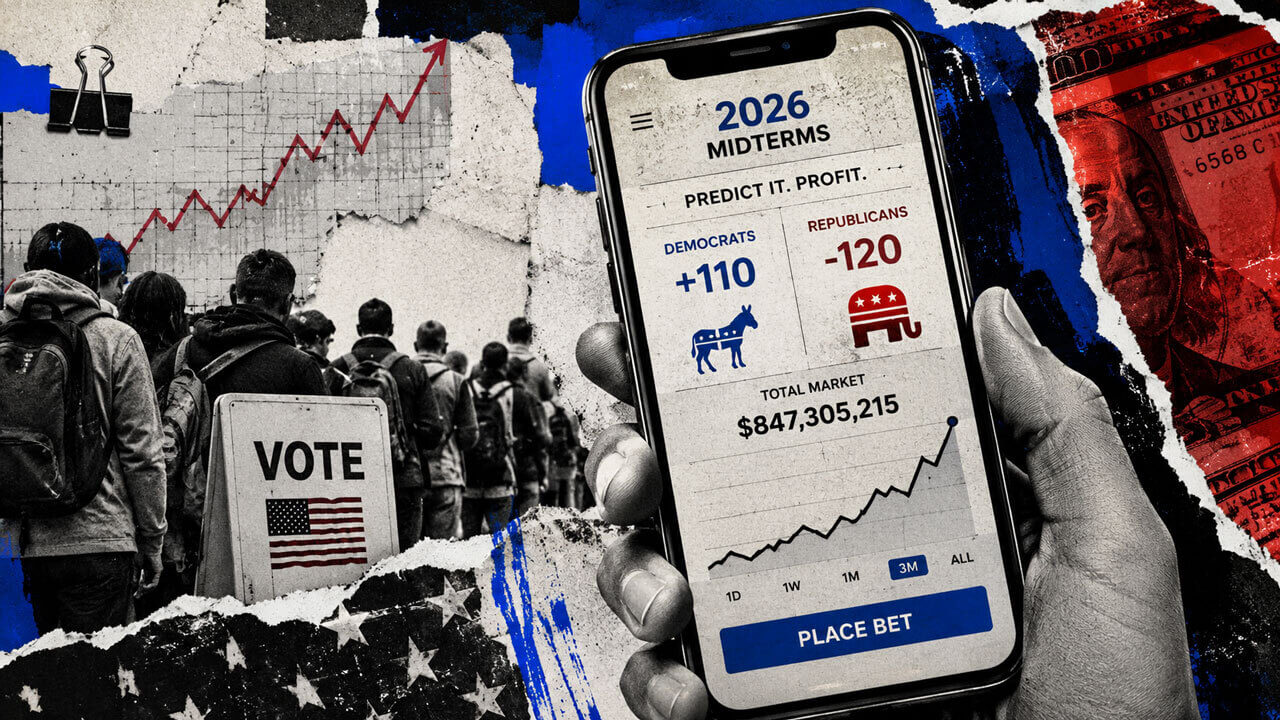
Trading volume across markets tied to House and Senate races reached at least $133 million by August 10, surpassing the total volume recorded during the entire 2024 congressional cycle, according to data covering Kalshi, Polymarket, and Polymarket US. The menu of available contracts expanded significantly from 464 comparable markets in 2024 to 7,466 for the upcoming midterm elections.
Despite the headline volume, participation data indicates a narrow base of activity. On Polymarket Global, the top 1% of wallets account for 68% of congressional trading volume. Additionally, just ten wallets generate 17% of the volume and have traded contracts touching 426 of the 470 seats on the ballot.
Research from the Anti-Corruption Data Collective highlights that market breadth has outpaced depth. Eighty percent of Polymarket's congressional markets feature fewer than 100 participating wallets, and only ten markets have crossed 1,000 participants. Across 39,820 Polymarket wallets, 87% of markets either have less than $10,000 in volume or maintain high volume controlled by very few traders. In thinner contracts, single well-funded orders can shift displayed probabilities without broader underlying changes in the races.
Prediction market prices function differently from traditional political polls, which estimate public opinion through weighted samples and margins of error. Prediction market prices are determined by traders exchanging contracts that pay out $1 if an event occurs, meaning dollars weight influence and participants can trade repeatedly, hedge, or provide liquidity without expressing sincere political beliefs.
As media outlets, campaigns, and donors increasingly incorporate these market prices into public commentary, the concentration of capital creates a risk that a figure resembling mass public consensus can be produced by a very small group of participants. While concentrated specialists can yield efficient pricing, pseudonymous global venues present ongoing surveillance challenges for regulators attempting to link wallet addresses to individuals, particularly as the Commodity Futures Trading Commission moves toward proposing amendments to event-contract listing and consumer protection rules.