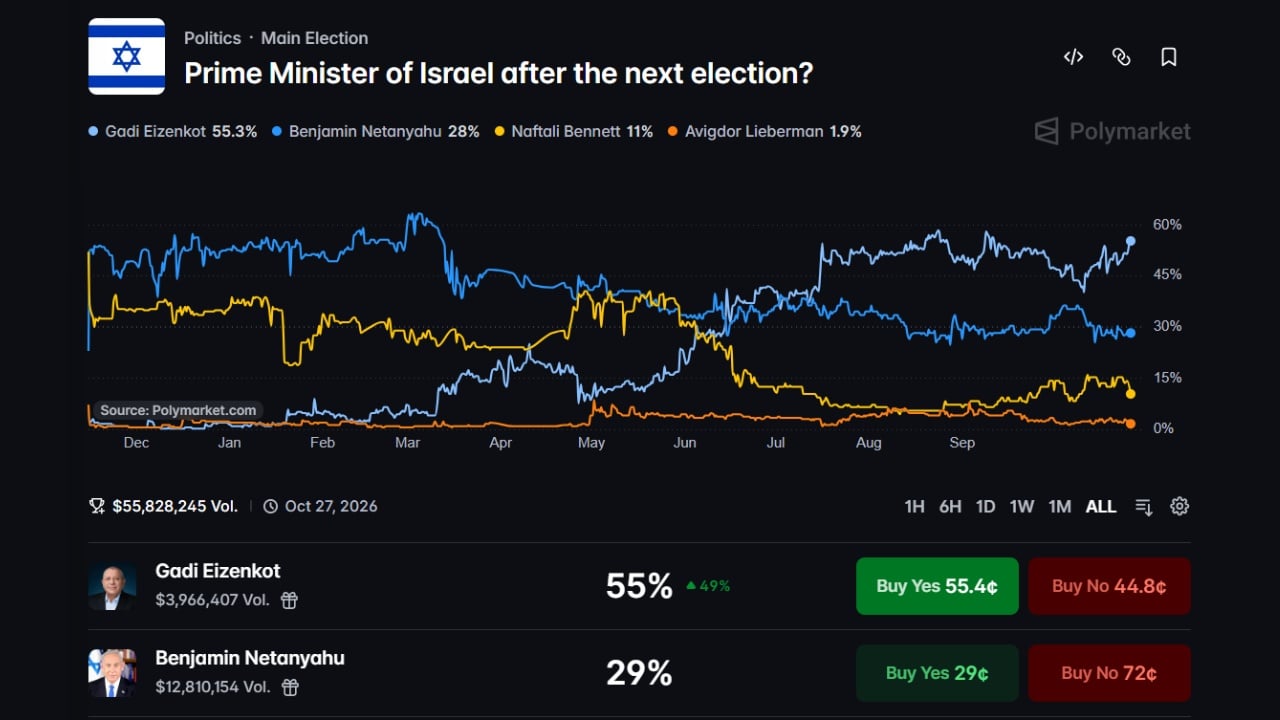
Polymarket, a prediction market platform, is signaling that Gadi Eisenkot, former chief of staff of the Israel Defense Forces and leader of the Yashar party, has a 55% chance of becoming Israel's next Prime Minister, according to odds on its "Prime Minister of Israel after the next election?" contract.
The same market gives incumbent Prime Minister Benjamin Netanyahu a 29% chance of retaining his position. Other candidates Bennett and Lieberman trail both frontrunners. The contract has processed over $55 million in trading volume.
Traditional polling data presents a more fragmented picture. Eisenkot's bloc holds a 6-seat advantage over Netanyahu's bloc, but neither commands a majority in the Knesset. This means Eisenkot's path to victory would require forming a coalition with unaligned parties.
Prediction markets have gained attention following their performance in recent political events. The platforms correctly forecasted President Trump's 2024 victory ahead of traditional pollsters, though they significantly underestimated President Lula's margin in Brazil's runoff election, where Senator Flavio Bolsonaro held 80% odds before losing by over 4 million votes.
Israel's use of prediction markets has drawn regulatory scrutiny. The Israel Democracy Institute has called on the Central Elections Committee to regulate betting odds as polls, banning their publication from Friday before election day. The institute cited concerns about election integrity and called for modernization of propaganda laws to address prediction market activity.