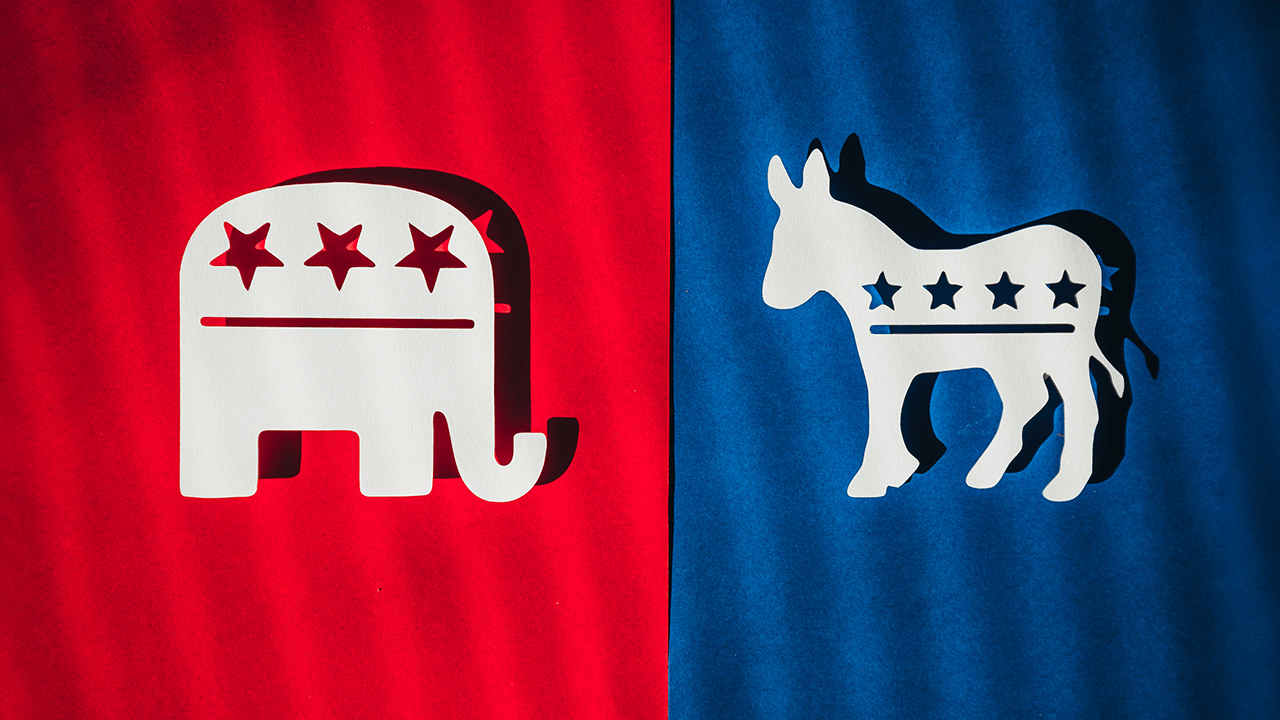
With Election Day just one week away, prediction markets are showing a clear Democratic advantage in both chambers of Congress. As of October 27, Polymarket gives Democrats a 92% chance of winning the House and a 65.5% chance of winning the Senate.
The most likely overall outcome is a full Democratic sweep at 65.5%, while a Republican sweep sits at just 7.5%. For crypto investors monitoring legislative timelines, the implications extend well beyond election night.
Prediction Markets Align on Democratic Edge as Chamber Control Bets Hit Peak Volume
Kalshi and Polymarket are closely aligned in their current readings. Kalshi prices Democrats at roughly 90% for the House and 64% for the Senate, according to aggregated data from Sikt Intelligence.
Trading volume on chamber-control contracts has surged in recent days. Kalshi alone has logged 73.4 million contracts on the House race, while Polymarket shows $23.8 million in notional volume on the same market.
The balance-of-power breakdown tells a similarly decisive story. A Republican Senate paired with a Democratic House, the next most likely scenario, sits at just 26.5%.
Iowa remains the sole Senate toss-up, with Republican Ashley Hinson at 57.5% against Democrat Josh Turek at 42%. Nine House districts are also rated as competitive, but none have moved the top-line odds materially.
2026 midterm election forecast from Polymarket odds
This aligns with midterm live coverage showing crypto market sensitivity to the race, where analysts identified $73,000 as a key Bitcoin downside level tied to regulatory uncertainty.
The surge in prediction markets volume is no coincidence. Phantom Wallet’s recent move to integrate Kalshi-powered markets for US users has broadened retail access. At the same time, the NBA’s decision to sign an MOU with the CFTC naming Kalshi and Polymarket as preferred exchanges has reinforced institutional legitimacy for the sector.
That legitimacy, however, remains contested. Utah is among 11 states to pursue legal action, having sued Kalshi over alleged illegal gambling and sought to block election and sports contracts for its residents.
Bloomberg Survey Shows Investors Favor Republican Congress for Stocks, Democratic Sweep for Bonds
A Bloomberg survey of 301 Terminal clients, traders, portfolio managers, and investment professionals found diverging views by asset class.
Respondents were more optimistic about U.S. stocks under a Republican-controlled Congress. They viewed a Democratic sweep as relatively better for bonds.
On Bitcoin, higher upside was priced under Republican control, with more downside risk expected under Democratic control.
For the crypto industry, a Democratic House carries direct implications for stalled legislation. The CLARITY Act, the flagship crypto market structure bill, already failed a Senate cloture vote 49-50 in September.
Coinbase subsequently cut Q3 lobbying spending after the CLARITY Act Senate defeat, shifting focus toward the SEC and CFTC instead.
The House had earlier compounded the challenge when it canceled late-September sessions ahead of the Senate vote, pushing Polymarket’s odds of the bill passing in 2026 to around 17%.
Seven Democrats have since reopened talks, but fewer than 14 legislative days remain before the election.
The SEC’s posture also tracks the political calendar closely. The agency recently delayed new XRP ETF filings again with November 30 as the revised effective date, just days before the November 3 vote.
Meanwhile, broader access to prediction markets keeps expanding. Binance US and Blockchain.com have entered the race to offer similar products, signaling that the sector sees long-term regulatory tailwinds regardless of who controls Congress.
Kalshi confirmed the Democratic Senate odds in a post on X, stating: “JUST IN: 65% chance Democrats win the US Senate this November.”
All eyes now turn to the handful of remaining toss-up districts. The current prediction markets consensus leaves little room for a Republican reversal in the House. But the Senate path remains fluid enough that the full midterm picture could shift before polls close on November 3.