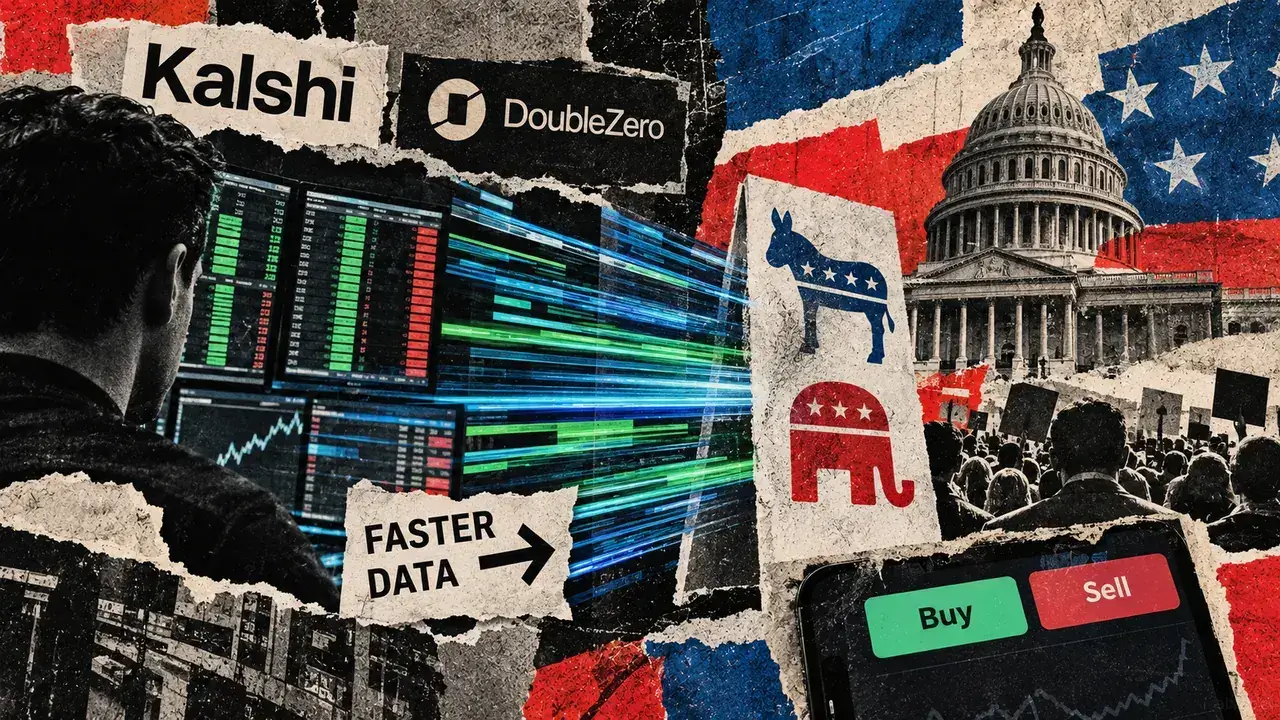
Prediction market participants face a timing problem: the price available when opening an app may disappear before an order executes, especially when news sends multiple traders toward the same outcome. This dynamic has created a new business opportunity in election betting infrastructure.
On September 9, DoubleZero announced it had added Kalshi's election and politics markets to Edge, a service delivering trading data over a dedicated network. The service provides access to the exchange's order book, showing prices and quantities available for buying and selling.
DoubleZero told CryptoSlate that faster, more reliable information can help professional trading companies offer better prices to customers. If competition passes those savings along, ordinary bettors could benefit. However, using such feeds effectively requires specialized software and capital, giving well-equipped companies another competitive advantage.
How Election Contracts Work
On Kalshi, a standard yes-or-no contract pays $1 if the outcome occurs and nothing otherwise. A contract purchased at 60 cents represents a potential 40-cent profit before fees if the outcome happens, with the price commonly interpreted as roughly a 60% probability.
Traders can also profit before the election concludes by selling contracts at higher prices than they paid. Someone buying 1,000 contracts at 60 cents and selling at 65 cents earns $50 before fees regardless of the actual election outcome, meaning traders profit from predicting the next buyer's willingness to pay rather than from the final result.
Speed as a Market Edge
The order book's best bid represents the highest price a buyer offers, while the best offer is the lowest price a seller accepts. The gap between them is the spread. Traders who receive updates quickly can see contracts being sold at outdated prices and act before slower participants.
This advantage particularly benefits market makers—firms that continuously offer to buy and sell, allowing other traders to execute orders. When news moves a contract's fair value from 60 cents to 70 cents, a faster-updating market maker can avoid losses by adjusting quotes before accepting old bids. If multiple firms can manage this risk competitively, they may offer narrower spreads, potentially benefiting casual bettors without requiring them to purchase premium data feeds.
However, this benefit remains theoretical without evidence from actual trades. Delivering data sooner and offering better prices are separate achievements requiring examination during busy political events when traders most need reliable information.
Unequal Capabilities Persist
DoubleZero's connection guide describes a paid feed and software that converts incoming data into usable messages, lowering connection work but still requiring subscribers to develop trading programs and maintain adequate capital. Large companies can spread these costs across far more activity than independent traders.
For someone holding a bet for months, a tiny delivery advantage measured in fractions of a cent may be irrelevant. For a company continuously updating thousands of quotes, it can significantly affect profitability on repeated trades.
Election Data in Financial Decisions
DoubleZero brings crypto infrastructure into election betting, combining privately supplied fiber links and hardware with blockchain services. Election odds could become an input for crypto investors assessing how congressional outcomes might affect industry legislation.
However, a faster number is not a more reliable one. Its value depends on the market supporting it. A price based on only a few contracts provides no indication of where larger transactions could execute, and sudden price movements might reflect sellers withdrawing rather than new information about the election.
Reliability and Disclosure Concerns
In a February 25 enforcement advisory, the CFTC described Kalshi disciplinary cases involving a candidate trading on his own candidacy and a YouTube editor trading contracts tied to unpublished videos. These cases involved information advantages beyond connection speed, highlighting the distinction between faster public data distribution and prohibited conduct based on confidential information.
When election probabilities appear in political coverage, the numbers can appear more authoritative than warranted. Even a deep market represents only those willing and able to trade, offering no indication of whether they resemble the actual electorate.
For ordinary bettors, the infrastructure's practical benefit will emerge through the prices they can actually obtain. Competition between professional trading companies could lower costs for entering and exiting positions, even as those companies develop capabilities most customers never access.