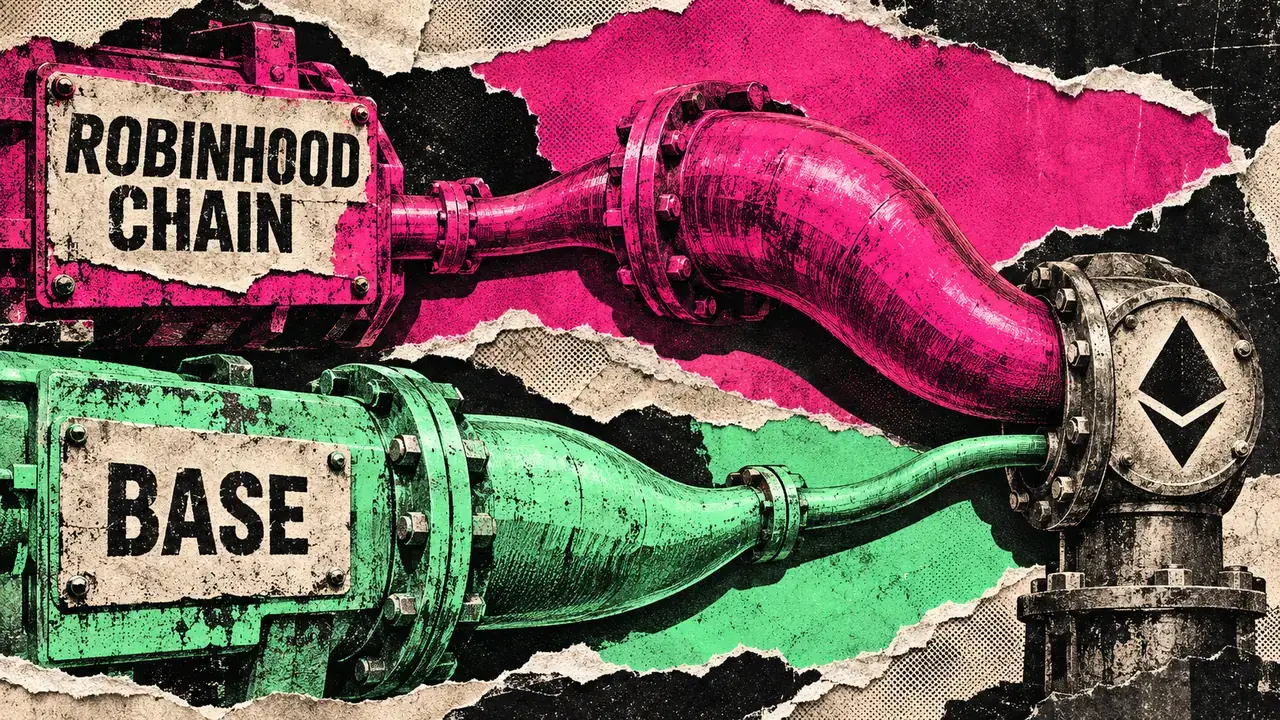
Robinhood Chain paid Ethereum roughly 70% more than Coinbase‑backed Base to settle transactions, even though it collected about 64% fewer user fees during the same 30‑day period.
Settlement costs and fee revenue
Between October 23 and November 21, Robinhood Chain’s settlement costs on Ethereum totaled approximately $25,700, compared with Base’s $15,100, according to data compiled by Castle Labs from growthepie.
Base generated $2.97 million in transaction fees in that timeframe, nearly three times the $1.07 million earned by Robinhood Chain.
This disparity means Robinhood Chain spent $2.41 on Ethereum settlement for every $100 collected from users, while Base spent only $0.51 per $100.
Data‑posting (blob) fees
Base posted about 350,000 blobs, nearly twice the 182,000 blobs posted by Robinhood Chain, according to Blobscan data. Blob fees amounted to $4,478 for Base and $2,315 for Robinhood Chain.
Excluding blob fees, Robinhood Chain’s remaining settlement costs were about $23,379, more than double Base’s $10,602. These costs cover standard Ethereum transaction fees for posting data and updating settlement states.
Broader scaling economics
Across all tracked Ethereum layer‑2 networks, users paid roughly $5 million in fees during the 30‑day period, while the networks collectively paid Ethereum about $74,500 for settlement and data availability—approximately 1.5% of user fees.
Base and Robinhood Chain together accounted for about $4.04 million of user fees but paid Ethereum only $40,800.
Implications
The figures highlight a significant cost imbalance between the two layer‑2 networks and raise questions about whether Robinhood Chain can reduce its settlement‑cost disadvantage and how much additional revenue Ethereum might capture as layer‑2 activity grows.