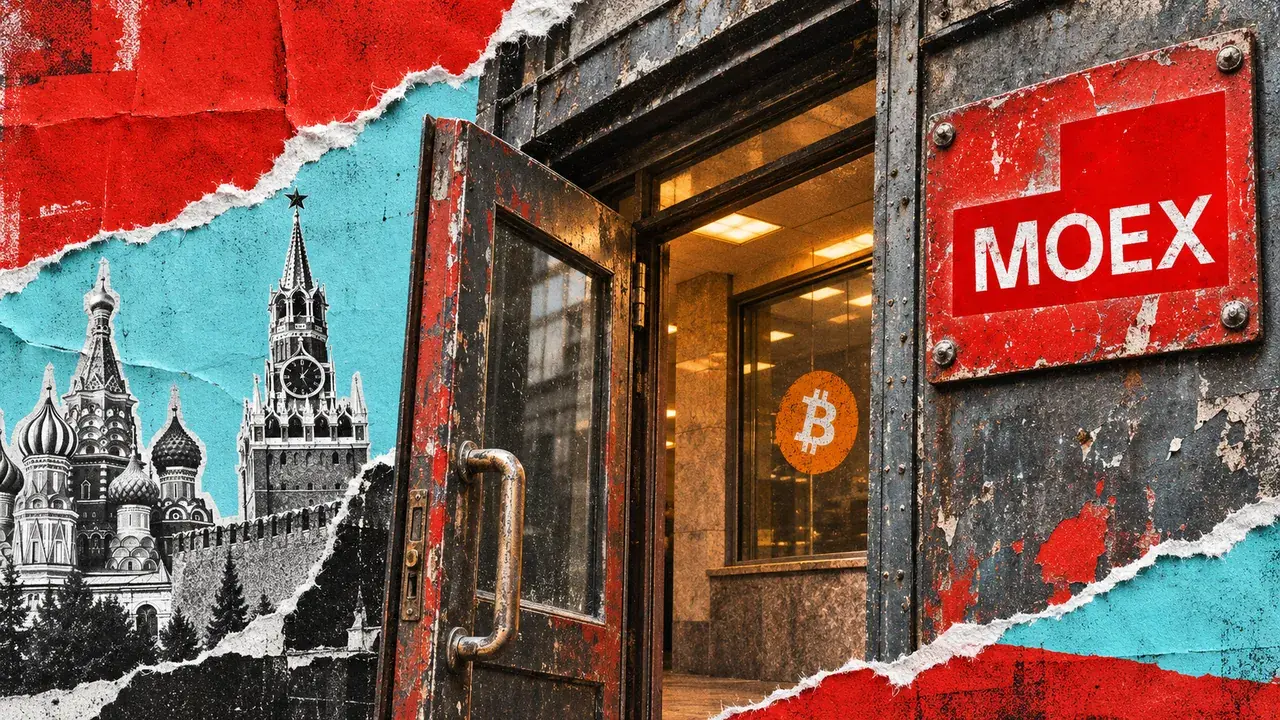
Russia's Moscow Exchange is preparing to launch cryptocurrency trading on December 1, marking the first phase of the country's regulated digital asset market. The central bank approved trading rules effective November 22, allowing exchanges to begin operations once they receive regulatory approval of their trading procedures.
The December 1 pilot will trade Bitcoin, Ethereum, and USDT through the National Clearing Centre, with settlement occurring roughly every 30 to 60 minutes. Trades will be settled through accounts at a separate digital depository rather than on-chain transactions, allowing the exchange to process orders without direct blockchain transfers.
Retail Purchase Limits
Ordinary investors are restricted to 300,000 rubles in annual cryptocurrency purchases per intermediary. This limit measures rubles spent on purchases rather than the market value of holdings at any given time. For example, purchasing 100,000 rubles of Bitcoin and 100,000 rubles of Ethereum through the same broker uses two-thirds of the annual allowance, regardless of price fluctuations.
The central bank selected Bitcoin, Ethereum, and USDT for retail trading partly because they have substantial price history on foreign exchanges spanning at least five years and are heavily traded. Qualified investors can purchase other cryptocurrencies without the same purchase cap after passing a test and reviewing applicable risks.
Restrictions on Use
While investors can purchase and hold these assets through the new system, cryptocurrency cannot be used for domestic payments. Merchants in Russia remain barred from accepting cryptocurrency for goods and services. However, exporters and importers may use cryptocurrency for cross-border settlement under a separate regulatory provision.
Trading Details
The exchange will trade five initial pairs: Bitcoin, Ethereum, and USDT against rubles, plus Bitcoin and USDT against USDX, a specialized settlement currency used by the clearinghouse. Direct cryptocurrency-to-cryptocurrency trading is not planned for the initial launch, though the exchange may consider such pairs in 2027.
Short selling will be prohibited initially, though brokers may offer margin trading under applicable rules. Members can place anonymous orders or negotiate deals with known counterparties.
Moscow Exchange previously reported more than 600 billion rubles in cryptocurrency futures turnover since launching crypto-futures contracts in summer 2025. Those cash-settled contracts differ from the December pilot, which will trade underlying assets themselves.
Regulatory and Technical Considerations
The US Treasury sanctioned both Moscow Exchange and the National Clearing Centre in June 2024. This creates complications for USDT trading, as the stablecoin is issued on Ethereum and controlled by a company outside Russia. Tether maintains a policy for freezing wallets associated with sanctioned individuals or entities, though the specifics of how this applies to Moscow Exchange's custody arrangements remain unresolved.
The exchange has not identified the wallets that will hold USDT tokens or confirmed who will supply them. Settlement will occur through depository accounts rather than requiring movement on public blockchains, but the underlying tokens must still be held and secured.