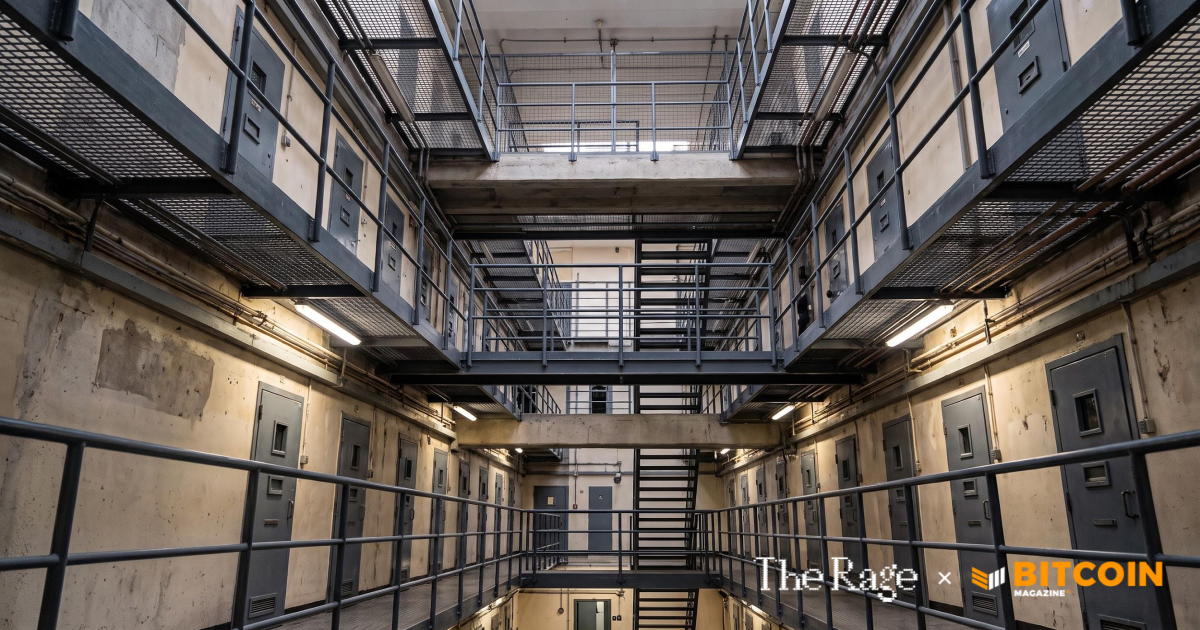
Keonne Rodriguez, a Samourai Wallet developer currently incarcerated in the federal prison system, has documented his experience being transferred between facilities in a detailed account published by Bitcoin Magazine.
On June 5th, Rodriguez was notified he would be transferred from FPC Morgantown to participate in a drug and alcohol treatment program at another facility. Successful completion of the program, which lasts approximately 9 to 10 months, results in one year removed from a prisoner's sentence.
Rodriguez requested a transfer furlough, a process that would have allowed him to transport himself at his own expense given his minimum security classification and record of no incident reports during his incarceration. The request was denied on June 8th without explanation.
The Transit Process
On June 10th, Rodriguez began the transfer process. He was stripped, searched, and issued standard transit clothing. Six inmates from Morgantown were prepared for departure that day, fitted with ankle shackles, wrist cuffs, and waist chains that restricted movement to short shuffling steps.
The group was loaded onto a bus already containing inmates from other facilities and security levels. The journey included a five-hour bus ride to Greenbriar Valley Regional Airport, where multiple prison buses coordinated a transfer operation.
Rodriguez was then boarded onto a plane operated by US Marshalls. He described the aircraft as dated, with safety instructions in German and Russian. The flight, along with subsequent transfers, was intended to route through a Bureau of Prisons transit hub in Oklahoma City before reaching the final destination.
Conditions During Transit
Rodriguez documented difficult physical conditions throughout the journey. The bus was extremely loud, with metal shackles creating noise with every bump in the road. Officers made multiple stops for food and cigarettes, extending the travel time.
Upon arrival at a holding facility, Rodriguez was assigned a cell with a cellmate and provided a half foam mattress. When he objected to the inadequate bedding, an officer told him it was all that was available. Rodriguez pushed back, stating that prisoners deserved basic amenities, but the mattress was not replaced. The holding cell had fluorescent lights that remained on continuously and were not turned off at night.
Rodriguez described the overall experience as traumatic and stated it was the most difficult 30 days of his life. He indicated that a second part of his account would provide additional details about the transit process and his adjustment to life at FCI McKean.