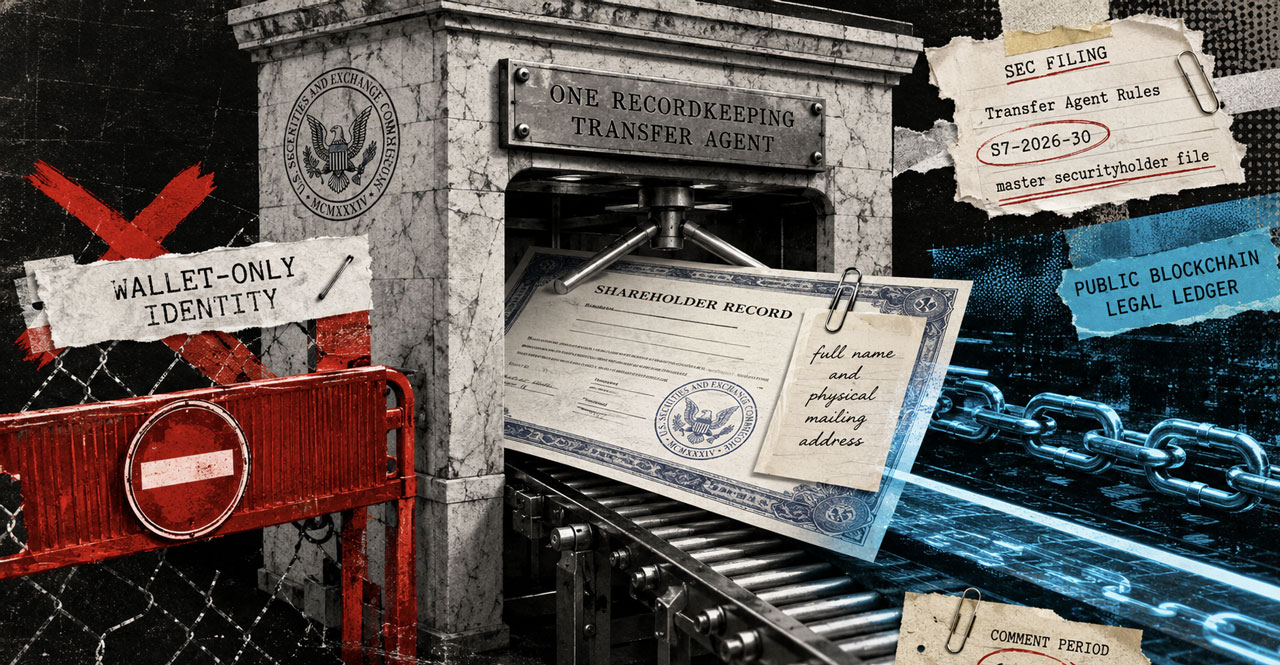
The US Securities and Exchange Commission has proposed sweeping changes to transfer-agent rules that would allow blockchain and distributed-ledger technology to become part of a company's official shareholder records for the first time.
The proposal, announced on September 1, represents the SEC's first significant overhaul of transfer-agent regulations since they were adopted in the late 1970s and early 1980s. It would formally permit blockchain to serve as a master securityholder file or part of it, moving tokenized securities deeper into the infrastructure that determines legal share ownership.
Regulatory Framework Preserved
Under the proposal, a registered transfer agent would retain exclusive control over the official shareholder file and remain responsible for its accuracy, security, and regulatory reporting. Transaction data including wallet addresses, balances, and ownership percentages could reside onchain, while sensitive personal information would remain in separate systems.
SEC Chairman Paul Atkins said the proposal reflects the growing use of electronic communications and blockchain technology in securities offerings. The broader rewrite would replace paper-based requirements with electronic recordkeeping standards and increase reporting requirements around tokenization and distributed ledgers.
Technology Choice Remains Flexible
The rules would not mandate blockchain adoption. Instead, transfer agents could choose whether to use conventional databases or distributed ledgers, provided their systems remain secure, current, and accessible. Technology providers would not inherit the transfer agent's regulatory responsibilities simply because infrastructure runs through their systems.
Traditional Identity Requirements Remain
The proposal stops short of making corporate ownership fully wallet-native. The SEC's framework would continue requiring the master securityholder file to include a holder's full name and contact information, including a physical mailing address. A digital-wallet address could form part of identifying information for a tokenized security but would not replace traditional identity requirements.
The SEC has asked for public comment on whether those identity requirements should change, and Commissioner Hester Peirce has separately raised the possibility of using email or digital-wallet addresses instead of names and physical addresses in some circumstances.
Comments on the proposal are due 60 days after publication in the Federal Register.