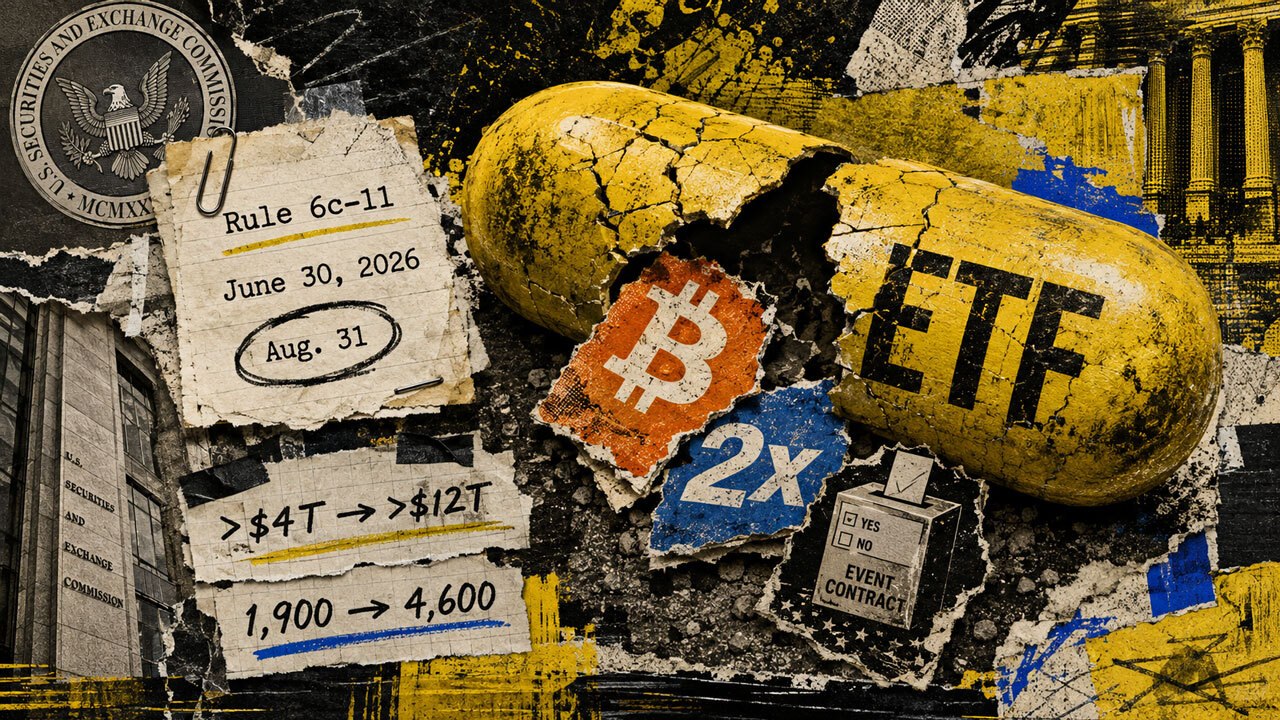
The Securities and Exchange Commission is reviewing how its ETF approval process handles increasingly exotic financial products, from cryptocurrency assets to contracts linked to elections and economic events.
On June 30, the SEC issued a request for public comment on how its existing rules apply to crypto assets, commodities, leveraged products, single-stock funds, blockchain opportunities, private assets, and event contracts. The comment period closes August 31.
The review reflects the dramatic growth of the ETF market. U.S. ETF assets climbed from over $4 trillion at the end of 2019 to over $12 trillion by the end of 2025, while the product count rose from nearly 1,900 to more than 4,600, according to the SEC's concept release.
How ETFs Became the Default Distribution System
ETFs package portfolios into shares that trade throughout the day on exchanges, allowing investors to buy exposure through standard brokerage accounts. The creation and redemption process helps keep trading prices close to the portfolio's underlying value.
In 2019, the SEC adopted Rule 6c-11, which allowed qualifying ETFs to launch without seeking an individual exemptive order, provided they met conditions involving portfolio information and trading data. This rule accelerated product launches and standardization.
However, the same regulatory framework that enables routine fund updates can also carry novel portfolios to market before staff has thoroughly examined them. Some registration statements and amendments can become effective automatically once a statutory waiting period expires.
New Product Categories Challenge Existing Rules
Spot cryptocurrency products became a turning point, as investors treated SEC approval as a bridge between an unfamiliar asset and an established trading account. The distinction between regulatory approval and perceived legitimacy blurred as the product menu widened.
Event-contract funds represent particularly complex territory, tying returns to election outcomes, economic releases, or other defined events. The SEC identified more than two dozen event-linked ETF proposals. These products raise regulatory difficulties because event contracts may trade on exchanges overseen by the Commodity Futures Trading Commission while the fund shares and disclosures fall under SEC authority.
Other emerging structures include staking products, options overlays, token baskets, and leveraged funds promising multiples of daily market moves. Each design introduces its own custody, valuation, market-hours, and concentration issues.
Custody and Valuation Challenges
Private-asset funds face stale valuations and limited exits. Single-stock multiplier products reset daily and can compound away from their stated multiples over longer periods. Token-based products may depend on custody or staking arrangements with no close counterpart in traditional index funds.
Cryptocurrency trades around the clock while ETF shares trade during exchange hours. The creation process must bridge those trading windows when prices move sharply overnight or across weekends.
Path Forward Remains Uncertain
SEC Chair Paul Atkins said in May that several sponsors had agreed to delay novel ETF launches, including event-contract products, while the agency evaluated the issues.
The SEC must decide whether to require rule amendments, additional disclosure conditions, a different review track, or clearer boundaries around which products qualify for automatic treatment. Any revision carries tradeoffs: a broad restriction could slow ordinary fund launches and advantage established issuers, while a narrow rule could leave staff racing against automatic deadlines whenever a new payoff structure appears.
The agency also must preserve the arbitrage mechanism that keeps ETF shares close to net asset value, since disclosure alone cannot repair a portfolio whose assets are too difficult to price or acquire during creations and redemptions.
Once the comment period closes, the SEC will weigh submissions, decide whether current authority and disclosure standards are sufficient, and publish any proposed rule amendments through the notice-and-comment process.