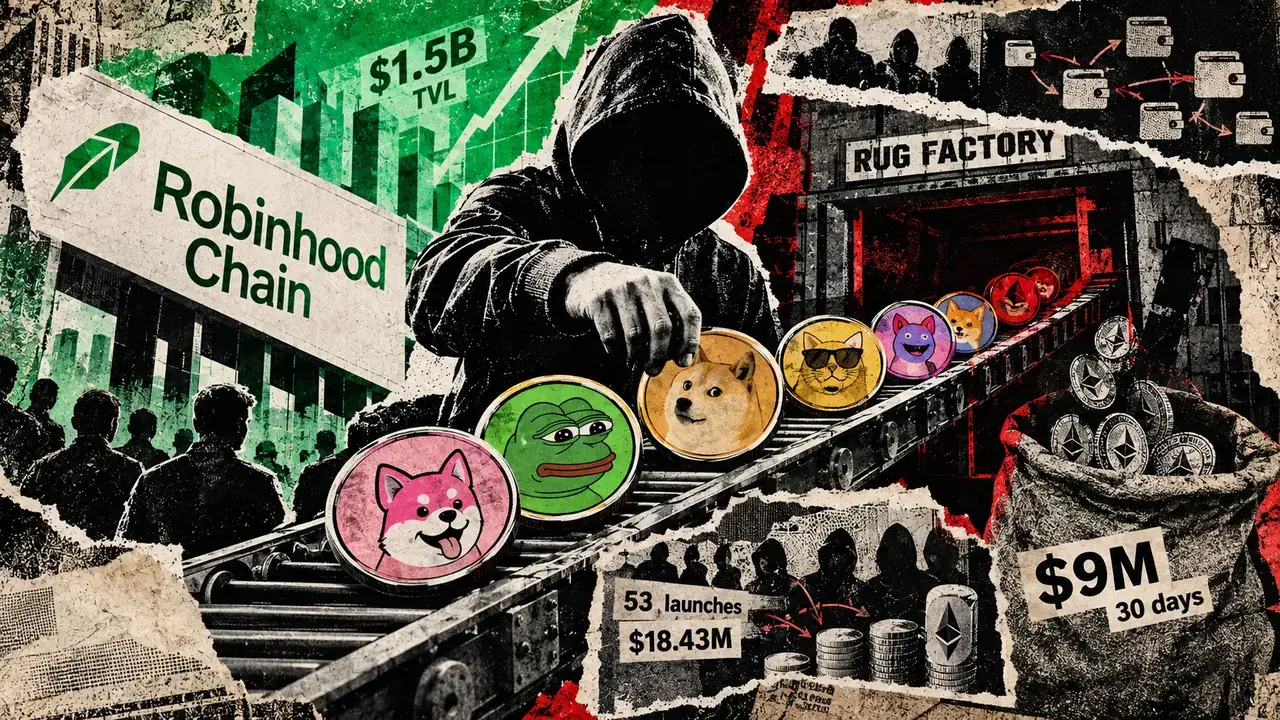
A second suspected memecoin rug factory has emerged on Robinhood Chain, marking an escalation in organized scam activity on the fast-growing network.
On September 28, blockchain security firm GoPlus identified a high-risk operation behind hundreds of memecoins that routed more than $9 million through a common fund-consolidation network over the preceding 30 days. The operation used batches of freshly created wallets to accumulate and sell tokens before routing proceeds into related addresses. GoPlus's analysis of the main consolidation wallet recorded approximately 3,589 ETH, worth roughly $9.49 million, across its latest 400 transactions.
The suspected operators created tokens around popular narratives, distributed supply among fresh wallets with minimal transaction history, and sold through contracts including PonsV2Helper and UniversalRouter. Proceeds were then routed through local sweep wallets before reaching the consolidation cluster. This structure obscures ownership concentration by creating the appearance of independent market activity across dozens of addresses before proceeds converge elsewhere.
GoPlus noted that while the setup differs from traditional rug pulls—in which liquidity suddenly disappears—the concern lies in the coordinated ownership and exit process followed by recycling of proceeds into subsequent launches.
Earlier Operation Extracted $18.4 Million
The findings follow on-chain researcher Wazz's identification of another suspected serial-rug operation on Robinhood Chain that allegedly extracted approximately $18.43 million from at least 53 memecoin launches over roughly two months.
That operation used a similar playbook, with groups of 70 to 200 wallets acquiring large portions of supply shortly after launch, often controlling over 70% of a token. Wazz identified links between successive launches, including funds from one project moving into wallets used to seed another, suggesting proceeds were recycled rather than withdrawn after each trade.
Both operations share several characteristics: heavy use of Pons V2 infrastructure, large wallet batches to disguise supply concentration, and capital moving from one launch into the next. GoPlus cautioned that there is no evidence the two clusters belong to the same operators. The structural variations suggest the activity is broader than a single crew.
Rapid Growth Creates Detection Challenges
The suspected factories are emerging as Robinhood Chain expands rapidly. The Ethereum layer-2 went live on July 1 and has crossed $1.5 billion in total value locked as of the reporting date, reaching that milestone in less than 90 days. Token Terminal estimates Robinhood Chain generated approximately $50 million in revenue in roughly three months, with September revenue reaching about $40 million.
Robinhood's larger opportunity extends beyond crypto-native fees. The brokerage has 28.6 million funded customers and approximately $384 billion in assets, giving developers the prospect of building on-chain products that could eventually reach a large existing customer base.
A permissionless network allows external developers to deploy products without approval, but applications and interfaces through which users encounter those products can add screening, wallet warnings, and concentration analysis. The emergence of a second suspected rug factory underscores the importance of these safeguards before Robinhood expands its brokerage audience on-chain.