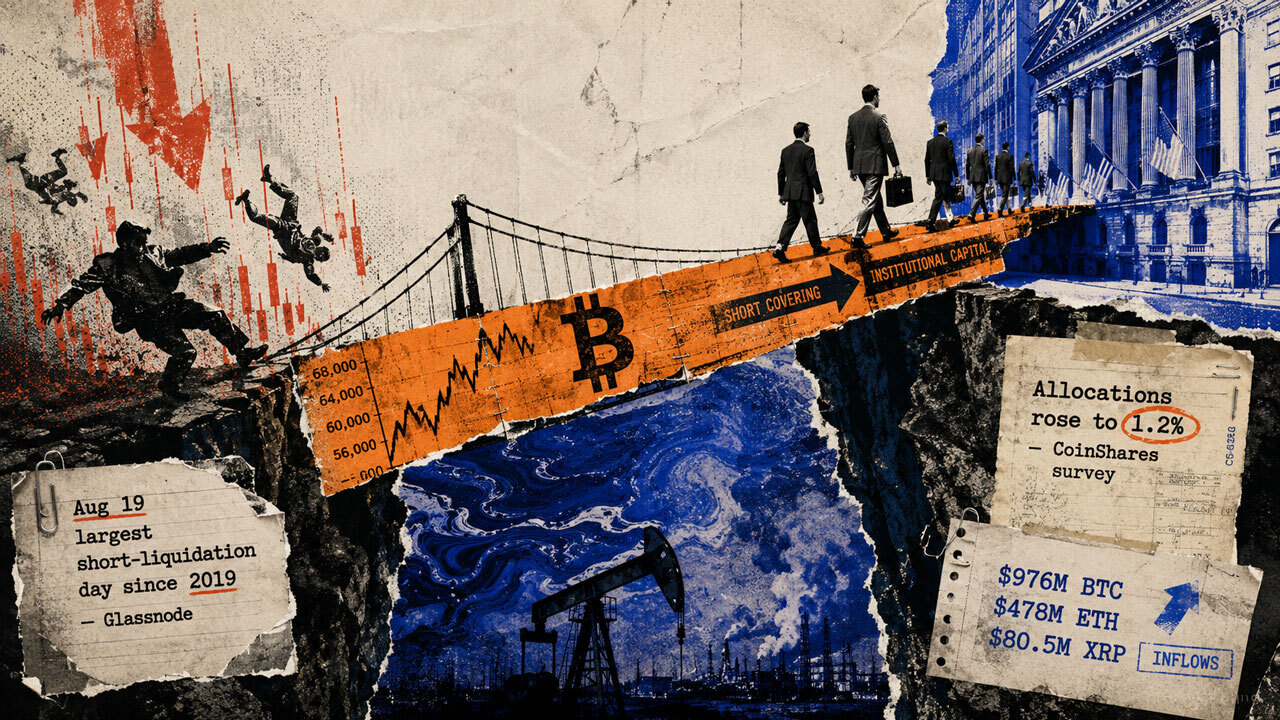
The Rally's Three Phases
Cryptocurrency markets gained roughly $500 billion in value over several days as Bitcoin climbed from approximately $63,500 toward $80,000. The move occurred in distinct phases, each driven by different market participants.
The initial breakout was triggered by macro conditions including Treasury buybacks and a weaker dollar. Short sellers then accelerated the rally through forced liquidations. Glassnode recorded the largest short-liquidation day in its historical feed since 2019 on August 19, as exchanges automatically closed bearish positions and converted them into mandatory buying pressure during the volatile rally.
Once forced buying began to fade, regulated investment products supplied fresh capital. CoinShares recorded over $2.9 billion in global crypto investment-product inflows in the week ending August 20, the largest weekly total of 2025. The following week's first three trading days added another $1.65 billion.
Where the Capital Flowed
Bitcoin received the majority of institutional inflows. On August 27 alone, Bitcoin attracted $976 million, Ethereum $478 million, XRP $80.5 million, Solana $62.9 million, and Hyperliquid products $39 million.
A CoinShares survey of fund managers overseeing approximately $1.16 trillion found that crypto allocations rose to 1.2% of portfolios, the first increase since October 2025. Institutions drove the entire gain, having begun adding exposure before Bitcoin's largest moves.
What the Liquidation Data Reveals
Bitcoin-denominated futures open interest fell from roughly 646,000 BTC to 588,000 BTC—a decline of about 58,000 BTC or 9%—as prices rose from $63,500 to $80,000. Funding rates remained contained throughout the move, indicating that traders did not immediately rebuild leverage on the long side at the same pace that prices increased. This pattern differs from typical leveraged rallies, which usually push price, open interest, and funding higher together.
The Bullish Scenario
The bull case rests on whether the liquidation event cleared bearish leverage without replacing it with equally unstable long-side positioning. Glassnode identified Bitcoin's first major overhead zone around $83,000 to $86,000. A move through that resistance would signal fresh demand absorbing supply from holders using the rally to exit.
Continued weekly crypto product inflows near or above $1 billion and gradual recovery in open interest would support this thesis. Contained funding rates would also prevent the kind of speculative excess that often triggers another liquidation cascade.
Macro Headwinds Complicate the Outlook
The favorable conditions that sparked the initial breakout have shifted. Fed Chair Kevin Warsh's Jackson Hole remarks pushed Fed-funds futures toward a more hawkish September outcome, with markets lifting the implied probability of a September rate hike from roughly 35% to 64%. Renewed U.S.-Iran fighting added stress on August 31, sending Brent crude above $90 and Treasury yields higher while U.S. equities fell.
The institutional buyers who inherited the rally now face a substantially less friendly macro environment than existed at the breakout.
Critical Support and Risk Levels
Bitcoin's short-term-holder cost basis sits near $70,000. A break below that level would put recent buyers underwater and test whether regulated fund demand can absorb selling during a broader risk-off move. The bear case intensifies if futures leverage rebuilds as prices fall, leaving long-side exposure vulnerable to liquidation as macro conditions tighten.
A sharp slowdown in crypto fund inflows would signal weakening institutional appetite. Broad redemptions from regulated products would indicate that buyers can no longer absorb selling driven by higher yields, hawkish Fed expectations, and geopolitical risk.
What Comes Next
The U.S. jobs report scheduled for September 4 represents the next major catalyst. A weak employment print could make a September rate hike harder to justify, while a stronger number would reinforce the hawkish repricing that followed recent Fed guidance.
The $500 billion surge will be decided by whether institutional capital continues absorbing supply through elevated oil prices, higher yields, and increased Fed tightening expectations, or whether the move proves to be a liquidation rally with limited follow-through.