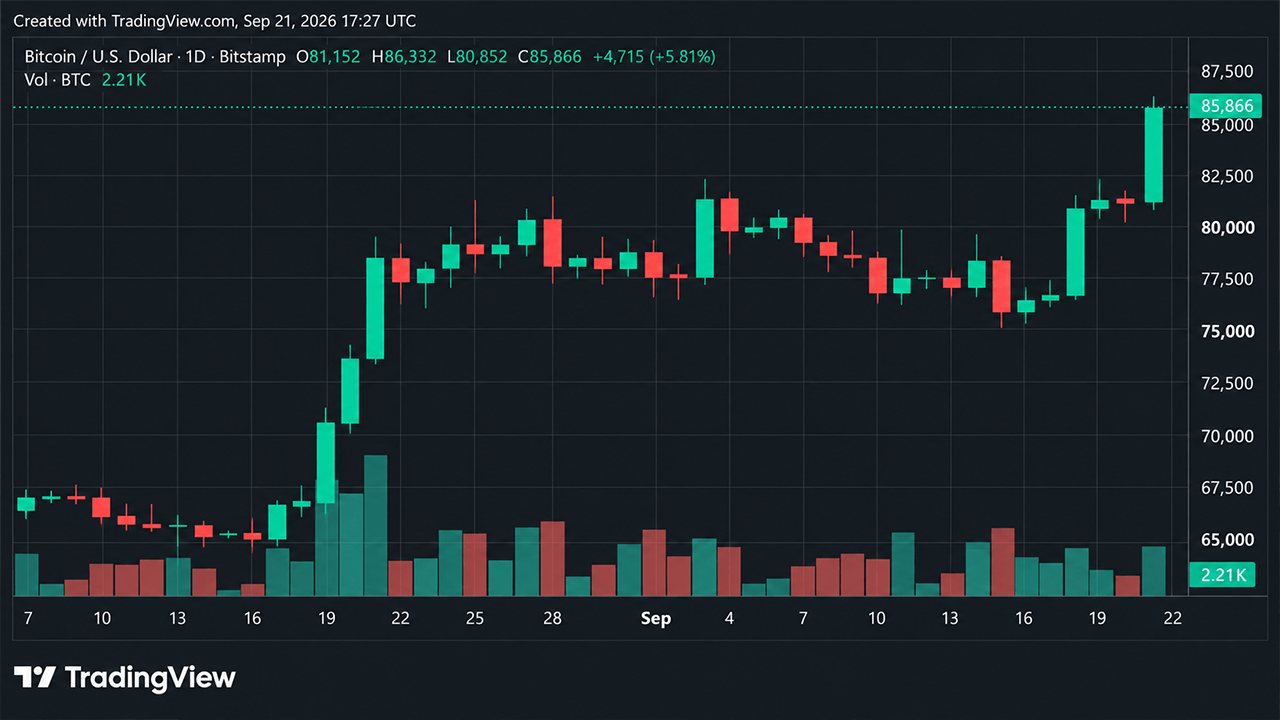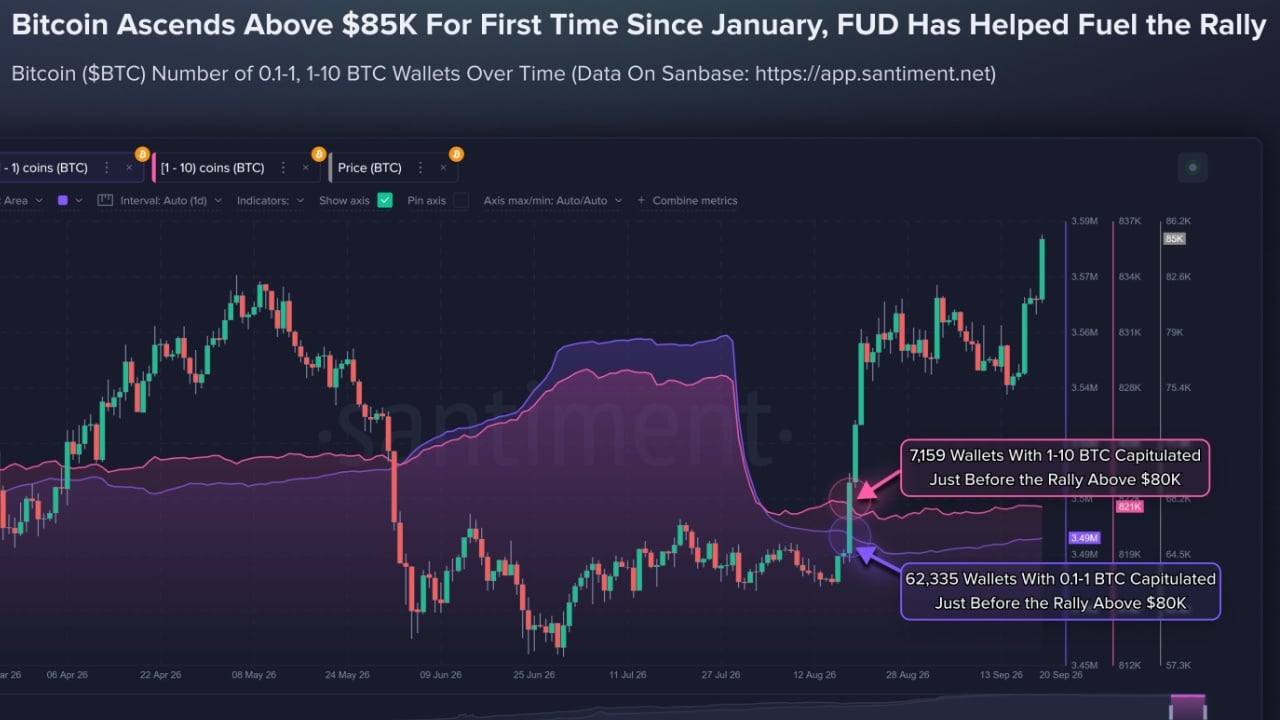
Bitcoin broke above $85,000 for the first time since January after 69,494 wallets disappeared from two smaller-holder balance groups during the July-August market decline. Onchain analytics platform Santiment reported that the wallet contractions occurred as the cryptocurrency recovered, suggesting capitulation among retail holders may have cleared reactive supply before the rally.
The wallet decline comprised 62,335 addresses holding between 0.1 and 1 BTC and 7,159 addresses holding between 1 and 10 BTC that left those balance ranges. Santiment noted that wallets leaving specific balance ranges can reflect selling, consolidation, or balance changes, and does not confirm that every address was closed. Bitcoin reclaimed $80,000 after the contraction and later exceeded $85,000.
Supply Shift Toward Larger Holders
The smaller-wallet exodus followed a broader shift in bitcoin ownership during the downturn. A July analysis found that wallets holding 1,000 to 10,000 BTC accumulated 66,700 BTC over 60 days, while holders with 100 to 1,000 BTC distributed 77,800 BTC during what was described as one of the most aggressive selling periods in the current data. Transfers toward larger holders may reduce the supply available during a market rebound if those participants retain their positions.
Liquidations and ETF Inflows Support the Move
The rally showed signs of speculative acceleration from multiple sources. Bearish crypto liquidations reached approximately $648 million during bitcoin's advance, with short-position closures generating additional market purchases. Simultaneously, U.S. spot bitcoin exchange-traded funds recorded more than $430 million in net inflows on September 18, led by more than $300 million for Fidelity's FBTC and over $100 million for BlackRock's IBIT.
The ETF inflows reversed heavy withdrawals earlier in the week and provided spot-market demand alongside the derivatives squeeze. Bitcoin crossed $84,000 after reclaiming its 50-week moving average before extending gains beyond $85,000.
Santiment cautioned that smaller-holder capitulation does not guarantee continued gains and that aggressive buying near market highs can create opposite conditions.